window.dataLayer = window.dataLayer || []; function gtag(){dataLayer.push(arguments);} gtag('js', new Date());gtag('config', 'UA-141884085-1'); gtag('config', 'AW-761820283');

dBhatt

About Dhyan Bhatt

This author has not yet filled in any details.
So far Dhyan Bhatt has created 14 blog entries.

Why a Robotic Welding Assistant?

As it is rightfully said, “You may design something in steel but to make it, you need to know how to manipulate the material. On a sheer technical end, you have to know how to weld steel.” – Brian Slocum

What Is welding

Welding is a fabrication process in which materials such as metals or thermoplastics are joined. It uses heat to melt the joints of the desired parts. The cooling that ensues causes fusion. Welding is different from brazing or soldering where the base material does not melt. There are different types of welding. All of which can be clubbed under two broad categories such as Manual welding and Robotic welding.

What is Robotic Welding?
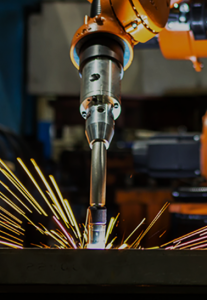
Robotic Welding

Automated welding, also known as Robotic welding, is the process of fusing two materials thanks to mechanized programmed tools. The many advantages of Robotic welding are: Weld quality, waste reduction, high efficiency, quick lead times, superior repeatability, and high output. This being said, there are disadvantages too. Robotic welding has a high initial cost, necessitates more advanced programming skills, can lack flexibility, and requires more space. Also, this type of welding causes a huge change in floorplans and is not suitable for production lines that require frequent changes. Over and above, automatic welding processes require the built and use of a mechanical jig specific to the shape of the product, therefore limiting the flexibility of the cell. These downsides have led automation welding to be concentrated mostly in large-scale industries.

An accessible solution

The Robotic Welding Assistant (RWA) by DIY-Robotics can help small and medium-scale industries in automating their plants by overcoming the disadvantages of automated welding. It is easy to program, cost-effective, faster, and consistent. Overall, it increases productivity. Now, let us see what the future holds in terms of automated welding for small and medium-scale industries.

Symbiosis Relation

As the name suggests, the RWA assists the welder. It does the work of a JIG and a human. It not only helps the welder with symmetrical parts, but it also helps with asymmetrical or irregular surface welding. This symbiosis relation makes for a safe environment in which humans can work with robots.

Third Arm

Third Robotic ArmThe RWA is a plug-and-play robotic cell that acts as a third arm. It holds the part in a fixed position, as the operator welds. Moreover, Fanuc robots’ 360° maneuverability helps in optimizing the work and safely prioritizes a horizontal welding position for the welder.

Budget-Friendly Solution

Traditional robotic welding equipment setup typically costs over 100 000 USD.  Adding to that, let’s not forget that this number blows up when associated costs such as labor, energy, material, factory setup, and installation are taken into account. The Robotic Welding Assistant however, starts at 74 000 USD and requires minimal programming skills.

Versatility

Small-scale industries deal with a large variety of customers and small quantities of products. The right solution for these industries needs to not only be budget-friendly but also flexible to fit and change from product to product in less time and with less floor space. On top of offering some of the features a huge welding robot would, the RWA has other features:Robotic Welding Assistant
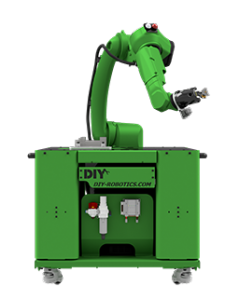
  • Joystick control for easy movement control
  • Safe Human-centric design, horizontal welding position
  • Consistent results with 100% accuracy
  • Versatile ergonomic welding capability
  • Compact Design architecture; fits in the current factory floorplan
  • Variable payload capacity

A great solution for SMEs

The Robotic Welding Assistant by DIY-Robotics is a go-to solution for any small to medium-scale industry. With minimal investment, this solution answers all your welding requirements without imposing any major changes in your current factory floorplan.


References

  • A. T. &. Machine, “What are the Pros and Cons of Robotic vs Manual Welding?,” AAA Tool & Machine, 08 09 2019. [Online]. Available: https://aaatoolandmachine.com/what-are-the-pros-and-cons-of-robotic-vs-manual-welding/.

  • C. E. Bennett Brumson, “Robots For Small Business: A Growing Trend,” automate, 31 10 2003. [Online]. Available: https://www.automate.org/industry-insights/robots-for-small-business-a-growing-trend.
  • D. Robotics, “ROBOTIC WELDING ASSISTANT,” DIY Robotics, 20 05 2021. [Online]. Available: https://diy-robotics.com/robotic-welding-assistant/.

  • F. F. /. T. Knell, “How does laser welding work? Costs, advantages & disadvantages,” maschinenmarkt international, 24 08 2019. [Online]. Available: https://www.maschinenmarkt.international/how-does-laser-welding-work-costs-advantages-disadvantages-a-857309/.

  • O. S. Amar Chinchane, “Robotic Welding Market,” 30 11 2019. [Online]. Available: https://www.alliedmarketresearch.com/robotic-welding-market.
  • Wikipedia, “Welding,” 15 05 2021. [Online]. Available: https://en.wikipedia.org/wiki/Welding.
 

Cobots: Pushing the Boundaries

The benefits of 3D printing in robotics

With 3D printing, Complexity is free. The printer doesn’t care if it makes the most rudimentary shape or the most complex shape, and that is completely turning designing and manufacturing on its head as we know it.

— Avi Reichental (CEO of 3D systems)

What is 3D printing?

Additive manufacturing, also known as 3D printing, turns digital files into 3D physical objects by adding material in a layer-by-layer process. Each layer can be seen as a very thin sliced cross-section of the object. Unlike the subtractive manufacturing method where a piece of plastic or metal is cut out, 3D printing gives everyday consumers the power of manufacturing.  

Now, let’s dig deep into the benefits of using 3D printing in Robotics:

On a broader level, 3D printing aids prototyping, tooling, fabrication, and lowers cost and time to market. It is of great use for robotic engineers to achieve their goals. It accelerates product design, and reduces cost and waste. In doing so, it increases the flexibility to create more complex designs. This technology enables us to mass-produce customized products for customers.

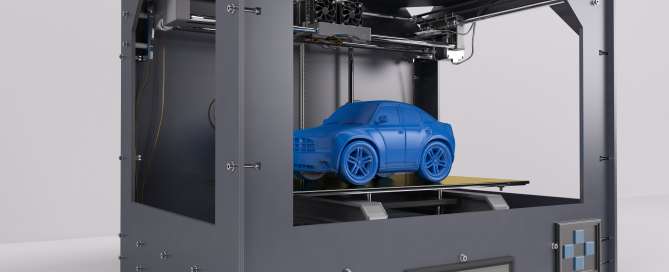
3D Printing exemple

Speed:

The time frame for designing, manufacturing, and testing parts used to take months. 3D printing reduced that to a few days. It enables the user to design any kind of complex part without the need of a warehouse and expensive machinery. This modern production method easily reduces long lead times for the outsourcing of complex manufacturing projects, as well as the constraints of the minimum order for customized parts and products. As per the EY39% of companies in the manufacturing and Robotics industry now prefer 3D printed tools to enhance their products.

Cost:

Unlike traditional methods of CNC and injection molding, 3D printing reduces trial and error in designing, the cost of expensive machinery, and labor. Also, creating a product from the ground up, instead of carving it out from the block of material, reduces waste.

Ergonomic Designing:

Ergonomic Design - 3D Printer

Using the same 3D printer, designs can be produced irrespective of the part dimension or complexity. This allows the designing and manufacturing geometries impossible for the traditional methods such as parts within parts as a single structure and hollow cavity inside a solid joint free part. (No other way to say this?) It allows anyone with very little know-how of CAD to work and edit designs as per their needs. They can also work with multiple materials in the same object, giving them the chance to mix the mechanical properties and textures.

Tangible Product Quality check:

The life cycle of product manufacturing is reduced, thanks to the low cost and high-speed production rate of additive manufacturing. A physical prototype can be tested for flaws, corrected, and printed immediately the next day allowing for quick product improvements. This helps in getting accurate feedback from potential investors and consumers. This step-by-step production guarantees faster enhancement in the production design and better quality parts or products.

Consistency:

With 3D printing, parts are manufactured in succession. Each part can be monitored and real-time faults can be checked. The result is less waste and failed parts during production. Increasing the consistency of best quality parts by testing product prototypes beforehand reduces the risk of potentially disastrous investments.

Consistency in 3D printing

Accessibility and Sustainability:

3D printing is almost entirely automated. It requires little or no additional staff to operate, supervise, and manage the process, rendering it far more accessible than other manufacturing processes. As a result, contrary to the conventional production setup, its setup is quite cost-efficient.

In Conclusion, by developing better tooling, leveraging design freedoms, customizing robots, accelerating time to market, and being user-friendly, additive manufacturing enables the robotics industry to, like others, take advantage of producing volumes with fewer upfront costs and more efficiency gains. This, along with the multitude of applications 3D printing can provide to the robotics industry, makes for a very innovative future.


What makes FANUC Robots a Good Choice for DIY solutions?

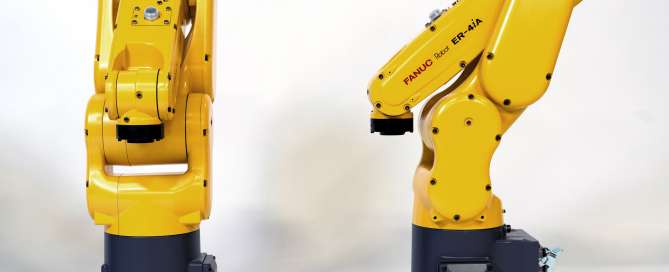
The arrival of the first robots in this world was inspired by Mother Nature and different species of animals including humans. There are 30 different kinds of muscles in a human hand, and many complex functioning goes behind a simple task such as lifting a cup of water. However, we laymen don’t need to understand the mechanics of the hand to get all the complex work done with them. The same goes for FANUC robots as for a DIY solution.

Think of the FANUC robot as the muscles and DIY-Robotics as your hand. You do not need to know how the FANUC robot is programmed to get your desired work done. Let us identify the benefits of using FANUC robots in DIY solutions at the existing factory setup:

1 | Easy to Operate

Operating FANUC robots can be as easy as moving a hand. As they come preprogrammed, we don’t need to worry about its coding to operate it. You can also modify it to do different tasks at the assembly line with just some easy minor changes in the hardware and software. FANUC Robots are easy to fit in within the current footprints and factory layouts helping any business, whether it is automotive, packing items, or precision work such as watchmaking to have:

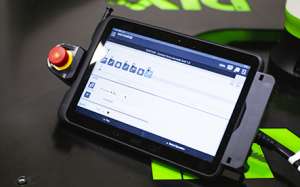
FANUC CRX Controler

  • Less downtime
  • Increased productivity
  • Better support and services
  • Deliver targeted product goals with precision
  • Low maintenance
  • Application-specific options
  • Range of payload and reach capacity

Today’s world is all about getting more productivity in less amount of time, money, and space. Choosing FANUC can fulfill all these aspects for your benefit.

2 | Flexibility

It is always said that work done by yourself gives you the best output and flexibility. Here is where the flexibility of FANUC robots helps to get the best whether it is saving money, saving time, or getting high production with quality outputs. With over 250 specialized software functions available, FANUC makes the customization easier, and along with our DIY-Robotics modular cells, gives you the option to make your design by choosing the modular panels that fit your needs.

3 | Compatibility

Sixty years since its foundation and, with more than 4.4 million CNC controls and 680,000 robots installed worldwide and still counting; FANUC has become the leading global manufacturer of factory automation. FANUC’s diverse reach in the global market makes it more feasible to connect to a DIY-Robotics cell. This makes your modification process quick and joint-free, giving the flexibility, payload, and reach capacity range as per your needs. FANUC Robots are compatible with almost all the other tools present in the market, making them the most accessible in terms of installation by yourself. Plugging and playing around with FANUC is just like playing with LEGO toys. FANUC Robots can plug and play with the existing factory design giving maximum output optimization in minimum changes made. These robots can do various applications, which includes as under but is not limited to:

FANUC Compatibility

  • Pick and place
  • Assembly
  • Cutting
  • Material application
  • Inspection
  • Palletizing
  • Dispensing and sealing
  • Material removal

I think this section should focus on the fact that FANUC controllers are very present in various industries, whether on a CNC machine or an injection molding machine, making it all the easier to connect to a DIY-Robotic cell.

4 | Lifetime Reliability Guaranteed

In addition to DIY-Robotics offering unlimited free support for their products, FANUC also offers lifetime support for their product throughout its life cycle no matter how old the robot is. FANUC being the only robot manufacturer to design and manufacture all its products’ components in-house also helps in giving superior quality products, functional reliability, and availability of products at the highest levels. With over 20 parts centers in Europe itself and a worldwide network of its parts store, they ensure 24/7 parts dispatch, limiting downtimes in your operations and giving guaranteed 100% performance service.

FANUC

FANUC IconThe name itself sells the product. It is very easy to find integrators for FANUC, being the leading brand in the robotics market. DIY-Robotics is not only an Authorized FANUC System Integrator but can also get you in contact with various integrators with different specialties around the world. Everything your robotic project requires, from FANUC robots to Certified Integrators, and custom components for your needs, is available at a one-stop solution platform called DIY-Robotics.

Choose Wise — Choose FANUC — Choose DIY-Robotics