window.dataLayer = window.dataLayer || []; function gtag(){dataLayer.push(arguments);} gtag('js', new Date());gtag('config', 'UA-141884085-1'); gtag('config', 'AW-761820283');

Why a Robotic Welding Assistant?

As it is rightfully said, “You may design something in steel but to make it, you need to know how to manipulate the material. On a sheer technical end, you have to know how to weld steel.” – Brian Slocum

What Is welding

Welding is a fabrication process in which materials such as metals or thermoplastics are joined. It uses heat to melt the joints of the desired parts. The cooling that ensues causes fusion. Welding is different from brazing or soldering where the base material does not melt. There are different types of welding. All of which can be clubbed under two broad categories such as Manual welding and Robotic welding.

What is Robotic Welding?
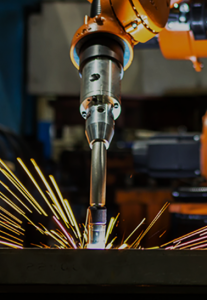
Robotic Welding

Automated welding, also known as Robotic welding, is the process of fusing two materials thanks to mechanized programmed tools. The many advantages of Robotic welding are: Weld quality, waste reduction, high efficiency, quick lead times, superior repeatability, and high output. This being said, there are disadvantages too. Robotic welding has a high initial cost, necessitates more advanced programming skills, can lack flexibility, and requires more space. Also, this type of welding causes a huge change in floorplans and is not suitable for production lines that require frequent changes. Over and above, automatic welding processes require the built and use of a mechanical jig specific to the shape of the product, therefore limiting the flexibility of the cell. These downsides have led automation welding to be concentrated mostly in large-scale industries.

An accessible solution

The Robotic Welding Assistant (RWA) by DIY-Robotics can help small and medium-scale industries in automating their plants by overcoming the disadvantages of automated welding. It is easy to program, cost-effective, faster, and consistent. Overall, it increases productivity. Now, let us see what the future holds in terms of automated welding for small and medium-scale industries.

Symbiosis Relation

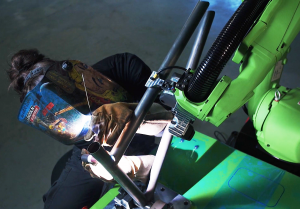
As the name suggests, the RWA assists the welder. It does the work of a JIG and a human. It not only helps the welder with symmetrical parts, but it also helps with asymmetrical or irregular surface welding. This symbiosis relation makes for a safe environment in which humans can work with robots.

Third Arm

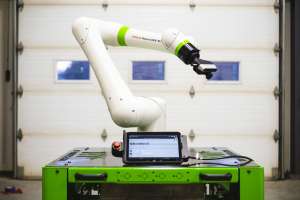
Third Robotic ArmThe RWA is a plug-and-play robotic cell that acts as a third arm. It holds the part in a fixed position, as the operator welds. Moreover, Fanuc robots’ 360° maneuverability helps in optimizing the work and safely prioritizes a horizontal welding position for the welder.

Budget-Friendly Solution

Traditional robotic welding equipment setup typically costs over 100 000 USD.  Adding to that, let’s not forget that this number blows up when associated costs such as labor, energy, material, factory setup, and installation are taken into account. The Robotic Welding Assistant however, starts at 74 000 USD and requires minimal programming skills.

Versatility

Small-scale industries deal with a large variety of customers and small quantities of products. The right solution for these industries needs to not only be budget-friendly but also flexible to fit and change from product to product in less time and with less floor space. On top of offering some of the features a huge welding robot would, the RWA has other features:Robotic Welding Assistant
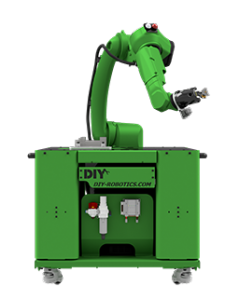
  • Joystick control for easy movement control
  • Safe Human-centric design, horizontal welding position
  • Consistent results with 100% accuracy
  • Versatile ergonomic welding capability
  • Compact Design architecture; fits in the current factory floorplan
  • Variable payload capacity

A great solution for SMEs

The Robotic Welding Assistant by DIY-Robotics is a go-to solution for any small to medium-scale industry. With minimal investment, this solution answers all your welding requirements without imposing any major changes in your current factory floorplan.


References

  • A. T. &. Machine, “What are the Pros and Cons of Robotic vs Manual Welding?,” AAA Tool & Machine, 08 09 2019. [Online]. Available: https://aaatoolandmachine.com/what-are-the-pros-and-cons-of-robotic-vs-manual-welding/.

  • C. E. Bennett Brumson, “Robots For Small Business: A Growing Trend,” automate, 31 10 2003. [Online]. Available: https://www.automate.org/industry-insights/robots-for-small-business-a-growing-trend.
  • D. Robotics, “ROBOTIC WELDING ASSISTANT,” DIY Robotics, 20 05 2021. [Online]. Available: https://diy-robotics.com/robotic-welding-assistant/.

  • F. F. /. T. Knell, “How does laser welding work? Costs, advantages & disadvantages,” maschinenmarkt international, 24 08 2019. [Online]. Available: https://www.maschinenmarkt.international/how-does-laser-welding-work-costs-advantages-disadvantages-a-857309/.

  • O. S. Amar Chinchane, “Robotic Welding Market,” 30 11 2019. [Online]. Available: https://www.alliedmarketresearch.com/robotic-welding-market.
  • Wikipedia, “Welding,” 15 05 2021. [Online]. Available: https://en.wikipedia.org/wiki/Welding.
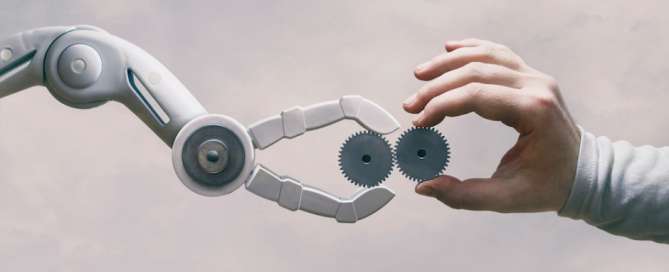
 

Cobots: Pushing the Boundaries

What are The Industrial Robotic Trends in 2021 And After?

The future of industrial robots looks very bright as many companies are looking to automate their production lines, especially with the COVID-19 pandemic. According to a report from Reportlinker from November 2020, industrial robotics which is the top segment in robotics, is about to experience a compound annual growth of 18.2% with revenues growing to $176.8 billion in 2025 from $76.6 billion in 2020.

Here are the top 5 emerging trends in industrial robotics in 2021 and after.

1 | Smart Industrial Robots

Smart industrial RobotsIndustrial robots are now able to communicate with each other without any human support. With the increased digitization of robots by harnessing the power of the internet, robots can now be programmed to independently communicate with each other which increases the efficiency and speed of manufacturing. Manufacturers are also able to leverage real-time data analytics to improve production and help in making business decisions as well.
2 | Robots to Work in Small Factories

While we are accustomed to big specialized robots in assembly lines, they are expensive to install and are not suited for small factories. The future calls for small robots connected to the same network and AMRs (Autonomous Mobile Robots), which are easier to fit in small factories. They are equipped with navigation technology, making them mobile and more flexible than traditional industrial robots.

Once they are done with their tasks, you can reprogram them for other uses instead of dismantling them. This encourages new markets to automate their processes, such as in the food and beverage industry. Companies like DIY-Robotics offer predesigned, modular, and mobile robotic cells that can be integrated into any production line and moved to the next when needed. These robots are very different from traditional industrial robots that were huge, expensive, and needed to be built on sight thus requiring a lot of effort during installation.

3 | Robots That Reduce the Carbon Footprint

With the growing sensitivity towards climate change, investments in robotic technologies that leave a smaller carbon footprint will be expected to grow. The robots of today and the future are more energy-efficient,  and therefore require less energy to perform similar tasks to other energy-consuming industrial robots. They also have a higher precision rate which produces fewer rejects and below standard goods that have to be disposed of.

4 | Collaborative Robots

Collaborative Industrial Robot

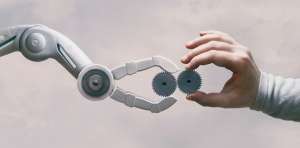
The focus on industrial safety is one of the trends in 2021. This is especially key when it comes to collaboration with humans working hand in hand with industrial robots on the same assembly line without the need for safety barriers. Human-robot collaboration has been improved by the advancement of software, sensory capabilities, and end-of-arm tooling (EOAT) which give industrial robots the capability to detect changes on the line and respond quickly and safely.

These collaborative robots are known as Cobots and are one of the fastest-growing trends in industrial robotics. This is because they are not only collaborative and safe but also easy to program, quick to set up and allow for flexible automation.

5 | Industrial Robots Securing the Supply Chain

The COVID-19 pandemic has not started any trends in robotic technology, it has just accelerated their use beyond what was thought possible. The future of industrial robots belongs in helping fix and stabilize the supply chains that have been severely exposed by the pandemic. Automation of processes will only increase especially in markets in high-wage countries. Doing so will increase their flexibility in the production lines as well as ensure stability and security during uncertain times.

Conclusion

The robot revolution has just begun and we expect to see more investment and attention in this area in the future. Automation of many mundane processes in the assembly line will have to occur to not only increase speeds and efficiency but also reduce costs of production. Gradually, humans will rely on robots for manufacturing even more which is a trend that has already begun in 2021.


Redirection Deburring Cell Page

The newest cobots on the market: The FANUC CRX 10iA series

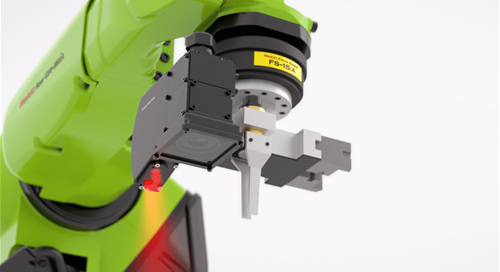
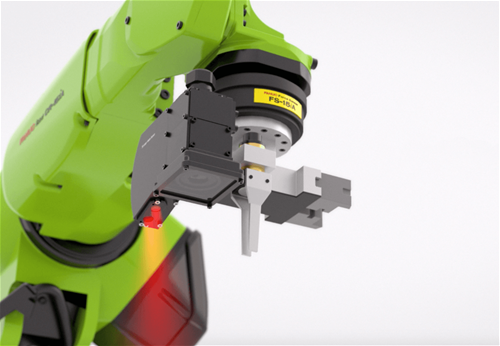
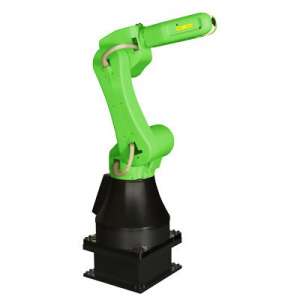
FANUC has once again raised the bar for cobots with the launch of their new CRX series. The new pair of CRX models, the CRX 10iA and the CRX 10iA/L have established themselves as the new leaders in the field of automation. With several cobot models available, what distinguishes this lineup from other units on the market?

Astro FANUC CRXKey Features

FANUC already featured the most extensive line of cobots available. The CRXs offer all the same advantages as the other FANUC cobots, but with a few crucial upgrades and distinctions. Here are just some of the features that set the CRX models apart from their competitors.

Manual Manipulation

Say goodbye to complex matrices and advance programming kinematics. The CRX line can be manipulated by hand and guided to “teach points” so that the human operator can quickly and easily position and pose the robot. By moving it exactly to where it needs to be, the operator can use the robot’s tablet to take a snapshot of that configuration. FANUC’s software takes over from there, making sure the robot gets from point A to point B via the most efficient path. And since it features FANUC’s contact stop function, it is safe for humans to work in this close proximity environment.

Astro CRX Manual ManipulationThe Teach Pendant

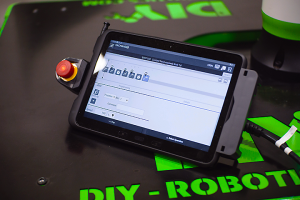
The CRX models come with the brand new Teach Pendant Tablet. This sleek, modern touchscreen device features drag-and-drop programming and a quick and straightforward setup. It easily connects to third-party grippers and devices. Plus, it comes loaded with FANUC’s top-of-the-line software like iRPickTool, iRVision, and more!

Small Footprint, Powerful Arm

Although they have smaller footprints than a CR-15, both the CRX 10iA and the 10iA/L can handle a 10kg payload capacity. While they start compact, with a minimal profile, they boast 1249 mm and 1488 mm reaches, respectively.

Out of the Box

What else can you expect right out of the box? For starters, FANUC CRX cobots offer quick setup and a lightweight and compact design. The sleek and smooth surfaces make the units easy, comfortable, and safe to handle. There are no messy wires or sharp corners to frustrate operators during the unboxing or operation.

Astro FANUC CRX by DIY-roboticsOnce the CRX is out of the box, you’ll find several features that may not make the “top features” list, but which will still make converts out of even the most skeptical consumer. Both models of the CRX operate on standard 120V power. That means you can insert them anywhere in your assembly line as long as you have a standard outlet nearby. Both CRX models easily connect to numerous grippers and vision tools, making it a breeze to get your cobot into your assembly line and working with various third-party hardware. When combined with DIY-Robotics’ mobile Astro cells, the CRX 10iA and the CRX 10iA/L become even more versatile.
DIY-Robotics is a proud FANUC integrator. Check out the list of all of our supported robots and cobots at DIY-Robotics.com/products. While there, take a look at our Payload Calculator, see what our robotic workcells can handle, and decide which ones are the best fit in your factory.


4 Frequently Asked Questions About Cobots

The industrial robotics market is booming, and more than ever before companies are automating their production process using cobots. But what exactly are cobots? What makes them different from regular industrial robots? What advantages do they have? And what are their limitations? DIY-Robotics will help you decide if a cobot is right for your company by answering four frequently asked questions about collaborative robots.

What is a cobot?

questions about cobot safety

A collaborative robot, or a cobot, is engineered to cooperate with humans in a shared workspace. This is in contrast with standard robots, which are designed to operate autonomously, or with limited guidance in a closed-off robot cell. Cobots can sense and react to humans to prevent injury. By eliminating the need for a safety zone, factories can reclaim floor-space because cobots effectively have a smaller footprint than typical robots.

How do cobots work?

Cobots are notably easy to program. Simple tasks, such as pick-and-place, can be programmed with little knowledge of coding, often on a tablet. At the same time, cobots can be as robust and advanced as a traditional industrial robot. When connecting cobots to other machines, advanced programming can exponentially increase their usefulness.

questions about how cobot works

Cobots can easily adapt to different environments and can easily be assigned new tasks and configurations. As is the case with traditional industrial robots, the work done by cobots and humans working together is more consistent and accurate than what humans can do alone.

Can my company afford to buy a cobot?

The price of a cobot depends on many variables. Payload and intended use are the top indicators of price. Specific configurations, compatibility with other machines, and ability to be repurposed for multiple tasks are examples of elements that contribute to the variation of the price. Consider, however, that the return on investment is relatively fast. Decreases in workplace injuries, an increase in production, and round-the-clock manufacturing guarantee a return on investment. As one of the largest FANUC robotic arm integrators in Canada, DIY-Robotics offers a high-quality robotic cell, with the robot included, very close to the retail price of the robot alone!

Which cobot should I choose for my business?

Before you start automating, you need to ask yourself which robot is the best choice for your business. Ask yourself and your team the following questions: What long term flexibility do you need? How easy are the programming, installation, and setup? Is the end-of-arm tool optimally designed for your needs? What are the safety advantages of each specific model? What are the operational ranges (payload, reach, etc.)? If that still doesn’t narrow it down for you, check out DIY-Robotics’ online tool to help you design a robotic cell specifically for your company’s needs.

If you plan to buy an industrial robotic cell, we invite you to visit the DIY-Robotics forum. Our certified integrators will be happy to answer your questions and help you build the right cell for your company.

add robots to your production line

DOWNLOAD NOW


5 Reasons to Work with a Cobot

5 Questions to Ask Yourself Before Going with a Cobot

If you thought robots were going to take over all of our factory jobs, you probably never considered the collaborative robot, or cobot. These machines are designed to work with and assist humans in the factory environment. Rather than to remove humans entirely from the process, machinery is quite capable of facilitating a variety of jobs that improve accuracy, safety, and precision. So what are the top 5 questions you should ask yourself before going with cobots in your factory?


#1 –  What long term flexibility are you looking for?

Which cobot to choose?Are you always going to need a robot that collaborates with a human? Or might your needs change to a more automated approach? This is the primary question you should ask when deciding if your company will benefit from a collaborative robots. Cobots are great at facilitating human machinists and assembly line workers. They are designed to take the load and strain off the human body, improve the precision of tasks, and improve worker speed. But are you looking at keeping humans on the factory floor? Do you need the capabilities of a real person to make judgment calls or fine tune operations? In this case, cobots would be suitable for your needs. If, however, your plans are to go fully automated in the next couple of years, cobots may be an expensive short-term solution.


#2 – How easy are the programming installation and setup?

In short, what can you expect from the setup process? What assembly is required? How long will it take to get one cobot up and running? Will this interrupt workflow? In general, cobots are advertised to have an easy setup process. Check out some videos on YouTube to see what you can expect from different manufacturers. This video from Omron shows how easy it can (and should!) be.

Then evaluate what cobots offer, or require, in terms of updating and customizing the programming. Will you need a dedicated programmer to make sure these machines work properly? If so, that’s a lot of pressure to put on someone in-house. When you have humans and robots working closely side-by-side, safety is of paramount importance. One should expect that the programming is simple and that safety features are already included in software packages provided by the manufacturer.


#3 – End-of-Arm-Tooling?Should I buy a cobot?

What about the end-of-arm-tooling (EOAT)? If the cobots you’re interested in are limited to only one or two applications then they’re not much different than traditional robots or machinery. Cobots are most useful when they are able to handle multiple tasks without changing your assembly flow. CNC, injection molding, pick and place operations, and welding are just a few of the possible applications that one single cobot should be able to perform. Also, if these tools happen to be dangerous, like a bladed instrument, for example, safety concerns may render this machine impractical as a cobot. Can it still operate without the need for a human operator?


#4 – What safety advantages can they provide?

With collaborative robots, your operators and engineers are working in close quarters with a robot. What are your controls and safety mechanisms? Did the manufacturer miss any concerns that are specific to your factory? What authoritative bodies conducted these safety tests? On the other hand, think about the preventative advantages that a cobot can offer. Reduced repetitive stress injury to your staff and a reduction in accidental, human-caused injuries alone are worth the investment.


#5 – What are the operational ranges?

ROI of industrial cobot

How close to the base can the cobot work? How far away vertically? What about horizontal reach? These aren’t just necessarily ways to boast about the machine’s capabilities, these are features that may render the cobot inadequate in your factory. Take an assessment of where you will use the cobot in your assembly process. How much room does it have to move? Which cobots from each manufacturer are capable of working safely in this space? Make your choice on the maximum dimensions that will work for your factory’s needs.

Another thing you’ll want to consider is the cobot speed. In general, cobots move slower than industrial robots. How much will this impact your production line? If speed is vital to your assembly, or if a reduction in speed will impact turnaround, then you may be better off going with a standard industrial robot.


If you don’t plan on having a human working closely with your robots, then cobots may not be the way to go as they are designed to work alongside a human counterpart. However, this design feature comes at the cost of speed and future flexibility in terms of the robot’s application; you might want to consider industrial robots and other automation solutions. Cobots offer a lot of advantages when humans are essential to the manufacturing process, but they aren’t a solution for all automation needs.

Written by: B.A. Durham

add robots to your production line

DOWNLOAD NOW


Top 5 Cobots on the Market

The world of robotics is in a golden age and the fields of industrial robotics and automation are reaping the benefits. In particular, the advent of the cobot fulfills the dream of humans and robots working side by side. In this article, we’ll take a look at the Top 5 collaborative robots currently on the market.

ABB YuMi® IRB 14000 best cobots robots

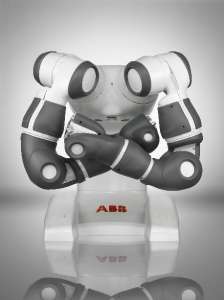
The Swiss-Swedish team at ABB has established their company as a leader in industrial robotics. The IRB 14000 cobot, known as YuMi, is a top of the line cobot. ABB designed the YuMi to manage processes that require lots of small and detailed parts in short cycles. ABB boasts that his 7-axis robot is the safest cobot on the market, eliminating the need for cages and safety barriers. The YuMi features camera-based part location as well as easy material feeding and extremely agile “hands.”


Kuka  LBR iisy and LBR iiwa

Kuka is ready for Industry 4.0 with their cobots LBR iisy and LBR iiwa. These two machines are in different payload categories, but keep the human at the center of the production process. With Kuka’s line of integrated sensors, delicate tasks can be delegated entirely to the machines. Bump sensing allows the machines to slow down when human contact is detected, providing superior safety and operational reliability.  The LBRs can perform tasks from automotive transmission assembly, to pick and place tasks, and even handling flexible and off-balance parts.


FANUC Cobotstop 5 industrial cobots

Used in everything from cheese production to automotive assembly, FANUC’s robotic arms are among some of the most beloved in the industry. Lauded for their reliability, easy programming and maintenance, and their long life-cycles, FANUC robots are trusted by such industry giants as Audi and Ford. Among their entire fleet of impressive machines, however, are some of the best collaborative robots available. Living up to the FANUC standard, the fleet of cobots tout great speed, reliability and reach. With six models of cobots to choose from, customers can select from a range of 4-35 kg and 550 mm reach to a whopping 1812 mm reach. These robots can also obtain speeds of up to 1500 mm/s.

Universal Robots UR10

Universal Robots is always looking to the future, and every robot they design has your company in mind. The UR10 is the perfect example of this company’s mission, allowing for superior customization, intuitive programming, and fast setup. The UR10 can handle a payload of up to 10 kg with a maximum reach of 1300 mm. The brilliantly simple design boasts a minimal footprint of only 190 mm and a relatively low mass of just over 33 kg. Combine that with an almost inexhaustible list of add-ons, and it’s no wonder this cobot is ideal for small and large businesses alike.


Omron TM Series

Omron, one of Europe’s top robotics manufacturers, is no late bloomer in this blossoming field. The TM Series offers safety, power, reach, and speed with four unique models. Operating at distances of up to 1300 mm and speeds of up to 1.4 m/s, there is no bad choice in this lineup. Omron takes the pressure off of programming and offers fast changeover to work with high or low volume productions. The TM Series requires no programming yet comes with intelligent vision processing capable of everything from barcode reading to object positioning and pattern recognition. Omron has created the perfect human-robot collaborative design ideal for a variety of applications including machine tending, soldering, and unloading.

Written by: B.A. Durham

add robots to your production line

DOWNLOAD NOW