window.dataLayer = window.dataLayer || []; function gtag(){dataLayer.push(arguments);} gtag('js', new Date());gtag('config', 'UA-141884085-1'); gtag('config', 'AW-761820283');

teverson

About Troy Everson

Summary

Graduate of Laurentian University equipped with a Bachelor of Science in Mechatronics Engineering. Extensive knowledge of microprocessor programming and design, robotics, 3D modelling software, and essential engineering practices.

Education
Laurentian University, Sudbury, Ontario

Bachelor of Science, Mechatronics Engineering, April 2021

Westside Secondary School, Orangeville, Ontario

High School Diploma, Honors, June 2017

Employment History
Technical Writer, DIY Robotics, Sherbrooke, Quebec

October 2021 – Present

Mechatronics Engineer, Wabtec Cooperation, London, Ontario

May 2022 – Present


Story

Raised on a farm, I grew up with the knowledge of agricultural practices, as well as the workings of farm equipment and labour. As a child, I had a natural talent for music and one of my greatest hobbies to this day is playing piano. I mainly played with LEGO and K’NEX which gave me interests in mechanical design; and one of my greatest interests of all was the exploration of space. Knowing what is in the unknown seemed exiting to me.

Throughout elementary, I was deeply interested in mathematics and science. Everything around me could be explained using these subjects and I wanted to delve further. As a result, I strived in these subjects and knew I wanted to be an engineer as soon as I got to high school. With this in mind, I took as many science and mathematics courses I could while still taking music all 4 years of my high school terms.

I was accepted to Laurentian University for Mechatronics Engineering since I wished to learn about the field of robotics since the world is moving more and more towards automation. I graduated in the summer of 2021 and begun working for DIY Robotics as their technical writer. I write about robotics and their applications in the manufacturing industry.

HOW TO ATTEND A ROBOTICS TRADE SHOW EFFECTIVELY

More and more industries are turning towards industry 4.0 with the use of automation and robotics. To ensure an industry is leading in a manufacturing climate, they must ensure their robotic equipment is effective and of top-grade quality. Therefore, is it crucial to be well educated and informed on the variety of equipment and technology available. Often, it is hard to acquire such knowledge or satisfy any questions from websites and manuals alone. It is important to view and work with robotic equipment physically before confirming that you wish to integrate it. Companies could plan a showcase of their products; however, these can be time consuming and might not deliver the answers and information a customer is looking for. Robotic trade shows are an excellent solution to this.

What are Robotic Trade Shows?

Also known as trade exhibitions or a robotics fair, a robotics trade show is a scheduled public event where companies and industries can showcase their products, technology, and research at a booth. They provide an excellent and effective form of marketing for both buyers and sellers. During these shows, customers who are be interested in robotic products have a chance to ask questions about any aspect of robotics, as well as spectate the workings of different equipment. This provides an opportunity for customers to receive first hand experience and knowledge, as well as give option to purchase or close deals. However, due to the great opportunity companies have to showcase their products, these trade shows are often clustered and can be quite overwhelming since each exhibitor wants your attention. It is important to have an effective strategy before attending these shows to ensure you acquire the maximum value in your visit.

Effective Strategies

A robotics trade show is likely to have a wide variety of technology available, some of which might not even relate to the field you wish to inquire about. Before attending these events, it is important to know what it is you are looking for in order to plan your time effectively. These events often have a member list along with a location of their booth on a floor plan. This can be found on the show website or during the event. When you arrive, you can simply visit their location and avoid the unnecessary booths.

Depending on the organization of the exhibition, companies with similar technology would be grouped together, giving visitors a categorized experience similar to a superstore. Upon arrival at a booth, it is also important to have a list of requirements or expectations available for the vendor. This will allow the vendor to provide the best solution they have for your company. Similarly, you can visit other booths within the show who may satisfy these requirements more appropriately.

Due to the popularity of these events, it can often be hard to receive a vendor’s full attention because of other potential customers. Establishing your intentions or informing a company of your visit will allow them to prepare a presentation. Certain companies will even schedule appointments during these events to provide a more personal, hands-on display of their products.

To summarize, robotic trade shows provide an excellent way for a company to acquire knowledge and information regarding new equipment, technology, and research. It is important to know what you are looking for before attending these shows since it is often a busy event. Plan which booths you wish to visit, as well as a list of requirements your company needs for equipment. Thank you for reading this week’s post on Robotic Trade Shows. If you have any questions, please feel free to contact us and we will provide you with the knowledge you require: https://diy-robotics.com/contact/.

References

SECOND-HAND AUTOMATION MARKET

Automation has been an essential part of manufacturing environments over the years. Around the globe, industries have been upgrading their workspaces to incorporate robots in order to be on track with industry 4.0. This involves integrating new robotic systems or adding to pre-existing robotic assemblies. The robot equipment does not always have to be bought new. In fact, many companies are purchasing second-hand robots in order to satisfy their automation requirements.

Second-Hand Robots

The second-hand market represents the sale of used or old equipment and merchandise. Automated equipment is a sector within this market, and is a viable option for manufacturers to invest in. Due to supply chain disruptions and the closure of boarders from the COVID-19 pandemic, second-hand robots provide a necessary and adequate way to substitute for late or cancelled robot shipments. There is also a range of advantages and disadvantages when acquiring and utilizing second-hand robots.

Advantages

The second-hand market continues to grow; many reasons contribute to the popularity of used robots, however, the main benefits are as follows:

Consistent

Often, the type and style of an industrial robot are crucial in order to achieve a production requirement. This could involve a custom application, or other machines being dependent. A manufacturer who has already integrated robotic equipment into their production floor may need a replacement of the same model. Depending on how old the equipment is, it may have become obsolete and new robots are not available. A newer robot also may not be compatible with older programs or power sources; therefore, a company would have to invest more money having to upgrade their robotic system to accommodate for one machine. In these cases, the second-hand market would be the only option.

Reliable

When an item has been labelled as ‘second-hand’, a common thought is that it is damaged, or of poor quality. However, that is not always the case. Industrial robots have an incredibly high lifespan, and used robots often still have years of lifespan remaining. If the second-hand robot was pre-owned by a respectable company who ensured maintenance was conducted regularly, the robot would still have a long operating life. Second-hand robots can also be refurbished to operate just as well as newer ones. Depending on the popularity of a used robot, spare parts may also be widely available in the case of future grievances.

Affordable

Newly designed robots can often be incredibly expensive and may be a dealbreaker for companies with tight budgets. Used robots are a fraction of the price of a new robot, while still delivering all automation needs. By spending less on robotic equipment, companies not only have a quicker ROI (return on investment), but could also use the savings to purchase more robots, or invest back into other manufacturing operations.

Disadvantages

Despite the already stated benefits, the second-hand automation market does have disadvantages and inconveniences to be aware of:

Quality

When acquiring a second-hand robot, it is crucial to ensure that it is in working condition. Be sure to be aware of the total working hours as well as reliability with its previous owner. As stated above, be sure the previous owners are of a respectable company who conducted maintenance regularly and ensured the robot operated within its specifications. Another option is to perform diagnostics to check if the robot is in an ideal working condition (ex. FANUC Pro Diagnostic). Doing so will ensure the robot does not perform poorly or have any mechanical errors like backlash, vibration, motor failure, etc.

Technology

A second-hand robot may not be equipped with the latest robotic features. Newer robots are usually more efficient, faster, and more accurate than older models. Not to mention, integration with the IIoT (Industrial Internet of Things) or production monitoring may be easier with newer models. For those who want complex robotic equipment, a newer model may be the best choice.

Conclusion

To summarize, second-hand robots provide an excellent solution for integrating automation into a production floor. They provide a cost-effective and consistent way to revolutionize a workspace. DIY Robotics offers a range of robotic cells well suited for second-hand robots. These cells are mobile and modular which allows the robot to adapt to any work environment, and facilitate a need on a production floor. For more information regarding DIY Robotics cells, please visit our product page.

Please stay connected for more posts addressing robotic industrial applications. If you have any questions regarding the second-hand market or have another inquiry, feel free to contact us and we will put you in touch with an expert.

References

WHAT TO KNOW ABOUT ROBOTIC INSPECTION INSTALLATIONS – PART TWO

As the world becomes more and more futuristic, industries have been upgrading their machine floors to become more efficient and productive. Automation is seen throughout the manufacturing world and is essential for any business to be on track with Industry 4.0. Many factory processes incorporate automation, one of which includes inspection installations. Automated inspection installations come in different forms, each with their own advantages and disadvantages. The most common inspection technologies include vision systems, measurement sensors, and optical comparators.

This post is part 2 of 3, where we will highlight Measurement Sensor technologies, along with their applications in the industry. The final topic (optical comparators) will be addressed in a final third post. If you are interested in vision systems and their applications, please feel free to visit part one of this series.

Measurement Sensors

robotic measurement sensorA measurement sensor is a device that determines a distance or dimensions of an object based on the readings and signals from an electronic element. Depending on the type of electronic element, a measurement sensor can have several types. These include but are not limited to ultrasonic sensors, contact sensors, laser & optical sensors, and inductive displacement sensors.

Ultrasonic Sensors

One of the more well-known measurement sensors, the ultrasonic sensor uses high-frequency sounds waves to determine the distance to an object. This is accomplished by emitting the sound waves towards the object and starting a timer. The sound waves are then reflected back, the receiver picks it up and stops the timer. The distance is then calculated based on time of travel and speed of sound (constant value in a standard medium). Ultrasonic sensors usually consume minimal power and can be used to measure objects that other sensors could not, such as liquid or transparent surfaces. However, ultrasonic sensors have a low detection range and accuracy compared to other measurement sensors.

Contact Sensors

As the name suggests, this sensor measures the distance of an object by directly contacting it. Contact sensors are usually used for detecting the height, thickness, or profile of an object since it works in one dimension. These sensors are also very durable due to the constant physical movements they are subjected to. They transmit high-precision data, often with a resolution in the micrometers. Contact sensors are especially useful in environments which are subject to water or oil since the sensor relies on a magnetic sensing method.

Laser & Optical Sensors

Laser and optical sensors contain the bulk of measurement sensors; therefore, we will address three technologies in this section. First is the Laser Profiler. This technology uses a sensor and special lensing to produce a laser line rather than a single laser point. This allows for 2D and 3D measurements like height, width, angle, and profile to be recorded using triangulation. This process can be completed at high speeds which makes it an ideal choice for fast-paced environments like a factory assembly line.

robotic sensor deviceNext is the laser displacement sensor. Unlike the laser profiler, the laser displacement sensor concentrates its triangulation to convene at a single point, which results in an extremely accurate reading. A laser displacement sensor is more accurate than a laser profiler, but if a two-dimensional measurement is required, the displacement sensor won’t be as efficient (since it would need to measure the object point by point).

Finally, there is the optical micrometer. This sensor generates a beam of light that encompasses the entire object. As the object moves through the beam, light is blocked from the receiver and it records the measurement of the ‘shadow’. In other words, this sensor would be able to generate the cross-sectional area of an object as it passes through the beam. From there, specific details about the object would be recorded. This includes detecting defects (like cracks or dents), creating a 2D representation, etc. This technology is extremely accurate and is often seen in many manufacturing settings.

Inductive Displacement Sensors

An inductive displacement sensor is a non-contact proximity sensor used for the detection of metal objects. This sensor uses electromagnetic induction to determine the distance of the magnetic object; therefore, non-ferrous metals (which are less magnetic) will not be as effective in sensing. An inductive displacement sensor is made up of a galvanometer which defects its position when a magnet is moved closer to it. Once the magnet is stationary the galvanometer is returned to its original position. When the magnet is pulled away, it defects in the opposite direction. Hence, the sensor will know when the object is moving closer or further away from it. Once the magnet has been calibrated with real-world measurement units, displacement sensing is accomplished.

This concludes the week’s post about robotic inspection installations. Please stay connected for the third and final post where we will address Optical Comparators and their applications in the robotic industry. If you have any questions regarding the material addressed, feel free to contact us and we will put you in touch with one of our experts.

References

HOW DIY ROBOTICS CELLS CAN GROW WITH YOUR BUSINESS

The application of robotic technologies is seen throughout the world. They provide huge benefits to any production floor while still being cost-effective. But as market opportunities and demand increase, industries are looking for more ways to improve upon existing robotic solutions. There are many technologies available to increase the efficiency of robotic equipment, one of which is the use of robotic cells.

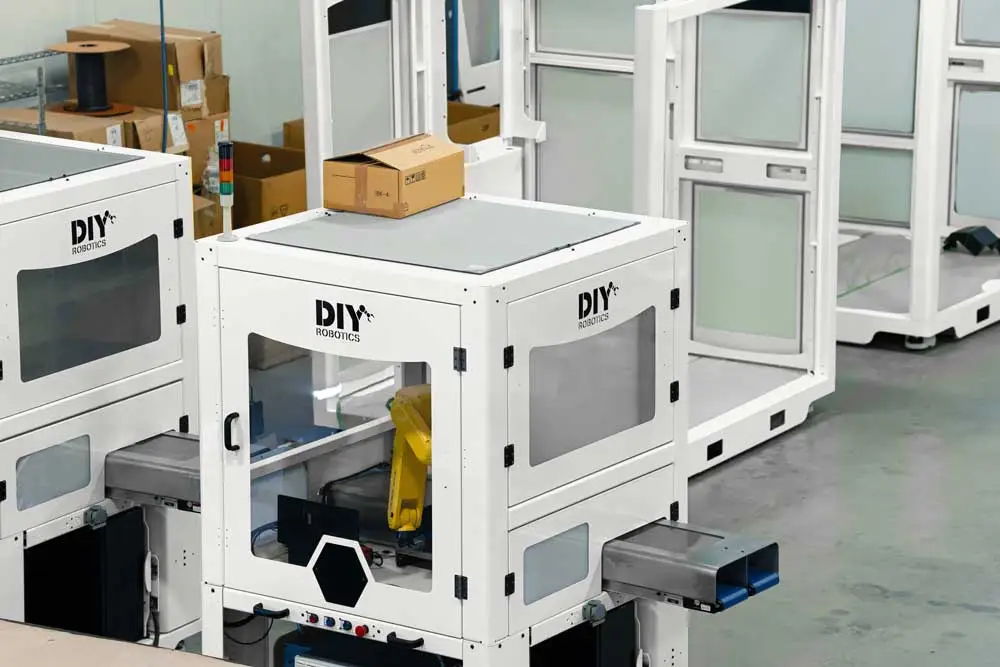
A robotic cell is defined as a set of machines or robots that are organized within a closed workspace to achieve an efficient and safe automation process. These cells can have pre-installed robots within them, or come empty to integrate your own robotic equipment. DIY Robotics has a wide range of mobile and modular robotic cells available to grow with any business; by installing a robotic cell, a company can deliver many benefits to its industrial processes.

Benefits to DIY Robotics Cells

Customizable

customizable DIY RoboticsOur robotic cells come in a range of sizes with customizable panels. Depending on your needs, our experts can develop and design the cell to ensure the robot will operate correctly and effectively. In other words, your robotic cell comes tailored to your specific robotic functions. An example would be adding passages for a conveyor to better incorporate it to your production floor. Our robotic cells also have the capability to house multiple industrial robots or machines, and can also be installed with your own robots in the case where your company is comfortable with a specific robotic brand.

Adaptable

As processes change or improve on a production floor, equipment may need to be installed, altered, or relocated. In the case of robotic equipment, Efficient DIY Roboticsthey are traditionally bolted to the ground and meant to focus on one task. To relocate the robot, it would consume a large amount of time and therefore increase downtime. Thankfully, DIY Robotics cells are completely mobile and can account for simple or complex changes in facility disposition. Due to this benefit, it is possible to add new cells to a production line at any moment based on a factory’s needs.

DIY Robotic cells also give the possibility to change the configuration of a cell at any time to match the needs of a changing work environment. This could involve changing the EOAT (end of arm tool) to directly change the function of a robot, or replacing the panels of the cell to incorporate new equipment (a sliding door, a conveyor, etc.). This means that you can use the same robotic cell for various applications.

Safety

Adaptable DIY RoboticsRobotic cells provide a closed environment for the robot to operate within. This means no human intervention is possible without disabling the robot. According to the accessories added to the DIY Robotics cell (conveyor, drawer, vibrating bowl, etc.), it can also come equipped with additional security components. Robotic cells provide a closed environment for the robot to operate within. This means no human intervention is possible without disabling the robot. According to the accessories added to the DIY Robotics cell (conveyor, drawer, vibrating bowl, etc.), it can also come equipped with additional security components.
Efficient

As stated above, a robotic cell can be customized to fulfill every need of the robot so it can perform its job effectively and consistently. Since the cell is also a closed system and limits human intervention, a robot can operate at higher speeds which in turn will increase production rates, and therefore improve OEE (Overall Equipment Effectiveness).

Conclusion

DIY Robotic cells are an excellent addition to any manufacturing environment. Efficiency will be greatly increased, hazards from the robot will be eliminated, and each cell can be customized to fulfill a production floor’s needs while still being adaptable to changes throughout its industrial lifespan. As your company grows and changes, your equipment can help facilitate its growth. If you have any inquiries regarding our robotic cells, please visit our product page. If you have any other questions, feel free to contact us and we will put you in touch with one of our experts.

References

WHAT TO KNOW ABOUT ROBOTIC INSPECTION INSTALLATIONS

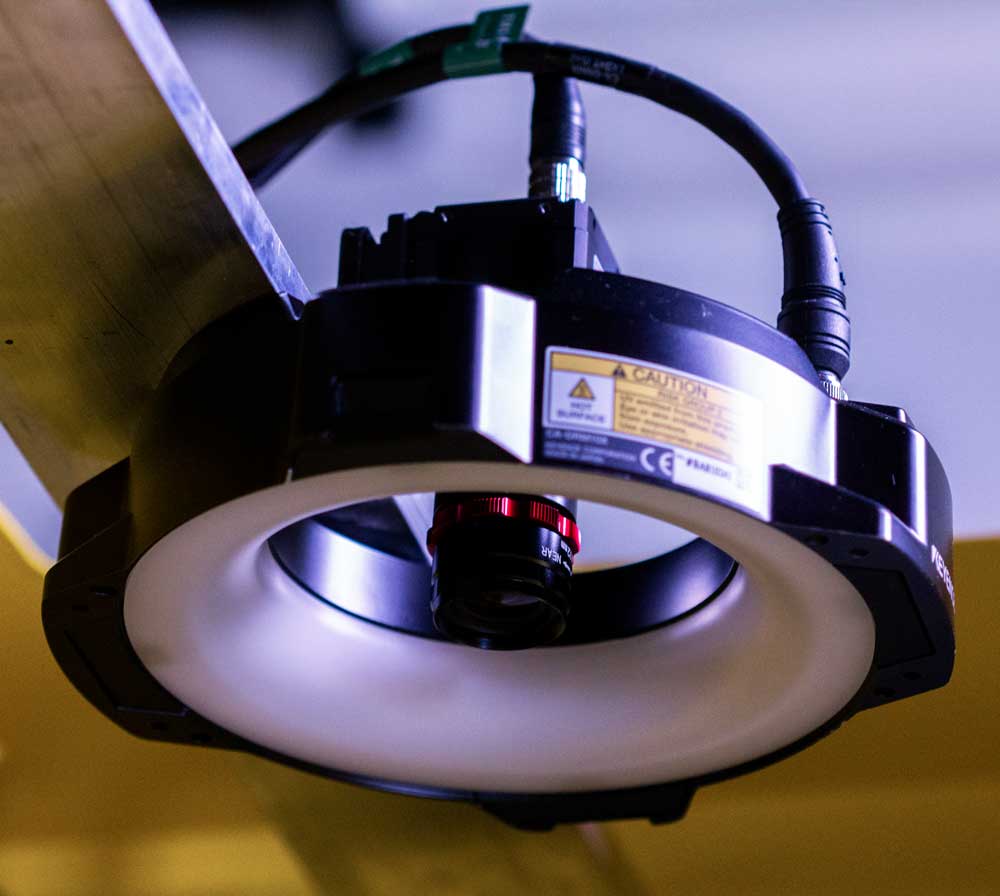
The manufacturing environment is defined by its ability to manufacture goods using assembly lines and machines. Factories should have the main intent to reduce costs, inspection cameraincrease production efficiency, and reduce hazards. This can be achieved by integrating robotic automation within their production process. In order to achieve true automation, however, a robot needs to know what it is working with, along with its physical measurements in order to perform its instructed tasks. Such applications include but are not limited to identification, measurement, positioning, flaw detection, etc. This can be done through the use of robotic inspection, or machine vision. Machine vision uses sensors and software algorithms to complete visual tasks and guide the equipment during product assembly.

There are different technologies available for automated measuring/inspection installations. Each of them with its own advantages and disadvantages based on the environment they are subject to. It is important to understand that the technology chosen is dependant on the material/object under inspection. Below is a list of the most commonly used inspection technologies:

  • Vision Systems
  • Measurement Sensors
  • Optical Comparators

This week’s post will be part 1 of 3, where we will highlight the capabilities of Vision Systems and their applications in the industry. The remaining topics will be discussed in posts to come.

Vision Systems

Vision systems use your typical sensors to detect if an object is present. If the sensor is triggered, a camera will capture an image. Then, depending on the machine’s software, it will determine whether or not machine instructions will take place based on the reference image captured. Depending on the application, manufacturers have two choices with regards to vision systems: 2D or 3D.

2D machine vision uses a camera to capture images of an object and can detect variations in contrast. Applications that involve 2D vision systems can include label orientation, barcode reading, defect detection, pattern or color inspection, etc. 2D vision systems are well known in the automation industry for their simple and effective inspection capabilities. As you would expect, 2D machine vision limitations include ambient lighting, contrast variations, and parallax. 

vision system3D vision systems are capable of sensing the height of an object. This type of vision system has multiple ways to create a 3D image. These include the use of multiple cameras which splice images together, structured light projectors which sense optical patterns and captures an ideal image, and laser triangulation to follow the profile of an object and create a digital geometry. Recently, manufacturers have begun to use 3D machine vision more due to its more accurate dimensional data. By using 3D vision, a robot can also sense variations in its physical environment and adapt accordingly. This feature is extremely useful for bin picking robots where objects are in random poses located in a container like a box. Hence, the majority of industrial robots work in the three-dimensional world.
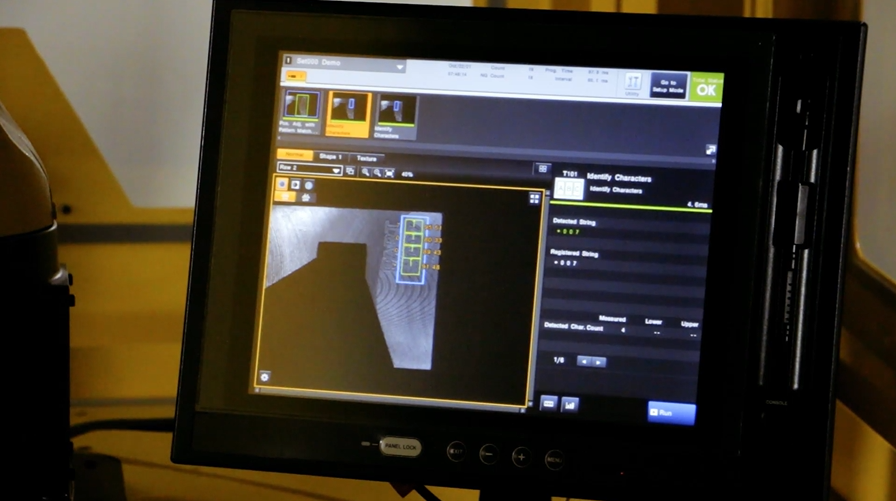
Vision Systems are very capable of performing robotic guidance. By using the processes stated above, guidance systems can locate the position and orientation of a part, and compare it to a tolerance that takes into account the contrast, lighting, scale, rotation, etc. In other words, 2D and 3D systems can locate an object anywhere within the vision range of the camera, and perform programmed robotic instructions accordingly.

A few benefits vision systems present are listed below:

Reduced Defects
vision system screenVision systems have the capability to notice when there are errors or discrepancies between products. This could include incorrect physical structure (damaged or manufactured wrong), mislabeling of the products, etc. These errors cost manufacturers money when needing to replace or recall product.

Increased Production
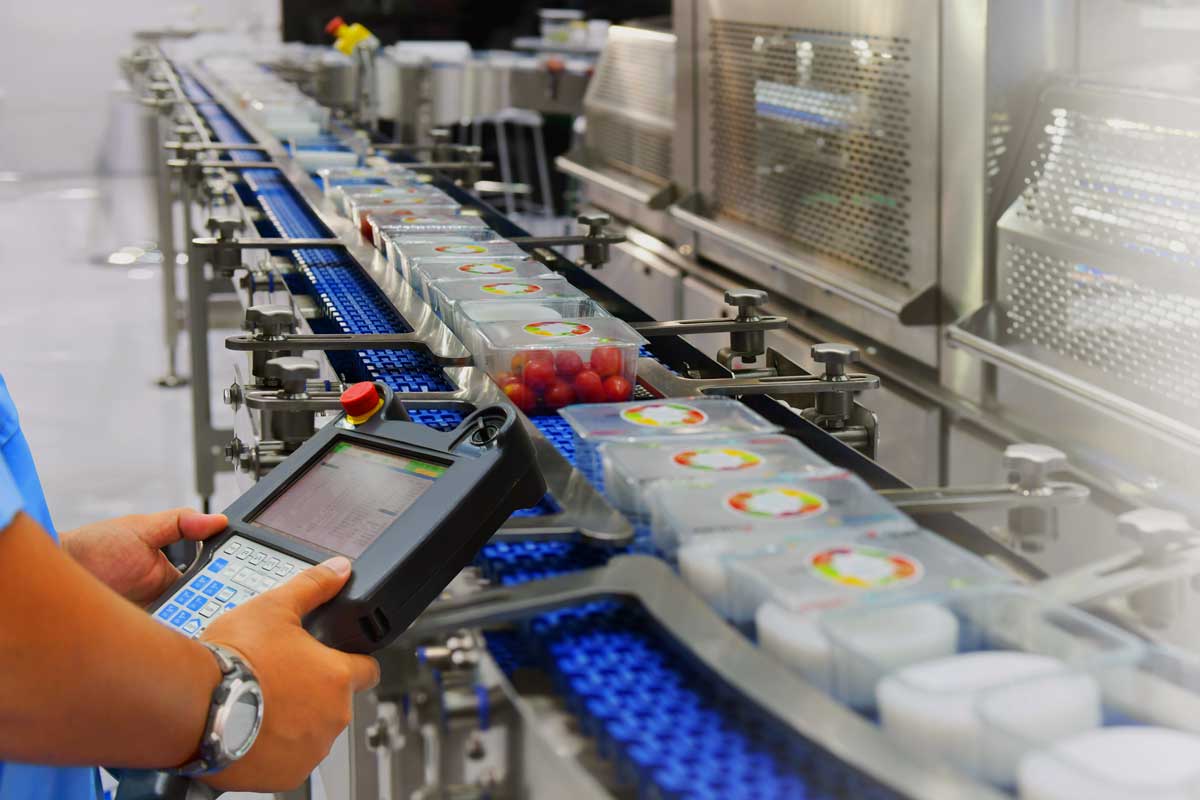
Some manufacturing environments still rely on human inspection of products. With automated vision systems, products can be accurately inspected. This will save time and money while still maintaining a strict schedule. Vision systems can also increase efficiency by analyzing products as they move down production lines. An example could be as a product comes off the assembly line, it may be in different position orientations. Through machine vision, and the correct software, a machine would know where to grab or position the product to correctly manufacture or package it.

That concludes the content for this week’s post on Robotic Inspection Installations. In later posts, we will touch on the remaining two topics stated above. Please feel free to contact us regarding any of the stated material, or if you have questions about our products: https://diy-robotics.com/contact/.

References

THE IMPORTANCE OF SUPPLY CHAINS

The acquisition of reasonably priced materials can make or break a company. In our modern world, industries and consumers are expecting goods to be delivered faster and cheaper than ever seen before. Industries must also ensure sufficient product is being delivered or created to match demand or run the risk of empty or leftover inventory. Meeting these constraints is highly dependant on the effectiveness of a company’s supply chain.

What is a Supply Chain?

In simple terms, a supply chain is the activities required by organizations in order to acquire and/or deliver goods. These activities usually include the transformation of raw materials into an end product for a customer, and the transportation in-between. Without an effective supply chain, a company runs the risk of reducing customers or losing an advantage over other competitors.

chain supply

Important Aspects

Supply chains are an essential part of the business structure and drive the economy. Understanding the following key aspects of what a supply chain is and how it operates is crucial for any business.

Diversity

Not all supply chains are operated by the same organization. In fact, the majority of supply chains involve many parties with different corporate interests. Therefore, companies may not be aware of other participants within the supply chain.

For example, a raw resource company that extracts iron ore and refines it to steel may sell it to an industry that makes robotics parts and electronics overseas. From there, the robot manufacturer would produce and assemble the robots to sell as full robotic cell assemblies to another industry that would use the robots on an assembly line (and the supply chain would continue from there). The ore refining company would have no insight on the business to which the robotic cell industry sold since it is on the other end of the supply chain. However, both are dependant on each other. If either company were to remove itself from the supply network (by going out of business or leaving the trade network), both companies would suffer.

That being said, any company would ideally seek to maximize its profits. If a company was to increase the price of its materials at the beginning of the supply chain, it would ultimately affect all other participating companies down the line, leaving the company or consumer at the end with an excessive cost. This could result in the ‘end’ company or consumer seeking another supplier and therefore disrupting the current supply chain. Organizations must work in cohesion by offering fair prices in order to construct an effective supply chain and not lose consumers. Doing so will increase the profitability of all organizations involved.

Supply & Demand

In order to maintain a steady supply chain, resources must be frequently available. When prices go up, delays become long, and when it is hard to get the required resources, industries will be unable to meet orders or schedules by their consumers. This will disrupt all players further down the supply chain and can greatly affect profitability since customers will look elsewhere to receive their goods. It is a smart strategy to have a plan to find another supplier before the previous is unable to provide the required recourses.

Chain supply

Despite the several layers of companies involved within a supply chain, it only operates effectively if there is customer behavior at the end of the chain (customer demand). Supply chain processes should be co-ordinated to focus on a customer’s needs. If no customers are purchasing goods from an ‘end’ company, the supplier will see fewer profits due to decreased demand, and vice versa.

Unexpected Events

Being the main contributor to supply chain disruption, unexpected events should be properly prepared for. These events can be classified into two categories: internal and external. Internal events usually entail anything which the supply chain companies are responsible for. This involves things like product recalls, transportation disasters, cost escalation, etc. External events involve occurrences that aren’t controlled by the supply chain company like border restrictions, natural disasters, importing taxes, etc.

For example, in recent events from the COVID-19 pandemic, many supply chains have been disrupted or halted due to the closing of borders and increased importing protocols. The global economy was greatly affected by the shutdown of businesses and we are still recovering. This is a prime example of an external unexpected event: a global pathogen.

In both cases of unexpected events (and decreased supply), keeping an inventory can prove quite useful. By having an excess of materials or products, any company which is experiencing slowdowns due to unexpected events can still fulfill its procedures. In severe terms, an inventory can also give a company enough time to find another material supplier. Many retail and industrial businesses own and manage storage facilities (warehouses) for these scenarios if they arise.

In the case where products can not be delivered or when the prices of the products go up, exploring a second-hand market is always an option. This gives the consumer company time to create a complete order when the delivering company fails to meet expectations. For example, a car manufacturing company that ordered a number of industrial robots only received a fraction. In order to stay on schedule, second-hand robots may need to be purchased. By knowing your supply chains, scoping out when second-hand purchasing is needed will be an easy task.

Chain supply

Conclusion

Therefore, performing due diligence with the supply of resources, internal/external events, company diversity, and the demand within or affecting the supply chain will allow for it to perform smoothly. That concludes this week’s post, if you have any questions about supply chains and their meaningfulness within an industry or if you have any other questions, please feel free to visit our contact page: https://diy-robotics.com/contact/

References

  • Coupa. “5 Scary External Factors for Supply Chains.” Coupa, 31 Oct. 2020, https://www.coupa.com/blog/supply-chain/5-scary-external-factors-for-supply-chains
  • “What Is Supply Chain Management and Why Is It Important?” Indeed Career Guide, https://www.indeed.com/career-advice/career-development/what-is-supply-chain-management-and-why-is-it-important.

OPTIMIZED FACTORY SHUTDOWNS

In order to be on track with today’s fast-paced, technology-driven world, industries have begun integrating automated processes to their production floors for a more efficient way of manufacturing goods. Robotic installations are a prime example of a crucial technology needed in present-day manufacturing. When performed correctly, robotic integration has many benefits. However, there are precautions that must be taken in order to ensure the technologies are installed swiftly and correctly. Often, robotic integrators are forced to shutdown equipment, or entire production floors in order to achieve this. This is referred to as Factory Shutdowns.

What is a Factory Shutdown?

As the name implies, a Factory Shutdown is a temporary closure of a production building to perform maintenance. Usually, these shutdowns are done to perform equipment inspections or deal with unplanned downtime. They are also performed to allow the integration of new equipment or technologies. Time, effort, and money devoted to shutdowns can sometimes be underestimated. This is due to the fact that elaborate planning and executions are required. Integrators may be unaware of certain layouts on a machine floor and will need equipment to be relocated to install their technologies properly. Or perhaps a software component within the machines (new and old) must be compatible in order to operate as one. Processes such as these are lengthy and costly, the company or the integrator must ensure every aspect of the integration process is planned and executed correctly to not waste possible production time, and in turn, reduce profits.

How DIY Robotic Cells can Help

How to Avoid or Reduce Shutdowns

Due to the nature of shutdowns and how they reduce profitability, companies should try to reduce the time spent in shutdown, or eliminate them entirely. Below are a few solutions to optimizing factory shutdowns due to robotic installations:

  • Develop a strategy in advance on how to accomplish integration. This includes assigning job tasks, resource planning (people, materials, tools), risk and safety assessments. This ensures that if any aspect of the integration process is delayed, there is a concrete plan set in place to put it back on track.
  • Schedule enough time in the case that issues arise. No matter how detailed a project plan is, unplanned work is inevitable. Not accounting for this work can have a huge impact on a budget or timeline. A time threshold should be set in place to ensure unseen issues do not ruin a project.
  • Employ an integrator with a time-efficient process to installation. This could involve prebuilding equipment that can be installed with ease, rather than supplying a company with only the parts.
  • Employ an integrator that offers a turnkey solution. Since all phases of integration are consolidated under one company, tasks are easier to plan, communication errors are less likely to occur, and any errors in integration are left to the experts. This will save a tremendous amount of time, for both parties.
  • If there are multiple production devices available, integration of the new technologies could take place on one of the devices while the others are still operating. This ensures the product is still being created while upgrading the upgrade is taking place. If there is an error with integration, only one machine would be affected.

How DIY Robotic Cells can Help

Factory shutdowns are a lengthy process. Companies should find a robotic integrator that can install technologies effectively, while still optimizing installation time. DIY Robotics provides the necessary solution to optimizing shutdown time. All DIY Robotics products come pre-built which reduces installation time greatly. Our cells are also modulare, which means they can be moved or altered with ease. Many robotic installations are bolted to the ground and therefore are fixed in position. These robots take unnecessary time to install or maintain (adjustments). By choosing DIY Robotics products, installation or maintenance can be easily executed due to its modulare capability. DIY Robotics also offers its products in turnkey solutions through a panel of official integrators familiar with the product. Integration/Customization of our machines can also be made at our facilities. All unexpected errors would be addressed before delivery, and any unique customizations would also be established. This could involve certain cell layouts, adjustments on the robot, custom EOATs, etc. Therefore, it would only take a few days to make a production line operational.

What is a Factory Shutdown?

All of these benefits listed above can help reduce shutdown time tremendously. A shutdown timespan of 2-4 weeks could easily be reduced down to 2-4 days with our products. If you are interested in learning more about our robotic cells, or have a question regarding other technical material, please feel free to visit our products page or contact us.

References

WHAT TO KNOW ABOUT ROBOTIC CUTTING INSTALLATIONS – Punch & Die, and Routers

Automation has become one of the essential building blocks for any manufacturing company. It saves money and helps eliminate hazards within the workspace. One of the most common practices which should incorporate automation is cutting installations. Automated cutting installations provide a high accuracy, costeffective way to cut and shape materials without subjecting workers to dangerous components. 

In this post, the final topics of our series on robotic cutting installations will be addressed: Punch & Die, and Routers. In previous posts, we touched on the other two applications, Laser Cutting and Ultrasonic Blades. If you are interested in either of these topics, you can find the content located at these links: 

Laser Cutting here

Ultrasonic Blades here

Punch & Die

Punch and Die (also known as Punching) is a cutting process that forces a tool (the punch) through a workpiece to create a hole or cut via a sheer load. A die is located on the opposite side of the workpiece to support the material around the perimeter of the hole profile. This is to ensure a clean cut is made and all forces are correctly directed to avoid deformations. Clearance between the punch and die is needed to prevent the punch from impacting the die. This clearance is dependant on the hardness and thickness of the material, and the type of profile desired

Punch and Dies are often made of hardened steel, or a material tougher than that of the cutting material. Punch and Dies are most commonly used to cut metals and plastics. This equipment is usually mechanically operated since a very large load may be required to cut certain metals. However, simple punches can also be hand-powered. Punching is often the cheapest method for creating holes and cuts due to its simple process. Leftover material can also be recycled to create more products (whereas routers grind away reusable material). Punching is used in high production settings where it can cut at an efficient rate and is extremely accurate. 

Punching is usually seen in metal cutting industries where parts are produced at a large rate. Automotive manufactures must produce various parts for their vehicles, and the Punch and Die is a common method used to do so. 

Safety

The amount of force required to pierce the material between the Punch and Die is quite substantial and therefore dangerous. This machinery could easily separate flesh and bone and should be averted from human contact. By installing a robotic cell, it would eliminate any chance of human coming in contact with an operating punch an die while still keeping an efficient production rate. 

Routers

A Router is a grinding tool that uses a motor and a specifically designed cutting bit. This bit spins at an extremely high speed which (depending on its type) can cut through wood, plastics, aluminium, and most metals. Various shapes and profiles for bits are available to allow for customed grinding. Basic routers can be seen in woodworking and are usually handheld or affixed to a table. Industrial routers, however, are usually automated through the use of a robot since they are capable of accurately following specific path and/or geometry. 

Unlike the other cutting methods discussed in past blogs, routers possess the ability to cut, shape, and carve materials in 3D (rather than 2D surfaces). Although ultrasonic blades can be used in 3D shaping, they are not as accurate or efficient as routers. Specific depths and contours of a material can be met through the use of routers which may be essential to certain manufactures (i.e. Automotive parts). Routers can be incorporated with CNC machines to allow for an efficient 3-axis way to create 3D parts. 

Safety

The bits that routers are equipped with have the capability to grind away hard materials and therefore would be a risk if humans interacted with it directly. Like any cutting application, it would be ideal to have protective barriers limiting human contact with hazardous devices. Robotics cells provide the necessary safety precautions for this cutting application. 

Conclusion

That concludes this three-part series on robotic cutting installations. Each topic has gone into detail about their advantages, process, and safety. If you missed the other two topics on cutting installations, or perhaps you are interested in other technical topics, please feel free to visit our blog page: https://diy-robotics.com/blog/. If you have any questions or concerns regarding this topic or would like some insight to our products, please feel free to Contact UsStay connected with DIY Robotics for more technical posts in the near future. 

References

SELECTING THE RIGHT INTEGRATOR FOR AN AUTOMATION PROJECT

As technologies advance, new processes in manufacturing present themselves all the time. These processes can save time and money, boost production efficiency, and create more market opportunities. However, most manufacturers need the assistance of an outside integrator to establish these technologies, since they are not familiar with the new systems. Finding and selecting the right integrator that suits all business needs is not an easy task. The right integrator should understand a company’s situation and goals, and develop a plan to execute them. In this article, we will address some key points when selecting an integrator, and how they are essential to achieve an organization’s vision.

The Five Key Details

Field of Work

When selecting an integrator, the first action should be to ensure that their field of work matches what technologies you want to implement. Does the selected integrator deal with the appropriate products to achieve a company’s vison? Let’s say a company was working with a computer software integrator that mainly deals with IT systems, when the desire is to implement an automated labeller into a machine floor. This situation would not be ideal for both parties. The company should have been working with an automation integrator.

Expertise & Experience

It is crucial for an integrator to have the required credentials, expertise, and experience in the field they work with. If their expertise matches your goals, you have found the right integrator. If they specialize in a specific technology which is not useful for your company, they might not have enough general knowledge for your specified solution. If the chosen integrator shares a brand or company with the equipment your company already possesses, this integrator may be the best choice (due to it direct specialization).

As for experience, there may be projects or research that an integrator has conducted which correlates with your company’s interests. It is also important to know if an integrator has had previous successful business operations. If an integrator provided poor service, or did not meet expectations, it would not be ideal for another company to work with them in the future.

Knowledge

Methodology & Maintenance

An integrator should have a direct approach when implementing their systems in any workspace. This could involve delivery promises, risk analysis, and overall timespan. Effective planning is key, and an integrator needs to ensure they do not use up much of their consumer’s time. Time spent installing the integrator’s technologies could be time spent making money.

Offering a maintenance system to their products is also an important aspect which should be available with an integrator. If any errors should arise from using an integrator’s product, a company should assume that the integrator possesses the necessary solution to stop the problem. This way it puts the experts in control which saves time and stops unnecessary troubleshooting if a company were to do it themselves.

Compatibility

Compatibility between an integrator and an organization is essential. Both parties (being business partners) should be on the same page with regards to implementing the technologies effectively. The integrator should ensure all goals of the organization are being met, provide ongoing support through installation, and keep time and cash- usage low. Expenses are an organization’s biggest fear. Although an integrator may have exceptional expertise and product quality, the overall cost may be a deciding factor. It would also be ideal for an integrator to utilize technical terms the organization is accustomed to. This could involve programs or computer languages of their customer’s equipment. This is to ensure complete understanding when initiating the consumer to the new technology, and therefore gives them the best experience.

Compatibility

Knowledge Transfer

Training on how to operate the equipment should be common practice with any integrator. An organization deserves to know how equipment is operating within their workspaces. All knowledge of the product should be available to the organization for review. This could range from technical booklets, operation instructions, troubleshooting tips, etc. By acquiring crucial knowledge from the integrator, organizations reduce the risk of downtime with the newly installed systems and keep a strong relationship between both parties.

Conclusion

An organization’s success greatly depends on the integrator chosen. There are several factors (as stated above) that should be taken into account during the selection process. Taking the time to research various integrators and their expertise, methodology, and compatibility will be well worth it in the end.

At DIY Robotics, we offer turnkey and DIY solutions while still keeping a low cost with our ‘plug-&-play’ products. Free support is available for all organizations who select our products. We offer the development of your internal resources by supplying technical documents and training programs. We also make the selection of a robotic cell integrator an easy task with our panel of official integrators (for turnkey solutions). At DIY Robotics, we value our customer’s experience above all else. If you have any questions regarding our products, list of integrators, or topics addressed in this post, please feel free to reach out on our website: https://diy-robotics.com/contact/

References

  • McCarthy, Matt. “Automation Solutions: How to Choose the Right System Integrator for You!” Intec Automation, Inc., Intec Automation, Inc., 7 Oct. 2021, https://www.intecautomation.com/automation-solutions-how-to-choose-the-right-system-integrator-for-you/.
  • “Turnkey Industrial Robotic Solutions – DIY-Robotics.” DIY, 22 Nov. 2021, https://diy-robotics.com/turnkey-solutions/.

WHAT TO KNOW ABOUT ROBOTIC CUTTING INSTALLATIONS – Ultrasonic Blades

Robotic cutting is an automated process of shaping or removing material. This process is high in accuracy, speed efficient, and quite cost-effective. This is why industries have been evolving their workplaces to involve these robots and their applications. It provides the necessary criteria to increase overall efficiency and helps eliminate any hazards workers are subject to when near cutting installations.

Automated cutting comes in many different forms. These include but are not limited to Laser Cutters, Ultrasonic Blades, Punch and Die, and Routers. In a previous post, we talked about Laser Cutting and its applications. If you are interested in the information supplied there, please visit the web page here.

In this post, we will be covering Ultrasonic Blades and their applications, and touch on the remaining topics (Punch and Die, Routers) in a later post.

Ultrasonic Blades

First developed in the 1950s with drills, ultrasonic technology has a wide range of applications and is routinely used in industry. Due to their accurate cutting capabilities, robots are often equipped with them to ensure the cleanest cuts out of selected materials. Ultrasonic cutting is commonly used with textiles and food products and can even be seen in medical practices with bone surgery. As for the industrial side, many factories which incorporate ultrasonic blades into their production procedures will cut plastics, rubbers, and foam (since they are often produced in bulk).

cutting bladeUltrasonic Blades rely on ultrasonic vibrations to allow them to cut various materials. Ultrasonic Blades vibrate around 20 – 40 kHz (20000 – 40000 times per second), which can easily cut through the materials stated above. This blade vibrates so fast that the material between each stroke is minuscule compared to that of the blade size. Therefore, cuts are often cleaner and more accurate with minimal debris compared to other cutting applications. Depending on the thickness of the material or speed constraints a higher frequency may be required.

The cutting blade has what is called a natural frequency. By adding external forces that correspond to the blade’s natural frequency, a large oscillation is achieved. This is known as resonance. Throughout its operation, the ultrasonic blade uses what is called the Piezoelectric effect or Magnetostriction to maintain this resonance.

human safetyAlthough the ultrasonic blade is not recommended to cut metals, it makes up for it by being one of the most accurate ways to cut. Material lost during the separation process is also reduced compared to other cutting methods. Laser cutters burn away unwanted material, and Routers carve it to dust. This saved material from the ultrasonic cutter could be recycled to create more products and therefore reduce costs. The ultrasonic blade also removes any chance of the cutting material being ignited. Laser cutters present that danger due to the high-temperature laser and routers from the friction of griding. Ultrasonic cutters are generally quite cheap compared to other cutting methods, and the blades are easily replaceable.

As for the ultrasonic blade disadvantages, is not as efficient as laser cutters or routers when it comes to engraving or carving designs. The ultrasonic blade is meant for separating materials, not shaping them. This cutting method is also limited to softer materials like plastics, rubbers, and foams.

Safety

Like any cutting application, all personnel should ensure they are a reasonable distance away from the machinery to avoid injury; but that should be standard practice when dealing with any robotic automation. Ultrasonic blades have the ability to cut through flesh and therefore should have some protective barriers to avoid human contact.

Integration of a robotic cell would be ideal to increase the safety of this technology. Not only do robotic cells allow full operating capacity, but they also restrict human contact. DIY Robotics offers a wide range of Modular Robotic Cells, which allow for a safe mechanical workspace. The modularity of these cells allows for full flexibility when any changes or layouts are required by the user. If you would like more information regarding our Modular Robotic Cells, please feel free to visit our website.

That concludes the content for Ultrasonic Blades. Please stay connected for the final in the following weeks: “What to know about robotic cutting installations – part 3” where we will touch on Punch and Die, and Routers. If you are interested in the topic discussed or have any questions regarding the material, please feel free to contact us. We shall put you in touch with one of our experts.

References