window.dataLayer = window.dataLayer || []; function gtag(){dataLayer.push(arguments);} gtag('js', new Date());gtag('config', 'UA-141884085-1'); gtag('config', 'AW-761820283');

WHAT TO KNOW ABOUT ROBOTIC CUTTING INSTALLATIONS – Punch & Die, and Routers

Automation has become one of the essential building blocks for any manufacturing company. It saves money and helps eliminate hazards within the workspace. One of the most common practices which should incorporate automation is cutting installations. Automated cutting installations provide a high accuracy, costeffective way to cut and shape materials without subjecting workers to dangerous components. 

In this post, the final topics of our series on robotic cutting installations will be addressed: Punch & Die, and Routers. In previous posts, we touched on the other two applications, Laser Cutting and Ultrasonic Blades. If you are interested in either of these topics, you can find the content located at these links: 

Laser Cutting here

Ultrasonic Blades here

Punch & Die

Punch and Die (also known as Punching) is a cutting process that forces a tool (the punch) through a workpiece to create a hole or cut via a sheer load. A die is located on the opposite side of the workpiece to support the material around the perimeter of the hole profile. This is to ensure a clean cut is made and all forces are correctly directed to avoid deformations. Clearance between the punch and die is needed to prevent the punch from impacting the die. This clearance is dependant on the hardness and thickness of the material, and the type of profile desired

Punch and Dies are often made of hardened steel, or a material tougher than that of the cutting material. Punch and Dies are most commonly used to cut metals and plastics. This equipment is usually mechanically operated since a very large load may be required to cut certain metals. However, simple punches can also be hand-powered. Punching is often the cheapest method for creating holes and cuts due to its simple process. Leftover material can also be recycled to create more products (whereas routers grind away reusable material). Punching is used in high production settings where it can cut at an efficient rate and is extremely accurate. 

Punching is usually seen in metal cutting industries where parts are produced at a large rate. Automotive manufactures must produce various parts for their vehicles, and the Punch and Die is a common method used to do so. 

Safety

The amount of force required to pierce the material between the Punch and Die is quite substantial and therefore dangerous. This machinery could easily separate flesh and bone and should be averted from human contact. By installing a robotic cell, it would eliminate any chance of human coming in contact with an operating punch an die while still keeping an efficient production rate. 

Routers

A Router is a grinding tool that uses a motor and a specifically designed cutting bit. This bit spins at an extremely high speed which (depending on its type) can cut through wood, plastics, aluminium, and most metals. Various shapes and profiles for bits are available to allow for customed grinding. Basic routers can be seen in woodworking and are usually handheld or affixed to a table. Industrial routers, however, are usually automated through the use of a robot since they are capable of accurately following specific path and/or geometry. 

Unlike the other cutting methods discussed in past blogs, routers possess the ability to cut, shape, and carve materials in 3D (rather than 2D surfaces). Although ultrasonic blades can be used in 3D shaping, they are not as accurate or efficient as routers. Specific depths and contours of a material can be met through the use of routers which may be essential to certain manufactures (i.e. Automotive parts). Routers can be incorporated with CNC machines to allow for an efficient 3-axis way to create 3D parts. 

Safety

The bits that routers are equipped with have the capability to grind away hard materials and therefore would be a risk if humans interacted with it directly. Like any cutting application, it would be ideal to have protective barriers limiting human contact with hazardous devices. Robotics cells provide the necessary safety precautions for this cutting application. 

Conclusion

That concludes this three-part series on robotic cutting installations. Each topic has gone into detail about their advantages, process, and safety. If you missed the other two topics on cutting installations, or perhaps you are interested in other technical topics, please feel free to visit our blog page: https://diy-robotics.com/blog/. If you have any questions or concerns regarding this topic or would like some insight to our products, please feel free to Contact UsStay connected with DIY Robotics for more technical posts in the near future. 

References

WHAT TO KNOW ABOUT ROBOTIC CUTTING INSTALLATIONS – Ultrasonic Blades

Robotic cutting is an automated process of shaping or removing material. This process is high in accuracy, speed efficient, and quite cost-effective. This is why industries have been evolving their workplaces to involve these robots and their applications. It provides the necessary criteria to increase overall efficiency and helps eliminate any hazards workers are subject to when near cutting installations.

Automated cutting comes in many different forms. These include but are not limited to Laser Cutters, Ultrasonic Blades, Punch and Die, and Routers. In a previous post, we talked about Laser Cutting and its applications. If you are interested in the information supplied there, please visit the web page here.

In this post, we will be covering Ultrasonic Blades and their applications, and touch on the remaining topics (Punch and Die, Routers) in a later post.

Ultrasonic Blades

First developed in the 1950s with drills, ultrasonic technology has a wide range of applications and is routinely used in industry. Due to their accurate cutting capabilities, robots are often equipped with them to ensure the cleanest cuts out of selected materials. Ultrasonic cutting is commonly used with textiles and food products and can even be seen in medical practices with bone surgery. As for the industrial side, many factories which incorporate ultrasonic blades into their production procedures will cut plastics, rubbers, and foam (since they are often produced in bulk).

cutting bladeUltrasonic Blades rely on ultrasonic vibrations to allow them to cut various materials. Ultrasonic Blades vibrate around 20 – 40 kHz (20000 – 40000 times per second), which can easily cut through the materials stated above. This blade vibrates so fast that the material between each stroke is minuscule compared to that of the blade size. Therefore, cuts are often cleaner and more accurate with minimal debris compared to other cutting applications. Depending on the thickness of the material or speed constraints a higher frequency may be required.

The cutting blade has what is called a natural frequency. By adding external forces that correspond to the blade’s natural frequency, a large oscillation is achieved. This is known as resonance. Throughout its operation, the ultrasonic blade uses what is called the Piezoelectric effect or Magnetostriction to maintain this resonance.

human safetyAlthough the ultrasonic blade is not recommended to cut metals, it makes up for it by being one of the most accurate ways to cut. Material lost during the separation process is also reduced compared to other cutting methods. Laser cutters burn away unwanted material, and Routers carve it to dust. This saved material from the ultrasonic cutter could be recycled to create more products and therefore reduce costs. The ultrasonic blade also removes any chance of the cutting material being ignited. Laser cutters present that danger due to the high-temperature laser and routers from the friction of griding. Ultrasonic cutters are generally quite cheap compared to other cutting methods, and the blades are easily replaceable.
As for the ultrasonic blade disadvantages, is not as efficient as laser cutters or routers when it comes to engraving or carving designs. The ultrasonic blade is meant for separating materials, not shaping them. This cutting method is also limited to softer materials like plastics, rubbers, and foams.

Safety

Like any cutting application, all personnel should ensure they are a reasonable distance away from the machinery to avoid injury; but that should be standard practice when dealing with any robotic automation. Ultrasonic blades have the ability to cut through flesh and therefore should have some protective barriers to avoid human contact.

Integration of a robotic cell would be ideal to increase the safety of this technology. Not only do robotic cells allow full operating capacity, but they also restrict human contact. DIY Robotics offers a wide range of Modular Robotic Cells, which allow for a safe mechanical workspace. The modularity of these cells allows for full flexibility when any changes or layouts are required by the user. If you would like more information regarding our Modular Robotic Cells, please feel free to visit our website.

That concludes the content for Ultrasonic Blades. Please stay connected for the final in the following weeks: “What to know about robotic cutting installations – part 3” where we will touch on Punch and Die, and Routers. If you are interested in the topic discussed or have any questions regarding the material, please feel free to contact us. We shall put you in touch with one of our experts.

References

Understanding Dispensing Robots

Dispensing is one of the many tasks that a robot can do. There are several aspects that need to be understood before selecting a good dispensing robot. Let’s go through them to try to make things clear.

What is it? How does it work?

As the name suggests, a dispensing robot is any robot that dispenses a variety of items such as adhesives or paint. Other than dispensing materials, it also sometimes sorts and counts items, transfer parts or fills up tanks.

Their most important characteristic is that they are leak and ejection-proof. The nozzle end opens up to pour or dispense a specific predefined quantity of material or fluid at a specified location. It then closes. They use methods like precise shutoff and “suck back” to reduce the wastage of fluids via diaphragmatic valves and motors.

Types and applications

There are various types of dispensing robots available on the market adapted to all sorts of requirements. These types are defined by the kind of material they are dispensing, the needed speed and accuracy, which number of axes are required, and also which industry the robot will be used in. In light of that, two broad categories emerge One to three-axis robots and four to six-axis robots. Let’s look at them in-depth:

One to three axis: These robots are only capable of linear motion, and lack rotational movements because they are limited between one to three axis. This being said, thanks to their limited movement, they can operate with high speed and accuracy. One example of this is a benchtop robot. One axis is controlled by the bench and the other by the Cartesian robot mounted on top. Similarly, SCARA are also in this category with (3-4 axis) variants. A classic example of this robot type is the toothpaste filling robots in the consumer goods industry.

Four to six-axis robots: Capable of moving in multiplanes, four to six-axis robots are also called robotic arms. They have joints that enable linear movements but also rotational movements. This allows these dispensing robots to work on angular planes, multiplanes, and dispense fluid in a rotational motion. A classic example of this kind of robot is the paint robots used in the automotive sector. Applications range is:

  • Electronics
  • Plastic parts in plastic industry
  • Automotive
  • Aerospace
  • Pharmaceutical
  • Paint dispensing
  • Wax seals
  • Adhesives

Benefits

Among the many benefits of automated dispensing, the increase in throughput and assurance quality of the product and process, for manufacturers, is really quite cost-effective in the long run. To list a few more benefits, dispensing robots:

  • Increase throughput
  • Increase process reliability and repeatability
  • Reduce unwanted dispensing
  • Reduce manufacturing time
  • Guaranty accuracy, irrespective of dispensing surface
  • Increase the ROI
  • Remove safety issues in manual dispensing
  • Reduce manufacturing costs

Choose the best fit

The selection process of the proper dispensing robot is an important aspect when aiming to obtain full benefits. The following factors should be taken into consideration to insure the selection of the proper dispensing robot:

  • Dispensing methodology
  • Dimensions of the robot
  • Size of the part or fluids
  • Material loading
  • Robot speed
  • Number of axes required
  • Dispensing path and movement in axis
  • Add-on capabilities to work across production lines

One of the most important things to remember when choosing any robot is that they are not supposed to replace the human workforce but rather increase the efficiency, reliability and throughput of that workforce’s production line. Automation in dispensing robots allows this operation to run around the clock. This solution is certainly not perfect, but the benefits are considerable. Once all the conditions to choose the correct robot are met and the right path is selected, a manufacturer will see a visible difference in their output.

Contact us for more information about our robotic cells that could fill up a dispensing task.

References

  • Roboworx, “Dispensing Robots,” 19 08 2021.
  • Assembly, “Implementing Dispensing Robots,” 06 12 2005.
  • M. building, “Considerations when choosing a dispensing robot,” 11 08 2020.

More about HEAT STAKING:

When assembling a part, some of the most important components to consider are the connections and joints. If the joints are weak, the whole structure will be weak. Heat Staking is the process of melting a boss from a plastic component into the hole of another component. The heating process can be accomplished using different ways such as hot air, ultrasonic system, or contact heating element.

Heat_Staking_process

Of the aforementioned options, heat staking is the one this article is dedicated to. It is a type of staking used in the plastics industry. Let’s dig a little deeper into that process to learn what it is and what is it used for.

Heat Staking:

The type of staking that involves melting a piece of plastic to hold two parts together in an assembly is called heat staking. During this process, the plastic boss is heated to a temperature where the boss melts and pressure is applied, then the boss is cooled down to form the bond. This process is low in cost compared to welding and other joint-making techniques. It can also be used in various industries because it offers the possibility of working on huge volumes in a cost-efficient manner.

Staking is a good solution to avoid vibrations and stress cracks. It can also be a way to avoid using additional hardware to prevent possible quality control issues due to defects. Even more so than other methods, it benefits manufacturers because the whole process of combining materials is finished in a single cycle time. This process uses the same base material throughout, has more pull strength, and doesn’t cause any mechanical stress. There are various methods of heat staking. To only name a few: hot tool staking, hot air staking, ultrasonic, and focused infrared energy.

The process of heat staking is used for various applications. It ranges from joining automobile panels to medical equipment to packaging, and more. In this blog post, we will turn the spotlight on two innovative heat Staking methods designed by Extol. The InfraStake and the Nanostake are, as mentioned, innovative technologies with the ability to stake in tight and delicate spaces.

The InfraStake

For this patent technology of heat staking, instead of a heating tip, infrared light is used to generate the heat. The InfraStake module is placed over the boss and its opening clamps the part to be staked. A concentrator is used to concentrate the heat only on the staking part. The IR bulb heats the boss radially and a punch performs a stake on the heated boss. To cool the part, airflow passes through the Infrastake module and then the punch retracts.

Robotic_Heat_staking_Cell_With_InfraStake

Here are a few benefits of InfraStake:

  • Safe for fragile components
  • Sturdy
  • High accuracy and repeatability
  • No smoke generation
  • High quality
  • High pull strength
  • Reduces stress joints
  • No surface damage
  • Mobile and modular
  • Low energy consumption
  • Changeable punch as per the requirements
  • Can be used in congested areas

The NanoSTAKE

This heat staking method is famous for its instant cooling effect. The staking rod cools down within a few seconds. This smart respond heating technology is also patented by Extol. The heating temperatures are regulated using low current value and increased efficiency. The current used is as low as 1.5A, making it easy for any connection.

The various benefits of this process are:

  • No plastic will get stuck
  • Can be used in congested areas
  • Easy connectivity
  • Low current-High performance
  • Comes with a LED indicator for real-time module status
  • The module remains cool even when the boss is heated

At DIY Robotics, we are collaborating with Extol and making a Robotic Heat staking Cell bundle, using the InfraStake technology. There are three models of InfraStake options depending on their stake dimensions: IS32, IS125, or ISM20.

Among the many heat staking and plastic staking technologies on the market, choosing the appropriate technology that can best serve your needs is quite a process. There are various factors that manufacturers need to consider before finalizing their choice. This is especially true when manufacturers want to adjust the staking process to their existing setup in order to save time and money. Manufacturers need to invest in the upcoming and latest technology that offers a short setup and installation time, high-quality machinery, and a quick ROI. One such solution is the DIY Robotics Heat Staking Cell with the Extol InfraStake heat staking module. Have a look at this new bundle and learn more about the InfraStake Technology.

References

Why a Packaging robot?

“Packaging can be a theater, it can create a story.”  ̶  STEVE JOBS

According to an Allied Market Research report, the global market for packaging robots is set to reach $4,649 million by 2023. Clearly, packaging is an important aspect of the manufacturing industry. Apart from protecting the product, packaging also improves the marketing of the product itself and its company.

Automated packaging installationsAutomated packaging installations not only provide quick ROI when deployed, but they also bring speed, accuracy and productivity to the production line. Let’s get into what packaging robots really are.

As the name suggests, packaging robots are used to palletize, carton and case products. Packaging can also include various other aspects like labelling, sealing or filling.

These robots mimic human hand movements to pack products. This allows them to pick, move, seal, label and pack. Different end of arm toolings can be added to the robot to best fit the product requirement. Articulated and delta robots are commonly used for packaging due to their degree of motion.

Benefits

Automated packaging installations give industries a huge boost in their productivity by reducing the time spent on this task. In the long run, this makes them far more cost-effective than manual labor.

Packaging robots are also quick between tooling changeovers. Their accuracy avoids damages caused by accidental drops or scratches. Using packaging robots can even prevent contamination in industries where it can be an issue like medical or food & beverage.

With the 6 axis robots, their movements, similar to the human arm, bring agility and allow for more complex manipulations. Packaging robots can also have a small footprint because of their capacity to be mounted in numerous ways. This helps save factory floor space.

Packaging robots require minimal maintenance and are capable of working in harsh conditions like fumes, dust and high temperatures. Unlike humans, they can operate 24/7. This increases the company’s production capacity without sacrificing the production efficiency and the quality of the product.

What to look for when choosing a packaging robot

Speed.

The packaging robot must match the speed of the production line. It helps speed up the whole production line and reduces the floor-to-market time of the product.

Flexibility.

The packaging robot should be compatible and flexible with a variety of product picking and placing. They could also be flexible to do other tasks such as labelling, palletizing, sorting, binning and more, if needed. Therefore, quick changeovers are a key point. Robots with a higher degree of freedom allow quick changeovers. There are automated tool changers available on the market which can reduce downtime.

Number of Axes.

Speaking of degrees of freedom, the number of axes is another key point manufacturers need to consider when investing in packaging robots. The more axes the robot has, the more flexible its actions will be. This minimizes downtimes and increases the productivity of the plant.

Budget.

This point tends to be overlooked, but the budget will help determine which compromise needs to be done to achieve the best ROI. To get the most out of a packaging robot, at DIY Robotics, we have a whole product line of affordable robotic cells. Contact one of our experts to find the perfect fit for your project.

Thanks to all the benefits mentioned above, like speed, accuracy, agility, and productivity, packaging robots are a great solution to boost profits. At DIY Robotics, we have succeeded in implementing all of the above-mentioned factors in our robotic cells. They are compact, customizable, mobile, and don’t require any specialist to program them. The cells are pre-fabricated solutions that enable manufacturers to simply plug and play them on their existing floor plan without any major changes in the blueprints. The integration of DIY Robotics modular cells on your floor will give you an edge over others on the market.

References

WHAT TO KNOW ABOUT ROBOTIC CUTTING INSTALLATIONS – Laser Cutting

Industries throughout the world have begun evolving their workspaces to include robotic automation. Often, in large-scale manufacturing environments, these robots perform repetitive or dangerous tasks with little to no error. In any manufacturing environment, it is essential to find a high accuracy, speed efficient way to shape or cut materials and products. In turn, this will save money, keep the manufacturing process steady, and eliminate any hazards workers would be subject to if they were to operate the cutting equipment themselves.

There are various technologies available for automated cutting. Each with its own benefits based on the material used in cutting, and the rate at which cutting should be achieved. Here are a few of the most common cutting technologies:

  • Laser Cutting: mostly used to cut organic material, plastics, & metals.
  • Ultrasonic Blades: best suited for soft plastics, rubbers, & foams.
  • Punch and Die: most effective with plastics & metals.
  • Router: quite practical with hard plastics & metals.

This post will go into detail on laser cutting, and touch on the remaining cutting technologies in a later post.

Laser Cutting

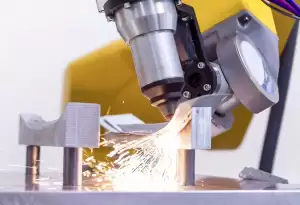
As the name suggests, laser cutting is the process of piercing a selected material with a high-intensity laser. Using this focussed beam of light, the device heats up the material surface to a point where it melts or vaporizes. Therefore, it has the ability to carve, engrave, and separate most materials based on the intensity of the light, and the time spent under the laser. The majority of laser cutting systems have the ability to follow a specific path or geometry indicated by the user or operating system. This allows for complete automation of the cutting.

Different types of lasers are better suited for cutting certain materials. High-powered lasers are generally used for industrial applications where large scale or large quantities of metal or plastics need to be cut. Whereas low-powered lasers are more effective on thinner or weaker materials like wood and plastics. Presently, there are three main types of laser cutters:

CO2 Lasers

First developed in the 1960s, a CO2 laser runs an electrical current through a gas-filled tube (composed most commonly with CO2, Nitrogen, Helium, and Hydrogen) to generate light rays in the infrared spectrum. These light rays average from 50 to 100 Watts in power, however, industrial machines can typically generate multiple kilowatts. The CO2 laser is the most common type used due to it being efficient and inexpensive.

This type of laser is most commonly used while working with metal, wood, and various plastics. It also has the ability to work with food products, fabric, and other organic substances like leather and rubber. It is important to mention that this type of laser should not be used on materials that are reflective; as it can damage the laser via back reflections.

YAG/YVO Lasers

Also known as Crystal lasers, the YAG (Yttrium-Aluminum-Garnet) or YVO (Yttrium-Ortho-Vanadate) laser cutter is one of the more unique automated separation tools. Using a carefully constructed crystal medium, this laser allows for an extremely high cutting power, which allows it to cut through thicker and stronger materials. This is due to smaller wavelengths of light being generated by the crystals, and therefore creates a higher intensity beam than that of a CO2 laser. Due to their high-intensity cutting abilities, crystal lasers are typically more expensive and have shorter lifespans than other laser cutters.

These lasers are versatile with regard to their material cutting abilities. They can be used with both metals and non-metals, and are useful for a large range of applications, including medical, military, and manufacturing processes.

Fiber Lasers

This class of laser generates its cutting abilities by amplifying light rays using specially designed glass fibers. A massive amount of light can be transported through these fibers; combined with an extremely small focal point, the result is a light laser intensity much stronger than that of a CO2 laser. Typically, fiber lasers consume the same amount of energy as a CO2 laser but are more expensive due to their more effective cutting capability. This laser also requires less maintenance and therefore is a longer-lasting alternative to crystal lasers.

Fiber lasers are best suited for metals and strong plastics. Fiber lasers can also be used with glass and can cut reflective materials without fear of back reflections.

Safety

Due to the nature of laser cutters melting and vaporizing the working material it is crucial to ensure proper ventilation is established so no toxic fumes escape the laser’s workspace, and no human tissue comes in contact with the laser point. High energy laser beams can also cause severe eye damage and must be contained behind light shielding. Laser cutters are typically enclosed systems that will not operate unless the safety precautions are met.

That concludes the content for our current post. Stay connected with DIY Robotics and read the next post in the following weeks “What to know about robotic cutting installations – part 2” where we will touch on the remaining topics. If you have any questions regarding the above material or would like insight on one of the other blog topics, please feel free to contact us.

References

Possible robotic applications for the metal industry

The metal industry is one of the biggest revenue-generating industries in today’s economy. It impacts various end-user applications and caters to a vast range of sectors: agriculture, automotive, medical, aerospace, construction, electronics, and many more. As it is such a huge industry, it needs automation to meet the standards and production rate of the demanded supply.

Robots accomplish various jobs in the metal industry. These tasks can vary from part handling to welding, assembly, painting, and cutting.

Let’s delve into some of the automation possibilities that robots can handle in the metal industry:

Part Handling:

This is one of the most common, yet one of the most necessary usages of robots in the metal industry. Part handling is basically picking either raw material or a finished product from one spot and placing it in another designated spot. It can also involve the robot operating with another machine like a forming press, a CNC, etc. Tasks included are, but are not limited to

  • Selection of parts
  • Reorienting
  • Sorting
  • Operating with classic metal industry machine (Press, Laser cutting, Plasma cutting, etc)

It allows the handling of large, heavy, and dangerous objects safely on a large scale and at a fast pace. Moreover, it provides high repeatability and efficiency with minimal changeover time between products.

Robotic Deburring:

Deburring is a necessary and important step in the metal industry as this makes the product more client-ready. This means high repeatability is needed for products to be consistent. When done by humans, errors increase and repeatability decreases. Automation helps manufacturers yield higher profits in a medium to long-term perspective. Robotic deburring also improves the quality of the produced part thanks to the fact that the robot’s settings and toolings can be customized according to each of the part’s requirements and be compliant with some part variations. This helps minimize defects.

Have a look at our DIY-Robotics Deburring Cell Bundle, developed in partnership with ATI Automation and RoboDK.

DeburringCell_Blog_MetalIndustry

Robotic Painting:

Metal painting has always been a health hazard for humans as it involves toxic components. Thankfully, robotizing this task helps reduce risks for workers. Also, robots have more consistency and precision than humans when applying paint.

In the automotive industry, some robots are used for paint jobs. GM motors and Volkswagen are good examples of this. Robots can do the initial primer, electrostatic, and final coat of paint in a short amount of time. They offer high flexibility, high quality, more control over the process, and all the while, decrease paint and material costs.

Robotic Welding

Welding is an operation where precision and consistency are both very much required. Due to this demand for precision, robotic welding has been a part of the metal industry for a long time.

Robotic welding guarantees high quality and high quantity welding with accuracy and repeatability. There are different types of robotic welding: laser, plasma, arc, TIG, MIG, and others. This technology saves industries both time and money. On top of that, it also helps reduce waste. All this makes it an expensive, but necessary investment. This is especially true for industries with small to medium-scale productions which have suffered a shortage of workers in recent years.

Welding_Blog_MetalIndustry

Some alternative solutions like the Robotic Welding Assistant have a better ROI for smaller productions that would like to automate more. It’s a collaborative solution that saves industries from hidden costs and it is ready to install and start-up.

Robotic Cutting:

Robotic cutting allows for high precision and higher quality cuts, irrespective of the complexity of the cutting blueprints. Some of the technologies used for robotic cutting are laser, plasma, waterjet, and others. Robotic cutting helps workers avoid working with high temperatures cutting and they even accelerate the process.

Robotic cutting is currently used mostly in the automotive, electronics, and sheet metal industries.

Robots are contributing more and more to the industrial revolution by doing mundane and repetitive work. In this blog, we only discussed a few Robotic Applications. There are many other robotic possibilities for the metal industry such as assembly, machine-tending, and quality checks. That last one is especially pertinent in a manufacturing industry of the automotive sector. With the development of Artificial Intelligence (AI), robot’s capabilities are increasing. The horizon is still expanding and there is still much more to go until we can maximize the usage of robots.

References

Part Entry Accessories for Robotic Cells – part 2

Thanks to the first section of this blog, we know that part-entry accessories are a great complement to an industry’s automation because they make it more profitable.

Next, we will look at part entry accessories when bulk feeding is not an option, and when a feeding mechanism is not restricted by the shape and size of the parts. So let’s get into it:

The Drawer:

We know what a drawer is in our kitchen house, and this drawer system is based on the same principle. An operator opens the drawer, feeds the part in before closing it to give it to the robot. Then, the robotic arm from the other side of the drawer collects the part, processes it, and puts it back. Drawers can be used for parts of all shapes and sizes. It is a perfect solution for offline productions that require the loading of parts by one or many operators.

Drawer_By_DIYRobotics

It is important to consider the robotic process before choosing this option. Multiple drawers can allow more efficiency and reduce downtime. That kind of configuration allows the robot to work on one drawer while the other is in the loading process by the operator.

Benefits:

  • Can house a vast range of products
  • Multiple customizable options (single or double)
  • Allows operator to work simultaneously on different drawers
  • Allows uninterrupted continuous production
  • Isolates the operator from the machine’s working space
  • Isn’t dependant on the parts’ geometrical symmetries

Some of the industries that use this feeder are metal, plastic, automotive, electronics, and pharmaceutical. Both single and double options are well known among industries.

Get a drawer for your DIY Robotics cell with the Lightbeam add-on.

The Rotative door:

This Rotative door allows operators to add or remove parts from the robot’s secure working space. These doors are helpful as they give operators uninterrupted access to the machine and can allow them to work simultaneously with the robot each on their own side of the door. This makes the part entry really quick and efficient. The selection of this part entry accessory depends on factors like operator safety, part shape and size, and production cycle time.

Benefits:

  • Used across variable part dimensions
  • Allows simultaneous work for both operator and machinery
  • Efficient and cost-effective solution
  • Safe for operators

All this makes it ideal for machinery maintenance and ensures secure access for the operator. Rotative doors are used in the automotive industry, metal industry, plastic industry, and many more.

Get a rotative door for your DIY Robotics cell with the Orbit add-on.

The Conveyor:

Conveyors are long moving tracks made of various materials (belt, roller, o’ring, air, etc.) that transfer parts from point A to B. The belts can be made of rubber, metal, plastic and can even be slotted. The selection of this accessory depends on the job the conveyor does and the requirement of the part. For example, if a certain number of finished parts need to be packed, a cleat conveyor can drop the finished parts from the slot into the packaging material. If any raw material needs to be taken to another level, a rubber conveyor could be chosen for better traction, a metal conveyor for spiral inclination, or a slotted one to separate the parts. The most important advantage of this part-feeding technology is that it can be used for any part irrespective of its shape, structure, orientation, weight, or material. This makes it popular across a vast array of industries.

Benefits:

  • High-speed feeding system
  • Compatible with most robots and machines
  • High accuracy and durability
  • Low, easy maintenance
  • Orientation does not affect feeding
  • Low-cost material handling

This technology is used in a wide range of applications such as, marking and coding, packaging, material handlingrobotics, assembly, rubber, and many more. 

SMEs can use these part-entry accessories for their changing production lines and gain a competitive advantage over larger industries.

SMEs should consider investing in part-entry accessories as it allows them to utilize their labor force more efficiently and increase their production throughput by automation. This one-time investment can help gain long-term profits and reduces the ROI time slab.

Contact us for more information about the part-entry accessories that best suit your needs.

References

Part Entry Accessories for Robotic Cells – part 1

According to the RIA (Robotic Industry association), in 2016, 34,606 robots were installed in North America alone. The main purpose of having robots in an industry is to reduce laborious, repetitive, and dangerous tasks. But to perform what they are intended to do, robots need material and parts to be fed in. This is where part entry accessories come into play. Automating this step helps industries utilize their workforce in other, more productive work.

What is a part entry accessory?

Part_entry_accessories_FeederBowl

As the name suggests, part entry accessories are used to enter raw materials into the assembly line and fetch the finish parts. They are mainly used for inline production to present parts in a specific orientation to the automated machine.

These robot accessories are required when the robot uses bulk parts that need to be presented in a specific orientation. Using these accessories reduces downtimes, the risks for operators, and part mishandling.

Let’s go through some of the most common part entry accessories:

Vibratory feeder bowls:

These vibratory feeder bowls are self-sufficient feeder systems customized according to the supplied part. They comprise a bulk hopper, vibratory mechanism, feeder bowl, a controlling system, and a vibrating track to present the parts to the robot. Parts are fed into the bowl via a hopper and moved across the outfeed track to the part outlet. They can usually sort and process up to 45 to 60 parts per minute. It is used in assembly lines to feed a machine with small randomly sorted individual parts oriented in a particular direction.

Before choosing this option, it’s important to consider the size, the mechanical structure, and the behavior of the parts that will be handled. The reason for this is that vibratory feeder bowls are best suited for symmetrical geometry parts to ensure a specific alignment. When in function, the part moves from the bulk hopper to the bowl, and then, the part to be fed passes through the outlet and is delivered to the desired location.

Benefits:

  • Cost-effective
  • Variable feed rate
  • Customizable bowl
  • Different working mechanisms to suit the requirements
  • Fewer product damages
  • High efficiency and repeatability
  • Bulk part possible
MA-DIY_bol_vibrant

This makes it popular in various industrial sectors: automotive, pharmaceutical, electronics, metal works, and many more, and for products such as screws, nuts, food packets, raw material for glass, etc.

Flexibowl:

The name itself reveals a lot about the feeding system. Instead of using a vibratory method, the Flexibowl segregates the parts using a servomotor that can go in both directions, and an impulse generator. It is perfect for irregular parts irrespective of their dimensions. When separated, parts are collected by the robot using a vision system to locate the parts.  The Flexibowl allows three simultaneous activities: dropping, sorting, and picking. It can feed up to 80 parts per minute and it is perfect for production lines with quick products changes.

Before choosing this part-entry solution, it’s important to consider the dimension and the geometry of the parts, the material, and the resistance

Benefits:

  • High throughput
  • Reliable and efficient
  • Low maintenance
  • Quick product changeover possible
  • Easy to install
  • Bulk feeder allows multiple parts feeding
  • Possibility of having 2 different parts in the same bowl

This type of feeder accessory is ideal for non-rigid materials, electrical components, and irregular parts. It is widely used in industries like cosmetics, automotive, and medical.

Flexible Feeding System (vibrating table):

This system is basically a table or a disc that, unlike vibratory bowls or Flexibowls, vibrates in all three directions to re-orient the parts. After that, a robotic arm fitted with a camera picks up the correctly oriented parts from the vibrating table and places them in the desired place. This part feeding system is compatible with 99% of parts irrespective of their complex structural geometry or materials. This flexible feeding system works on the principle of 3-axis vibration technology allowing a high efficiency, a maximum orientation change, and minimum damage to the parts.

Even if this solution is really versatile, it’s important to consider the size and the geometry of the parts to handle before choosing a vibrating table.

Benefits:

  • Accurate part identification
  • Easily configurable
  • Organized part orientation

This accessory is widely used in various industries from electronics to watchmaking and medical.

Even though the part entry accessories discussed above are in one way or another dependent on the mechanical structure of the part they feed, they increase the production throughput and allow better time management. Thus, even if these above-mentioned part-feeding accessories are famous in the industry, there are various kinds of part feeders available on the market. The ones named in this blog are just a few.

Stay connected to be the first to read our Part Entry Accessories for Robotic Cells  – part 2 in a few weeks.

References

Why a machine-tending robot?

Sometimes it’s better to break down complex words to understand their meaning. Let’s do that with the word: Machine-Tending. The first part of the term is Machine. We probably all know what the definition of a machine is. As for the second part of the term, tending refers to the act of carefully providing for someone or something. So, those two words together and in the context of industrial automation, refer to the loading or unloading of parts or material on a machine.

Robotic Machine-tending:

Machine-tending is one of the most basic automation required by any job, shop, or manufacturing unit. Traditionally, operators feed in or remove the parts or material from machines. Though most of the industries are currently using humans as their machine-tending tools, that is changing. Thus, machine-tending robots will replace these operators and make them available to do more complex work.

robot machine tending

On top of basic loading/unloading of parts or raw materials, machine-tending robots are also capable of doing more complex work: picking up parts from a supply area and placing them on a designated machine, but also performing secondary applications, such as assembly, cutting, and inspection.

Applications:

With a wide array of parts that can be handled, ranging from a tiny pin to a large refrigeration system, there are various applications where machine-tending can be used:

Machine Tending Application
  • Loading products in a CNC, milling machine
  • Holding parts for welding operations
  • Grinding, stamping, and punching

Benefits:

Due to their wide range of applications and working capacities, machine-tending robots offer many benefits.

  • Can reduce strain and accidental injuries to operators due to repetitive, dangerous work
  • Increases production, quality, production rate, and consistency
  • Fast change over between products
  • Lower operation costs with a quick ROI
  • Customizable with various robot grippers, enabling it to work in continuously changing product ranges
  • Capability to work secondary operations
  • Increases system and manufacturing line uptime
  • Round the clock manufacturing capability as no fatigue can affect the production
  • Requires minimal maintenance and assistance
benefits

Choose Right, Choose Best:

To select the best machine-tending robot for a specific industry, certain things need to be taken into account. The selection process takes various factors into consideration :

  • Type of industry and machine on which the robot will be working
  • Investment budget
  • Shape, size, and weight of the parts to be handled
  • End effector grip tools requirement
  • Required speed for the task
  • Maximum payload of the robot
  • Vise, if needed
  • Multi-machine work capacity
  • ROI of the machine-tending robot
  • Robot limitations and work envelope

There are various companies on the market providing customizable machine-tending robots and robotic cells. Moreover, machine-tending robots help SMEs utilize their machines to their maximum capacity. It is very important to select the best suitable machine-tending robot to maximize profits. This helps SMEs gain an advantage over large-scale companies. So, by correctly choosing the machine-tending robot, companies can compete in this evolving market. It automates the industry with minimal investment and helps them maximizes their throughput.

If you have a hard time choosing the best machine-tending robot for your project, feel free to contact us.

References