window.dataLayer = window.dataLayer || []; function gtag(){dataLayer.push(arguments);} gtag('js', new Date());gtag('config', 'UA-141884085-1'); gtag('config', 'AW-761820283');

DIY-Robotics

About DIY-Robotics

This author has not yet filled in any details.
So far DIY-Robotics has created 131 blog entries.

THE TRUTH BEHIND INDUSTRIAL ROBOTS: SEPARATING FACT FROM FICTION

Industrial robots have been around for decades, but it’s only in recent years that they’ve become more prevalent in manufacturing. These machines are designed to automate tasks that are repetitive or dangerous for human workers, and they come in a variety of shapes and sizes to fit different applications.

They have revolutionized the way manufacturing is done, and they offer numerous benefits for businesses. Despite this, there are still plenty of misconceptions about industrial robots that need to be cleared up.

The Benefits of Using Industrial Robots in Manufacturing

Close-up industrial robot are test run new program in automotive assembly factory

One of the main benefits of using industrial robots in manufacturing is improved efficiency. Robots can complete tasks much faster than humans, and they don’t require breaks or rest periods. This means that businesses can produce more products in less time, which can ultimately lead to increased profits.

Additionally, industrial robots can help to improve product quality. They are programmed to perform tasks with a high level of accuracy, which can reduce errors and defects in the manufacturing process. This can lead to a higher level of customer satisfaction and reduced costs associated with reworking or repairing products.

Another benefit of using industrial robots is improved safety. These machines can be used to perform tasks that are dangerous for humans, such as working with hazardous materials or in environments with extreme temperatures. By using robots for these tasks, businesses can reduce the risk of workplace injuries and accidents.

Common Misconceptions About Industrial Robots

There are several common misconceptions about industrial robots that need to be cleared up. One of the biggest misconceptions is that robots will replace human workers. While it’s true that some jobs may be automated, there will always be a need for human workers in manufacturing. Robots are mostly transforming jobs by opening new opportunities for skilled workers.

Another misconception is that robots are prohibitively expensive. While it’s true that industrial robots can be expensive, their cost has decreased in recent years. Additionally, the increased efficiency and improved product quality that robots offer can ultimately lead to cost savings for businesses.

Finally, some people believe that robots are difficult to program and maintain. While it’s true that programming and maintenance of industrial robots can be complex, there are plenty of resources available to help businesses get started. (This is the main goal of DIY Robotics). Additionally, many industrial robot integrators offer training and support to ensure that their customers are able to use their robots effectively. (Yes, we have a training program, want to learn more about it?)

Types of Industrial Robots

The truth behind industrial robots: separating fact from fictionThere are several types of industrial robots, each designed to perform different tasks. Some of the most common types of industrial robots include:

  • Articulated Robots: These robots have rotary joints and can move in a variety of ways, making them ideal for tasks that require flexibility.
  • Cartesian Robots: These robots move in a straight line and are often used for tasks that require high precision.
  • SCARA Robots: These robots have a horizontal arm and are often used for tasks that require speed and precision.
  • Delta Robots: These robots have three arms that work together to perform tasks quickly and accurately.

Industrial Robots and Automation – The Impact on the Workforce

As mentioned earlier, there are concerns among people that the introduction of industrial robots in manufacturing will lead to the replacement of human workers. Although it is true that some jobs may be automated, the presence of human workers will always be necessary in the manufacturing sector.

Automation can actually create new jobs, as businesses that use robots often require skilled workers to program, maintain, and repair the robots. Additionally, automation can lead to increased productivity and profits, which can ultimately lead to job growth.

The Future of Industrial Robots

The future of industrial robots is exciting, with new advancements being made all the time. One area of focus is collaborative robots, or cobots, which are designed to work alongside human workers. These robots can help to improve efficiency and safety in the workplace.

Additionally, there is a growing trend towards using artificial intelligence and machine learning to improve the capabilities of industrial robots. This could lead to robots that are able to adapt to changing environments and perform complex tasks with a high degree of accuracy.

Conclusion

Industrial robots have revolutionized the way manufacturing is done, and they offer numerous benefits for businesses. While there are some misconceptions about industrial robots, it’s important to remember that they are not a replacement for human workers.

Choosing the right industrial robot integrator is essential for businesses that want to incorporate robots into their manufacturing processes. With the right integrator and ongoing support and training, businesses can reap the benefits of improved efficiency, product quality, and safety that industrial robots offer.

If you are looking for more automation, contact us at https://diy-robotics.com/contact/.

WHY IMPROVE YOUR PRODUCTION LINE WITH MACHINE-TENDING ROBOTS?

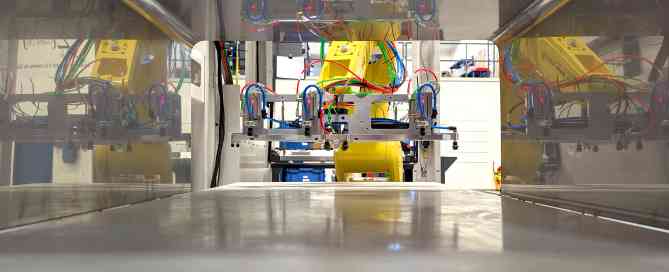
Machine tending is an essential part of the manufacturing process. It involves loading and unloading materials, parts, or products into machines such as CNC machines, lathes, and injection molding machines. This process can be time-consuming, repetitive, and potentially dangerous, which is why many manufacturers are turning to machine-tending robots to automate this task. In this blog post, we will discuss the relevance of using a machine-tending robot in the manufacturing industry.

1. Increased Productivity

Machine tending robots can operate 24/7, allowing manufacturers to increase their productivity by reducing downtime and increasing throughput. These robots are designed to work at a consistent pace, which means that they can complete tasks at a faster rate than human workers. This results in a significant increase in production output, which can help manufacturers meet their production targets.

2. Improved Quality Control

Robots are designed to perform tasks with a high level of accuracy and precision. This means that they can reduce the risk of errors that can occur when humans are performing repetitive tasks. Consistent loading and unloading of materials, parts, or products into machines can also reduce the risk of defects and errors in the manufacturing process, resulting in improved quality control.

3. Enhanced Safety

These robots can help improve safety in the manufacturing industry by reducing the risk of accidents and injuries. They are designed to perform tasks that can be dangerous for human workers, such as loading and unloading heavy materials or working in hazardous environments. By automating these tasks, manufacturers can reduce the risk of worker injuries and illnesses, resulting in a safer work environment.

4. Reduced Labor Costs

Machine tending robots can also help reduce labor costs by eliminating the need for human workers to perform repetitive tasks. This allows manufacturers to allocate their human resources to more complex tasks that require human intervention. This can result in significant cost savings for manufacturers, especially in industries where labor costs are high.

5. Scalability

This technology can be easily scaled up or down depending on production needs. It means that manufacturers can adjust their production capacities to meet changing market demands. This flexibility allows manufacturers to remain competitive in their respective industries by ensuring that they can meet customer demands quickly and efficiently.
6. Data Collection

Usually, robots can be equipped with sensors and cameras that allow them to collect data on the manufacturing process. This data can be used to optimize production, reduce waste, and improve quality control. Manufacturers can use this data to identify trends and patterns in the manufacturing process, allowing them to make data-driven decisions that can help improve their production processes.

Conclusion

In the end, machine-tending robots are becoming an increasingly relevant tool in the manufacturing industry. They offer a range of benefits, including increased productivity, improved quality control, enhanced safety, reduced labor costs, scalability, and data collection. By automating the machine tending process, manufacturers can improve their production processes, increase efficiency, and remain competitive in their respective industries.

At DIY Robotics, we offer great options to assist you in introducing machine-tending robots to your production line. If you would like to learn more about our products, you can visit: https://diy-robotics.com/products/

THE FUTURE OF INDUSTRIAL AUTOMATION AND THE ROLE OF ROBOTICS IN MANUFACTURING

In recent years, the manufacturing industry has undergone significant transformation, thanks to the rise of industrial automation and robotics. As businesses strive to enhance efficiency, productivity, and quality, robotic automation has become increasingly popular. This blog post delves into the future of industrial automation and the critical role that robotics will play in the manufacturing industry.

The Current State of Industrial Automation

Although businesses have been using machines to automate manufacturing processes for decades, recent technological advancements have taken automation to the next level. Today, businesses can implement comprehensive automation solutions that integrate multiple systems and processes, from production lines to warehouse management.

Automation offers numerous benefits, including reducing labor costs, improving efficiency and productivity, and enhancing quality and consistency. Additionally, automation can reduce the risk of workplace accidents and injuries, thus improving workplace safety.

The Role of Robotics Automation in Manufacturing

robotic hand machine tool at industrial manufacture factory

Despite the use of robotics in manufacturing is not new, recent technological advancements have made robotics more accessible and affordable for businesses of all sizes. Robotics can automate various tasks, from assembly to packaging to material handling.

One of the key benefits of robotics in manufacturing is their ability to perform repetitive tasks with high precision and accuracy. This not only improves efficiency and productivity but also enhances quality and consistency. Robots can work around the clock, reducing the need for human labor and increasing output.

Another benefit of robotics in manufacturing is their flexibility. Robotic systems can be programmed to perform a wide range of tasks and can be easily reconfigured to adapt to changing production needs. This makes them an ideal solution for businesses that need to produce multiple products or change production lines frequently.

The Future of Industrial Automation

The future of industrial automation is bright, with continued technological advancements driving innovation and growth. One of the key areas of growth is the Internet of Things (IoT), which allows machines and devices to communicate and share data. This enables businesses to monitor and control their manufacturing processes in real-time, optimizing performance and reducing downtime.

Artificial intelligence (AI) is another area of growth that enables machines to learn and adapt to changing conditions. AI can optimize production processes, predict maintenance needs, and improve product quality. Furthermore, the use of collaborative robots (cobots) is expected to increase in the coming years. Cobots are designed to work alongside human workers, performing repetitive or dangerous tasks while leaving more complex tasks to humans. This not only improves efficiency and productivity but also enhances workplace safety.

Industrial automation and robotics are transforming the manufacturing industry. The use of robotics in manufacturing is expected to increase as businesses aim to improve efficiency, productivity, and quality. In addition, IoT, AI, and cobots are expected to become more prevalent, enabling businesses to optimize their manufacturing processes and stay competitive. As a business owner, it is crucial to keep up-to-date with the latest trends and developments in industrial automation to ensure that your business remains competitive in the future.

To get more information about our robotic solutions, please visit our website: https://diy-robotics.com/

THE BENEFITS OF TURNKEY ROBOTIC SOLUTIONS FOR SMALL AND MEDIUM-SIZED BUSINESSES

The manufacturing industry has been transformed by the advent of advanced robotics technology. While large corporations have been utilizing this technology for years, small and medium-sized businesses (SMBs) have been slower to adopt it. This is primarily due to the high cost and complexity of implementing robotic systems. However, turnkey robotic solutions are changing that. In this article, we will explore the benefits of turnkey robotic solutions for small and medium-sized businesses.

What Are Turnkey Robotic Solutions?

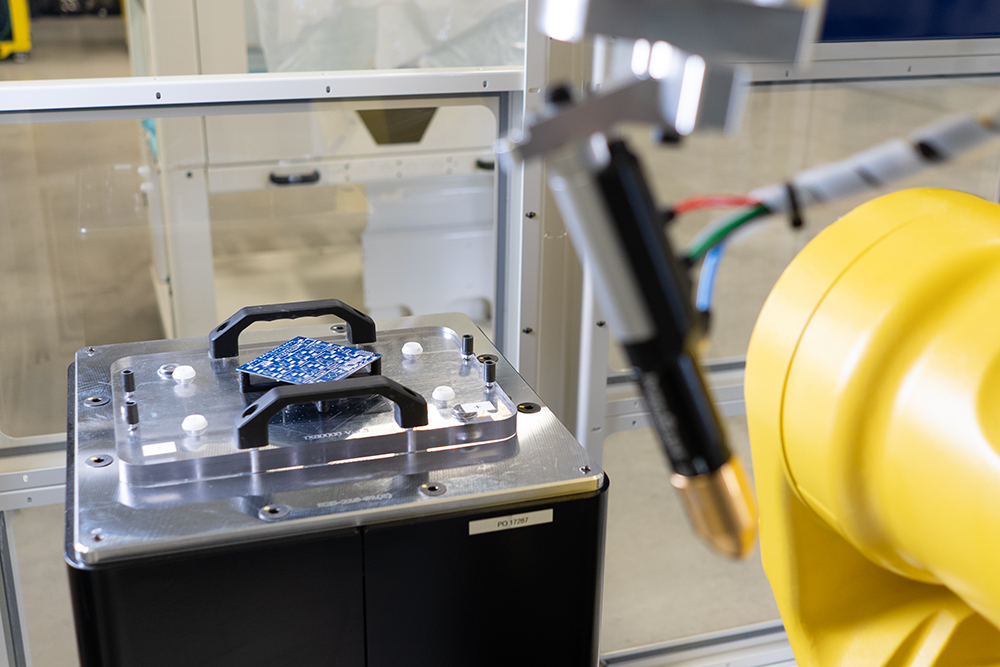
turney robotic solutions 2Turnkey robotic solutions are pre-engineered robotic systems that are designed to be plug-and-play with minimal installation and setup required. These systems are typically designed for specific applications, such as welding, material handling, or packaging. They come with all the necessary hardware, software, and controls to automate a specific task or process.
Benefits of Turnkey Robotic Solutions for SMBs

1. Cost-Effective

One of the primary benefits of turnkey robotic solutions for SMBs is their cost-effectiveness. These systems are typically less expensive than custom-designed robotic systems, making them more accessible to small and medium-sized businesses.

Moreover, turnkey robotic solutions are designed to be easy to install and operate. This means that SMBs can avoid the high costs associated with engineering, programming, and commissioning custom robotic systems, which would require specialized skills and knowledge.

2. Quick Deployment

Another benefit of turnkey robotic solutions is their quick deployment. These systems are pre-engineered and pre-configured, so they can be installed and put into operation quickly. This means that businesses can start realizing the benefits of automation sooner.

They can be easily integrated into existing production lines without the need for major modifications or downtime. This further reduces the time and cost associated with deploying robotic systems.

3. Increased Efficiency and Productivity

Those custom solutions can help increase efficiency and productivity by automating repetitive and time-consuming tasks. By automating these tasks, businesses can free up their employees to focus on higher-value activities, such as innovation, problem-solving, and customer service.

A great advantage is that they can operate 24/7, which means that businesses can increase their production output without increasing their labor costs. This can help SMBs compete with larger corporations that have already adopted robotic technology.

4. Improved Quality and Consistency

precisionTurnkey robotic solutions can also help to improve the quality and consistency of their products. Robotic systems can perform tasks with a high degree of accuracy and repeatability, which reduces the risk of human error and inconsistency.

Robotic systems can be programmed to perform quality inspections and reject defective products, which ensures that only high-quality products are delivered to customers. This can help businesses build a strong reputation for quality and reliability.

5. Enhanced Safety

Enhancing safety in the workplace is always a priority. By automating dangerous or repetitive tasks, businesses can reduce the risk of workplace accidents and injuries. This not only protects employees but also reduces liability and workers’ compensation costs for the business.

Additionally, turnkey robotic solutions can be equipped with safety features such as sensors and barriers, which ensure that the robotic system stops or slows down when a person enters the workspace. This further reduces the risk of accidents and injuries.

Conclusion

Turnkey robotic solutions offer numerous benefits for small and medium-sized businesses. They are cost-effective, quick to deploy, increase efficiency and productivity, improve quality and consistency, and enhance safety in the workplace. They can help SMBs remain competitive by providing access to advanced automation technology. If you are an SMB looking to enhance your operations, turnkey robotic solutions are definitely worth considering.

To conclude, if you are looking for a robotic solution for your business, don’t hesitate to visit our product page https://diy-robotics.com/products/ and contact us to book a free consultation https://diy-robotics.com/free-consultation/.

HOW MODULAR ROBOTICS CELLS CAN STREAMLINE MANUFACTURING PROCESSES

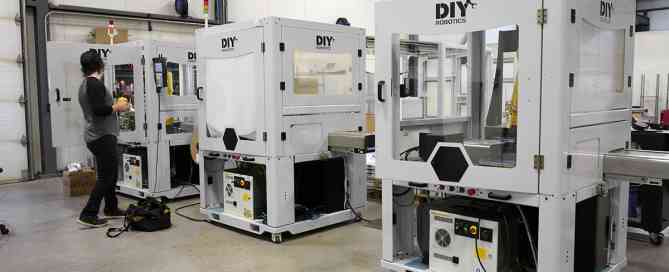
Modular robotics cells are transforming the manufacturing industry, allowing businesses to automate their production lines and streamline their operations. These pre-designed, modular, and mobile robotic cells can be customized to fit a variety of manufacturing needs, from small businesses to large-scale operations. In this blog post, we will explore the benefits of these cells and how they can streamline manufacturing processes.

Modular robotics cells are designed to be flexible and adaptable, allowing manufacturers to quickly and easily reconfigure them to meet changing production needs. This means that businesses can automate their production lines without having to make significant investments in new equipment or infrastructure. By using modular robotics cells, manufacturers can save time and money while improving efficiency and productivity.

Benefits

One of the key benefits of a modular robotics cell is that it can be easily integrated with existing manufacturing processes. This means that businesses can automate specific tasks or processes without overhauling their entire production line. This makes this cell ideal for small and medium-sized businesses that want to automate their operations but may not have the resources to invest in a full-scale robotic integration.

Another benefit of modular robotics cells is that they can be customized to fit a variety of manufacturing needs. This means that businesses can choose the size, configuration, and capabilities of their robotic cells to match their specific production requirements. This customization allows manufacturers to optimize their production lines and improve overall efficiency and productivity.

More Flexibility

Those flexible cells are designed to be mobile, which means they can be easily moved around the production floor to adapt to changing needs. This mobility allows businesses to optimize their production lines, moving robotic cells to where they are needed most and avoiding bottlenecks or other production issues.

In addition to their flexibility the modular, and mobile robotics cells also offer significant safety benefits. By automating dangerous or repetitive tasks, businesses can reduce the risk of workplace accidents and injuries. This not only protects employees but also reduces liability and workers’ compensation costs for the business.

Finally, these cells can improve the quality and consistency of finished products. By automating manufacturing processes, businesses can reduce the risk of human error and ensure that products are produced to a consistent standard. This can lead to higher customer satisfaction and fewer product returns or recalls.
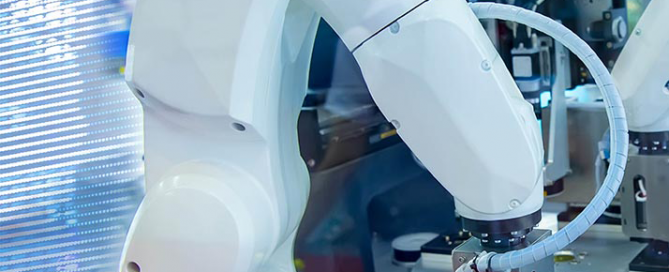
In conclusion, modular robotics cells are transforming the manufacturing industry by providing businesses with a flexible, adaptable, and customizable solution for automating their production lines. By streamlining manufacturing processes, businesses can save time and money while improving efficiency, productivity, and product quality. If your business is looking to automate its operations, modular robotics cells are an excellent option to consider.

If you would like to know more about our modular product line, visit our product page: https://diy-robotics.com/products/modular-robotic-cells/.

What are The Industrial Robotic Trends in 2021 And After?

The future of industrial robots looks very bright as many companies are looking to automate their production lines, especially with the COVID-19 pandemic. According to a report from Reportlinker from November 2020, industrial robotics which is the top segment in robotics, is about to experience a compound annual growth of 18.2% with revenues growing to $176.8 billion in 2025 from $76.6 billion in 2020.

Here are the top 5 emerging trends in industrial robotics in 2021 and after.

1 | Smart Industrial Robots

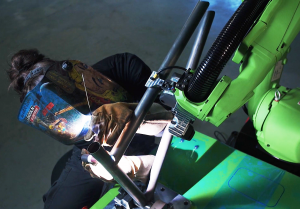
Smart industrial RobotsIndustrial robots are now able to communicate with each other without any human support. With the increased digitization of robots by harnessing the power of the internet, robots can now be programmed to independently communicate with each other which increases the efficiency and speed of manufacturing. Manufacturers are also able to leverage real-time data analytics to improve production and help in making business decisions as well.
2 | Robots to Work in Small Factories

While we are accustomed to big specialized robots in assembly lines, they are expensive to install and are not suited for small factories. The future calls for small robots connected to the same network and AMRs (Autonomous Mobile Robots), which are easier to fit in small factories. They are equipped with navigation technology, making them mobile and more flexible than traditional industrial robots.

Once they are done with their tasks, you can reprogram them for other uses instead of dismantling them. This encourages new markets to automate their processes, such as in the food and beverage industry. Companies like DIY-Robotics offer predesigned, modular, and mobile robotic cells that can be integrated into any production line and moved to the next when needed. These robots are very different from traditional industrial robots that were huge, expensive, and needed to be built on sight thus requiring a lot of effort during installation.

3 | Robots That Reduce the Carbon Footprint

With the growing sensitivity towards climate change, investments in robotic technologies that leave a smaller carbon footprint will be expected to grow. The robots of today and the future are more energy-efficient,  and therefore require less energy to perform similar tasks to other energy-consuming industrial robots. They also have a higher precision rate which produces fewer rejects and below standard goods that have to be disposed of.

4 | Collaborative Robots

Collaborative Industrial Robot

The focus on industrial safety is one of the trends in 2021. This is especially key when it comes to collaboration with humans working hand in hand with industrial robots on the same assembly line without the need for safety barriers. Human-robot collaboration has been improved by the advancement of software, sensory capabilities, and end-of-arm tooling (EOAT) which give industrial robots the capability to detect changes on the line and respond quickly and safely.

These collaborative robots are known as Cobots and are one of the fastest-growing trends in industrial robotics. This is because they are not only collaborative and safe but also easy to program, quick to set up and allow for flexible automation.

5 | Industrial Robots Securing the Supply Chain

The COVID-19 pandemic has not started any trends in robotic technology, it has just accelerated their use beyond what was thought possible. The future of industrial robots belongs in helping fix and stabilize the supply chains that have been severely exposed by the pandemic. Automation of processes will only increase especially in markets in high-wage countries. Doing so will increase their flexibility in the production lines as well as ensure stability and security during uncertain times.

Conclusion

The robot revolution has just begun and we expect to see more investment and attention in this area in the future. Automation of many mundane processes in the assembly line will have to occur to not only increase speeds and efficiency but also reduce costs of production. Gradually, humans will rely on robots for manufacturing even more which is a trend that has already begun in 2021.


Redirection Deburring Cell Page

Why are Robotic kits profitable for businesses?

With an estimated average of 3 million industrial robots in use by the end of 2020, it is clear that more and more businesses are continuously embracing robots within their processes. This is according to IFR Statistics. With the dynamic technological advancements on the rise, we only anticipate even more use of robotic kits both for simple and complex functions.

Today we take a deep dive into why robotic kits are essentially a better option for you and why they are more profitable. In a nutshell, a robotic kit is a compilation of robot essentials which are used to build robots, then programmed to serve different functions. Here are some of the reasons why they are the better option for you.

1 | Low Cost Initial Outlay

Unlike buying a complete robot, robotic kits are way much cheaper to buy and install. We all know that at the end of the day, the objective of every business is to keep the costs as low as possible and therefore, this option will definitely leave you with a bigger chunk of the revenue. Depending on the complexity of the functions performed, robotic kits cost as low as $3800 and other marketplaces. In addition, extra costs such as shipping and installation, including the time is reduced considerably as all the parts come together and are assembled at your premise. and other marketplaces. 

2 | Customized Functionality

DIY_Robotics_3D_Builder

Once you have the robotic kit installed, depending on your need(s), you are able to connect with experts whose aim is to understand your end goals, then develop a customised program to allow your robot serve appropriately. This is magically impressive as you are able to fully service your needs, saving you a lot and ultimately increasing your profits. This aspect of robotic kits ensures that the robot fully serves the purpose.

Arrow_Profitability_Robotic_Kit

3 | Increased Efficiency

This is a sure factor for profitability. The use of robotic kits by far improves the production process as it eliminates the human error. As a result, businesses are able to increase their output, reduce wastage and hence, increase profits. This is one of the major reasons behind robots, as they are programmed to do what human beings do, just by much, more efficiently.

4 | Continued Expert Support

DIY-Robotics_Kits

The biggest problem especially when dealing with complex technology such as robotics is that of support. After you buy and install your robotic kit and it is functional, just like any other piece of technology, problems arise which can lead to huge losses. Therefore, having expert support is key to ensuring that you quickly troubleshoot your robot and get it back to work in the shortest time possible. This can take the form of a live online chat with your supplier and/or community forums such as DIY-Robotics’,  where you can instantly get help from experts and peers.

Clearly, you can now see that indeed robotic kits are here to help you with your production and day-to-day processes, which ultimately leads to increased profits for you. If you haven’t considered robotic kits yet, it is about that time you got in touch with an expert and come on board.


Switching User Frames without changing the physical points positions

Switching User Frames without changing the physical points positions

This procedure is use to change user frame number to a section or all of a program points.

You will find a downloadable

PDF icon
PDF version at the end of this page.

  • DURATION

+/- 15 minutes

  • RECOMMENDATION

It’s important to create a backup of your settings before making any significant modifications in your program.

  • WARNING!

Make sure to switch the “Convert” to “YES” before applying the modifications.

  • DANGER

A bad adjustment could lead to robots or tooling collisions.

STEP BY STEP

  1. PRESS –> [ SELECT ]
  2. Choose the program you want to make user frame reference changes.
  3. PRESS –> [ ENTER ]
  4. PRESS –> [ MENU ]
  5. SELECT –> [ 1 ] 1 UTILITIES
  6. SELECT –> [ 9 ] 9 Frame Offset
  7. PRESS –> [ F4 ] [CHOICE]
  8. Select the program in which the changes have to be made.
  9. PRESS –> [ ENTER ]
  10. Using Arrow –> Scroll down to the 2nd line. 
  11. PRESS –> [ F4 ] [PART]
  12. Using Arrow –> Scroll down to the 3rd line. 
  13. ENTER –> The number where the changes should start.
  14. PRESS –> [ ENTER ]
  15. Using Arrow –> Scroll down to the 5th line. 
  16. ENTER –> A new program name (or keep the same one.)
  17. PRESS –> [ ENTER ]
  18. Using Arrow –> Scroll down to the 6th line. 
  19. If you kept the same program name, enter a program line number where the lines with the switched frames will be copied. If you have changed the program name the step before, no “insert line” will be asked.
  20. PRESS –> [ ENTER ] (if you have entered an “insert line” number) (see screenshot)
  21. Using Arrow –> Scroll down until the next page appear.
  22. ENTER –> Old frame number (the frame number on which the points where reference to)
  23. PRESS –> [ ENTER ]
  24. Using Arrow –> Scroll down to the 2nd line. 
  25. ENTER –> New frame number (the frame number on which the points on which you want to reference them to)
  26. PRESS –> [ ENTER ]
  27. Using Arrow –> Scroll down to the 3rd line. 
  28. PRESS –>[ F4 ] YES (points will keep there physical position unchanged but there references will be changed with coordinate according to the new frame)
  29. PRESS –> [ F2 ] EXECUTE
  30. PRESS –> [ F4 ] YES
  31. DELETE –> Lines 4 to 8
  32. CHANGE –> UFRAME_NUM from 1 to 0.

Switching User Frames to change the physical points positions.

Switching User Frames

This procedure is use to change user frame number to a section or all of a program points.

You will find a downloadable

PDF icon
PDF version at the end of this page.

  • DURATION

+/- 15 minutes

  • RECOMMENDATION

Create a backup of your settings before making any changes to your program.

  • WARNING!

Make sure to put “NO” in the convert space before applying the modifications.

  • DANGER

Robot collisions may occur if this step is not done correctly.

STEP BY STEP

  1. PRESS –> [ SELECT ]
  2. Choose the program you want to make user frame reference changes.
  3. PRESS –> [ ENTER ]
  4. PRESS –> [ MENU ]
  5. SELECT –> [ 1 ] 1 UTILITIES
  6. SELECT –> [ 9 ] 9 Frame Offset
  7. PRESS –> [ F4 ] [CHOICE]
  8. Select the program in which the changes have to be made
  9. PRESS –> [ ENTER ]
  10. Using Arrow –> Scroll down to the 2nd line. 
  11. PRESS –> [ F4 ] [PART]
  12. Using Arrow –> Scroll down to the 3rd line. 
  13. ENTER –> The number where the changes should start. [4]
  14. PRESS –> [ ENTER ]
  15. Using Arrow –> Scroll down to the 4th line. 
  16. ENTER –> The number where the changes should end. [8]
  17. PRESS –> [ ENTER ]
  18. Using Arrow –> Scroll down to the 5th line. 
  19. ENTER –> A new program name (or keep the same one.)
  20. PRESS –> [ ENTER ]
  21. Using Arrow –> Scroll down to the 6th line. 
  22. If you kept the same program name, enter a program line number where the lines with the switched frames will be copied. If you have changed the program name the step before, no “insert line” will be asked. [10]
  23. PRESS –> [ ENTER ] (if you have entered an “insert line” number)
  24. Using Arrow –> Scroll down until the next page appear.
  25. ENTER –> Old frame number (the frame number on which the points where reference to) [1] (for this example)
  26. PRESS –> [ ENTER ]
  27. Using Arrow –> Scroll down to the 2nd line. 
  28. ENTER –> New frame number (the frame number on which the points on which you want to reference them to) [2] (for this example)
  29. PRESS –> [ ENTER ]
  30. Using Arrow –> Scroll down to the 3rd line. 
  31. PRESS –> [ F5 ] NO (Physical positions will be changed. The points coordinates will remain the same but positions will be shifted according to the new frame)
  32. PRESS –> [ F2 ] EXECUTE
  33. PRESS –> [ F4 ] YES
  34. PRESS –> [ EDIT ]
  35. Delete lines 4 to 8 –> PRESS [ F5 ] [EDCMD] (press [NEXT] if you don’t see it)
  36. CHANGE –> UFRAME_NUM from 1 to 2.

Background edit on TP program

Background edit on TP program

This tutorial shows how to background edit a program in Teach Pendant from a FANUC robot. Background edit function allows modification on a TP program with the Teach Pendant selector is turned off (useful in automatic mode).

N.B. Modifications in the background editing program can be applied only once the selected program is not running.

  • DURATION

+/- 5 minutes

  • RECOMMENDATION

Create a backup of your program before making modifications to your program.

  • DANGER

Any modification containing bad values could lead to robot collisions.

STEP BY STEP

  1. PRESS –> [ SELECT ]
  2. PRESS –> [ ITEM ]
  3. PRESS –> KEY [ 1 ]
  4. SELECT –> 1 -BCKEDT- 
  5. Choose the program you want to make changes
  6. PRESS –> [ OK ]
  7. Make changes that you desire for your program
  8. PRESS –> [ F5 ] [ EDCMD ]
  9. SELECT –>[ 7 ] [ END_edit ]