USES OF COLLABORATIVE ROBOTS
In recent years, robotics have become increasingly popular in manufacturing, healthcare, and other industries. They offer a range of benefits, including increased efficiency, improved quality, and reduced costs. In this blog post, we will explore one of the types of robots which has become a staple in the industry; read more about the uses of collaborative robots.
What are Collaborative Robots?
Collaborative robots, also known as cobots, are a type of robot that is designed to work alongside humans, often in a shared workspace. Unlike traditional industrial robots, which are typically large, heavy and caged off from human workers, cobots are designed to be lightweight, flexible and safe. They are equipped with sensors and other features that allow them to detect and respond to the presence of humans in their workspace, preventing collisions and other accidents. Cobots are also designed to be user-friendly, with features that make them more approachable and easier to use for non-experts. Cobots are a relatively recent innovation in the field of robotics, and they already have a significant impact on the manufacturing industry and beyond.
Advantages of Collaborative Robots
The following are a few advantages that collaborative robots bring to a workplace which can be utilized by your industry.
 Collaboration
The main advantage of cobots is their ability to work alongside human workers. They can collaborate with human workers, performing tasks that require strength and precision, while leaving more complex tasks to the human workers. This creates a more flexible and efficient workplace, where human workers can focus on tasks that require creativity and problem-solving skills while leaving the more repetitive and physically demanding tasks to the cobots.
Safety features
Similar to the theme of collaboration, one of the other key features of cobots is their safety. Unlike traditional industrial robots, which are often fenced off to protect human workers, cobots are designed to work safely alongside humans. They are equipped with a range of sensors and other safety features, including collision detection and force limitation. This means that if a cobot comes into contact with a human worker, it will automatically stop or slow down to prevent injury. This is especially useful for small to medium businesses where employees could be in close proximity to it.
Versatility
Cobots are also highly versatile, with the ability to perform a wide range of tasks. They can be programmed to perform simple repetitive tasks, such as picking and placing items on an assembly line, or more complex tasks, such as welding and painting.
Flexibility
Another advantage of cobots is their flexibility. They can be quickly and easily reprogrammed to perform different tasks, making them ideal for small-batch manufacturing and other applications where production needs can change rapidly. This flexibility allows companies to respond quickly to changing market demands, reducing lead times and improving overall efficiency.
 Ease of use
In addition, a key feature of cobots is their ease of use. They are designed to be user-friendly, with intuitive interfaces that allow non-experts to operate them with ease. This makes them ideal for small and medium-sized enterprises that may not have the resources to hire dedicated robotics experts. Cobots can be programmed using a range of methods, including hand-guiding, teach pendants, and graphical interfaces.
Affordability
Finally, cobots can be more affordable than traditional industrial robots, making them accessible to small and medium-sized enterprises that may not have the resources to invest in expensive automation equipment.
Conclusion
Collaborative robots are transforming the workplace, offering a range of benefits, including increased efficiency, improved quality, and reduced costs. They are safe, easy to use, versatile, and can collaborate with human workers to create a more efficient and flexible workplace. As the technology continues to evolve, we can expect to see more and more cobots in a range of industries. Thank you for tuning into our blog for this week, if you have any questions about collaborative robots, or inquiries about our collaborative robot cell products, please feel free to reach out: https://diy-robotics.com/contact/
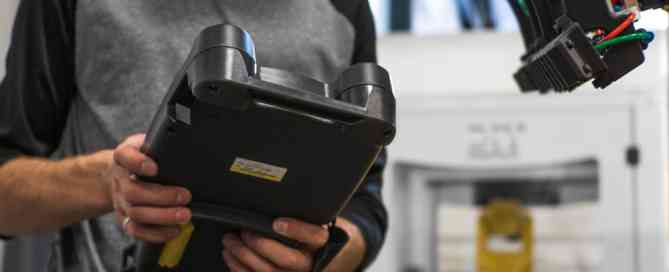
 The benefits of this type of automation include increased efficiency, improved accuracy, reduced overall costs, decreased human error, and improved safety. Robots can work non-stop, leading to increased productivity and streamlined processes, waste reduction, and improved quality control. For instance, robots can perform machine tending, material removal, and assembly in the manufacturing industry, tasks that would otherwise require a lot of resources and time.
 When implementing robotic automation, there are several best practices to follow. First, it is important to identify the tasks that are best suited for automation. Tasks that are repetitive, dangerous, or require a high degree of accuracy are good candidates for automation.
 Another challenge is the need for ongoing maintenance and support. Robotic automation systems require maintenance and support to ensure that they are operating at peak efficiency. The good news is that there is plenty of help and support existing on the web. For example, there is numerous forum such as the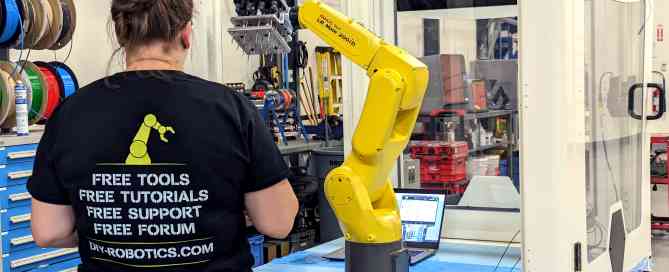

 There are several types of industrial robots, each designed to perform different tasks. Some of the most common types of industrial robots include:
 Machine tending robots can operate 24/7, allowing manufacturers to increase their productivity by reducing downtime and increasing throughput. These robots are designed to work at a consistent pace, which means that they can complete tasks at a faster rate than human workers. This results in a significant increase in production output, which can help manufacturers meet their production targets.
 This technology can be easily scaled up or down depending on production needs. It means that manufacturers can adjust their production capacities to meet changing market demands. This flexibility allows manufacturers to remain competitive in their respective industries by ensuring that they can meet customer demands quickly and efficiently.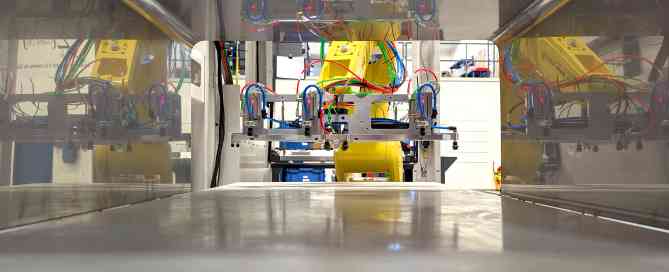


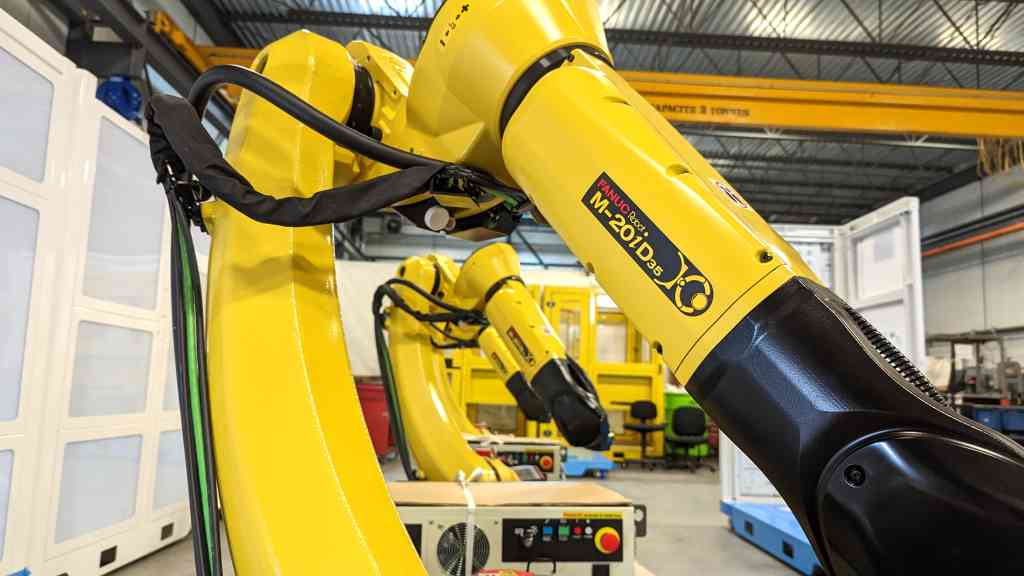
 FANUC robots are designed with ease of use in mind. The robots can be programmed using FANUC’s proprietary programming language, which is easy enough to learn and use. Instructions can be programmed using a computer or a teach pendant, which is a handheld device used to manually input commands to the robot. FANUC programming is flexible. Robots can be reprogrammed quickly and easily to adapt to changes in manufacturing processes or to perform new tasks. This allows for greater agility in manufacturing operations and can help businesses stay competitive in a rapidly changing market.
 At DIY Robotics, we design and produce robotic work cells which are perfect to house and assist FANUC robots (as well as other robot brands) with their daily automated tasks while keeping the work environment safe and secure. Each of our various work cells can house different FANUC models and can be customized to match or accommodate your production floor layout and requirements. For more information about our robotic work cells or the FANUC robots they are equipped with, please feel free to visit our product page: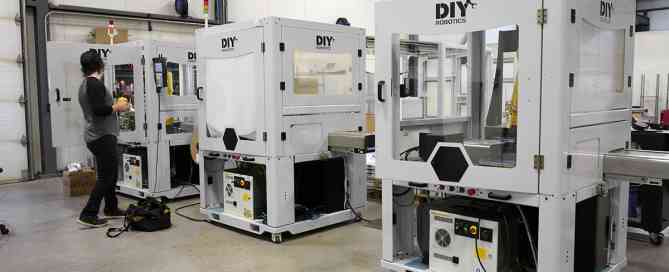
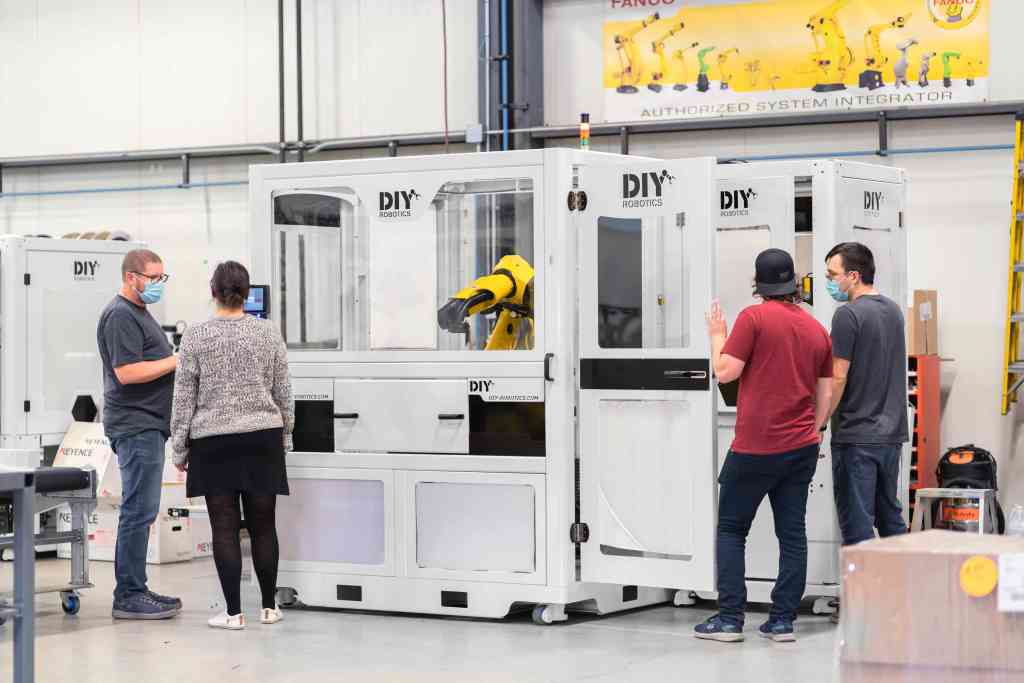 Turnkey robotic solutions are pre-engineered robotic systems that are designed to be plug-and-play with minimal installation and setup required. These systems are typically designed for specific applications, such as welding, material handling, or packaging. They come with all the necessary hardware, software, and controls to automate a specific task or process.
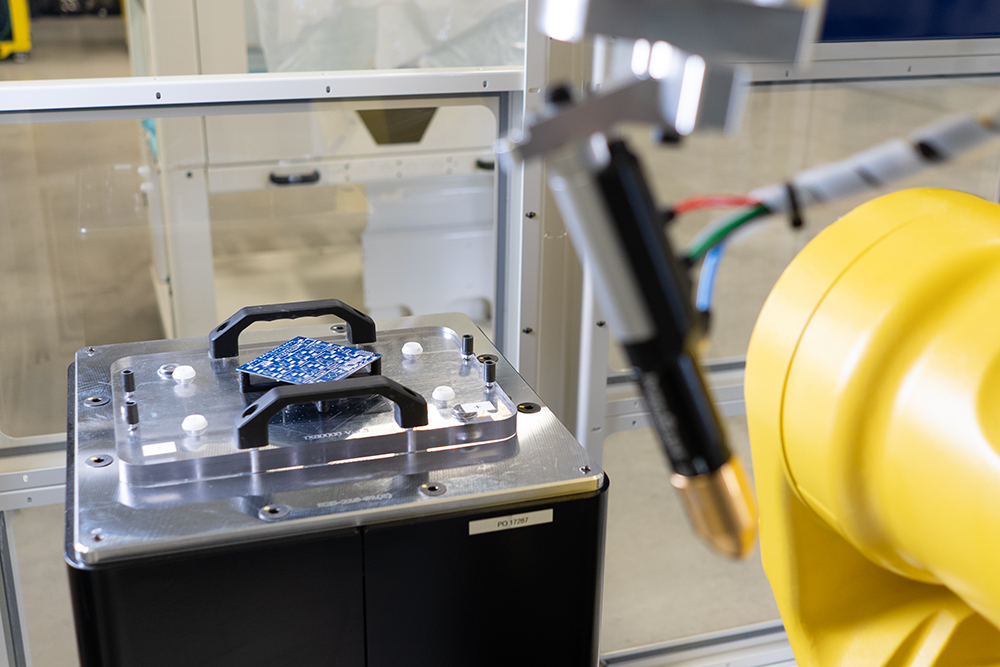 Turnkey robotic solutions can also help to improve the quality and consistency of their products. Robotic systems can perform tasks with a high degree of accuracy and repeatability, which reduces the risk of human error and inconsistency.

 Finally, these cells can improve the quality and consistency of finished products. By automating manufacturing processes, businesses can reduce the risk of human error and ensure that products are produced to a consistent standard. This can lead to higher customer satisfaction and fewer product returns or recalls.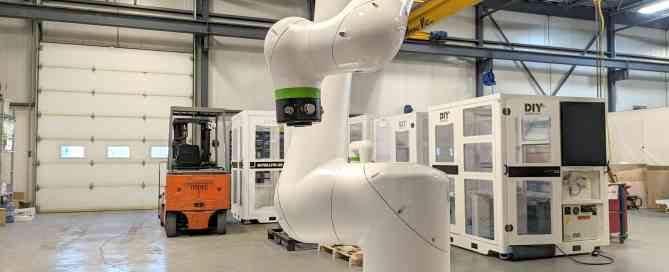
 Cobots are designed to be installed quickly. They usually come pre-assembled in a box or crate and only require a few anchoring bolts and power connections before the cobot can start functioning. With the right training, these types of robots can be installed and programmed internally. Some companies, including DIY Robotics, even offer user-friendly software and HMIs to help guide the acquiring company to an easier solution.
 At DIY Robotics, we pride ourselves on our fully mobile and modular robotic cells. Each of our models support different kinds and sizes of robots to satisfy any requirement by your production environment. Each of these cells are equipped with wheels to achieve a mobile product capable of performing day to day robotic tasks, as well as providing all the benefits stated above.