window.dataLayer = window.dataLayer || []; function gtag(){dataLayer.push(arguments);} gtag('js', new Date());gtag('config', 'UA-141884085-1'); gtag('config', 'AW-761820283');

Blog

3 Difficulties You Will Encounter With DIY Robotics Projects

difficulties encounter diy-robotics project robotic armIt comes as no surprise that building a DIY-Robotics industrial robot is a process that comprises unique challenges. You could face problems with design, construction, programming, or electronics and need to know how to troubleshoot a variety of sub-systems on the fly. In this article, we discuss three common problems you may face with your DIY-Robotics project and propose tools to overcome them.

Potential Problems

Programming the Robot

Programming a work cell requires an understanding of the physical limits and capabilities of the robot. The code must go hand-in-hand with the robot’s design and function. You have to consider the robot’s environment and mechanical constraints. On top of that, FANUC puts powerful tools at your disposal, and efficient, precise programming is necessary to make these tools as effective as possible.

Interfacing the Robot with External Machinery

Your robot may seem isolated in its protective work cell, but that is far from the case. You must configure your robot to interact fluidly with its environment. Properly configuring the robot’s inputs and outputs will be one of your primary tasks as you begin the setup process. There are a lot of variables to consider from the robot’s dimensions, workspace layout, proximity to other machinery, and payload.

Robot Movement

You will also want to consider how the robot’s movements are affected by different loads. This can change the robot’s center of mass, and moment of inertia. Once these values are calculated, you can move onto designing appendage tools, such as grippers and arms, that will facilitate the motions your robot will make, optimizing the process and cutting down cycle time.

DIY-Robotics Solutions

DIY-Robotics offers a variety of information sources that answer the questions of engineers and programmers and other industry professionals. Here are just a few possible solutions to help smooth over your DIY Project.

Documentation

Each robotic cell comes with a manual full of resources. Additionally, you have access to FANUC’s electronic reference documents and extensive programming library. Satellite, Comet and every other cell DIY-Robotics makes is delivered with a full catalog of documentation. You can even get help building your own cell!

problems diy robot project

Tutorials

FANUC’s website if full of e-classes, whitepapers, and other helpful documents to answer every question you may have about your work cell setup and integration. Their YouTube channel is a vital resource featuring numerous training videos and troubleshooting guides. Take part in a variety of webinars offered by FANUC that cover the basics, and not-so-basics, of owning and optimizing your FANUC robot cell.

Forum

Get help from users and professionals alike on the forum. You’ll find help for everything from programming issues to error codes. Learn from other users just like you who have tackled the same problems you are facing and have the solutions you need.

At DIY-Robotics, we care about fostering the collaboration between members of the engineering and programmer community. Working with us means having access to a maximum number of resources so you can implement efficient solutions for your DIY project challenges. Embark on the DIY-Robotics adventure and build your robotic cell now using all our online tools.

Access DIY Robotics Forum

ACCESS NOW


How DIY Robotics Can Increase Your Company’s Profit

how diy robotics increase company profitCFM Robotics has grown into a highly regarded enterprise with 23 years of experience in creating turnkey solutions. Recently, the Québec-based company has shifted to a DIY platform to provide support and resources for self-starters and industry innovators who have a thirst for a first-hand understanding of cutting-edge technology. With the explosion of the DIY movement, CFM Robotics saw an exciting opportunity to expand into this new type of partnership. After all, coming up with new programming possibilities is what we do. Here’s how our new DIY-Robotics platform can increase your company’s profit, and give you the edge in the new age of automation.

Reduce your maintenance and repair expenses with ideas for in-house solutions

Robotic work cells are cost-effective, given that they do not need major infrastructure changes once they are set up. Simplified programming and guided support allow your company to operate as autonomous as your machinery. DIY-Robotics provides you and your company with everything you need from product reviews to programming solutions to keep you and your technology running efficiently and help you utilize all of your work cell’s features.

diy-robotics increase company roi

Ideas for flexibility in function and utility

Make your robotic cells work for you. Produce several products in the same cell and with less expense with easily reconfigured cell options. We’ll show you how to redeploy units in your production line for multiple purposes so you don’t end up spending money on additional units. Turn your business into a “lights-out” factory by configuring your units to work around the clock.

Save money with our free online support

Take advantage of CFM Robotics’ more than 23 years of experience. We are a community of talented programmers, engineers, and certified integrators who love talking about robotics and who take great pleasure in building solid relationships with our customers. We are privileged to count among our resources the valuable personal qualities of our employees in addition to their noteworthy technical abilities. Respect, pleasure in our work, rigorous diligence, and creativity are some examples of what we bring to work every day and what you can expect from our support team.

DIY-Robotics is a place to talk programming, share ideas and solutions, and work together to build amazing things. It is our ever-growing network of resources, professionals and experts to help you with all of your robotic and automation needs.

Enable robotization at an affordable price

Each robotic cell is optimized for function and efficiency, so they are easy to maintain and deploy. Our cells are pre-engineered, pre-secured and pre-programmed, meaning that our customers get a worry-free installation that reduces downtime and production interruptions. Our cells include pre-integrated electronics and pneumatic panels, so say “ good-bye ” to tedious routing and flow mapping. Save money by making smart decisions and getting the cell that works right for you at each stage of production.

Avoiding the complications when a break occurs

In the event of a mechanical breakdown, robotic units can be easily moved along the production line by simply relocating the cell. Unlike anchored robots, robotic cells allow for customizable and adaptable configurations and tasks. Our interchangeable cells can prevent production halts or slowdowns, which can be costly to you and your customers. Don’t forget that you always have access to our free online support. No need for you to outsource; all of the support and resources you need are at diy-robotics.com.

In many ways, DIY-Robotics will benefit your business and increase your profit margins and returns-on-investment. For more information, read our e-book in which we explain all the advantages of working with our team to design and build the best robotic cell for you and your company’s needs.

Build your robotic cell - online tool

TRY IT NOW


5 Tips for Programming Your FANUC Integrated Work Cell

programming fanuc robotic cellRobotic cells are complete systems that house your robot, controller, and other essentials like positioners. Your robot cell also ensures the safety of your employees and protects your investment. Efficiency, precision, and reliability are of paramount importance. So, before you start integrating, consider the following five tips for programming your FANUC integrated work cell to ensure that it provides you with the maximum potential benefits.

Take the time to think carefully about the programming structure

Your programming structure will follow you throughout the programming process of the various applications of the cell. Taking the time to set it up correctly before you start programming could save you a lot of time and trouble in the future. Setting up a pseudo-code structure can help you to think about the logical flow of events and can give you a framework when you start writing the actual code. A flowchart or process diagram can also be very useful for visualizing the routine your robot will execute. Save yourself some time and troubleshooting later by sketching out your programming structure in advance and making sure all workers are familiar with the routine.

Set the robot’s working tools correctly using “Tool Frames”

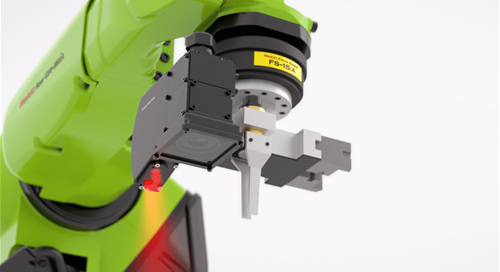
programming fanuc work cellFANUC’s “Tool Frames” allow programmers to plot the robot’s movement in a Cartesian coordinate system. The reference point, also called the Tool Center Point (TCP), is set by one of several methods, and all other positions are referenced relative to the TCP. The operator defines the TCP using one of four common methods : the three-point method, six-point method, direct entry, or two-point + Z method. With three-point and six-point methods, the TCP is defined by setting the robot tool to different reference positions. The direct entry method, just as it sounds, allows the programmer to enter the TCP coordinates manually. The 2-point + Z method uses two reference points to determine x and y coordinates but lets the user define the height of the tool. Be sure to enter the weight and inertia characteristics of the robot hand because this data plays a role in correctly determining the robot path and can speed up the cycle time when input correctly.
Do not try to “patch” a programming problem

When a problem arises in programming, a patch may provide a workaround and often appeals to users as a convenient and low-maintenance fix. However, patches may not address the underlying causes of errors that can persist and manifest themselves in other areas. Before applying a patch, check to see if you can identify the source of the error. Double-check all relevant settings, values, and the programming structure itself. A little work on the front end can save lots of time and energy later when you may have to hunt down and fix numerous instances of an error that has propagated throughout lengthy segments of code.

Plan Ahead

You can eliminate many programming problems before you even get your robot set up. Programmers can get very creative with their coding. However, if they are spending a lot of time finding innovative solutions to make a robot do something it wasn’t designed for, the problem isn’t a programming one. In this case, it may be a problem with the type of robot you’re using. Take the time to think carefully about the processes you want to robotize before making a purchasing decision. Work with your team, plan, and choose the best robot for your automation needs. If you need assistance, DIY-Robotics offers free consultations to help you decide on the right robot or cell. This way, you can avoid complications that reduce productivity and throughput by taking a robot out of the automation flow.

Free Programming Libraries and Forums

No matter what you need to program, it’s always a good idea to look for existing libraries and free resources. These reservoirs of pre-existing, tested code can make your job a lot easier. The programming community is a helpful one. If someone has come across a problem and found a useful solution, chances are, it has been posted somewhere. Check the top forums, like the FANUC forums on Robot-Forum.com and DIY-Robotic.com. Search on GitHub or in training resources. And don’t overlook programming solutions in different languages or for other products. The physics and engineering principles that govern robots are the same, so the answer to your problem may be universal.


At DIY Robotics, it is important to provide you with all the resources you need to execute your project effectively. We hope, among other things, that these three tips will be useful. Find all the details related to the complete process of a DIY Robotics project, using Fanuc robots, by consulting our Build Your Cell guide.

Build your robotic cell - online tool

TRY IT NOW


5 Reasons to Work with a Cobot

10 Industrial Robotic Arms Manufacturers Who Stood Out In The Last Years

Robotic automation has found a foothold in a record number of industries. Robotic arms are one of the most common and iconic types of robots found on factory floors. Yet, it’s just a few key, innovative companies responsible for making most of those machines. Here are ten of the best industrial robotic arm manufacturers in the industry and what makes them stand out above the rest.

FANUC Robotics

fanuc industrial robotic arm manufacturer

FANUC Robotics offers over one hundred models of industrial robots. Renowned for their easy-to-use, versatile products, FANUC is a leader in innovation.

Recently FANUC unveiled their new CRX series of cobots. These collaborative robotic arm units are streamlined with smart programming and highly-sensitive safety protocols, ensuring risk-free and straightforward
programming and operation.

FANUC is also well-known for their large and powerful M-2000iA series robotic arms. This “Ultra Heavy Payload” class has a working capacity of up to 2300 kg! Of course, they make arms of all sizes in between as well. Their Paint Series robotic arm uses a top-of-the-line hydraulic system that is powerful enough for automobile painting but delicate enough for smaller powder-coating jobs. Finally, their mid-range arms can do everything from pick-and-place to welding and machine tending. FANUC has a robot for virtually every automation need.


Universal Robots

Cobots are more popular now than ever, and they are quickly becoming a ubiquitous fixture in many factories. When you look back at cobot evolution, you will find Universal Robotics at the start of it all. Universal Robots introduced cobots to the industrial market. If you’re searching for a robotic arm for your factory, cobots may be on your list. If they are, it’s worth taking a look at the creator of these revolutionary and now commonplace machines.

Yaskawa Electric

Almost one hundred years ago, Yasakawa Electric was producing basic induction motors and magnetic conductors. Today, their U1000 Industrial Matrix inverter drive is revolutionizing the industry. Additionally, Yasakawa offers several welding robots, cobots, and a variety of material handling robotic arms. Today, Yawaska is known for its high-quality and energy-efficient designs. Their Motoman line, in particular, is one of the most versatile lines of robot arms available. Available for everything from the assembly line to the food industry, these arms have reaches ranging from less than a meter to well over three meters. Customers can also choose between multi-axis, cobot, and delta robots.

industrial robotic arms manufacturer

ABB

Swiss-based ABB has over 130 years of technological innovation. With a foothold in more than 100 countries, ABB has sold over 400,000 robots worldwide. Today, ABB is a leader in industrial digitization and a forerunner in Industry 4.0. ABB specializes in single-arm and dual-arm designs that make their robots versatile, adaptable, and durable.

Omron Adept Technologies

Intelligent automation products have made Omron the largest US-based industrial robotics manufacturer and supplier. They have a portfolio full of smart mobile robots, industrial robots, advanced software, and machine vision tools. Omron is especially well known for their TM series cobots and the 6-axis Viper robotic arm.

Kuka Robotics

When Kuka’s Quantec robotic arm came out, it went viral with commercial videos of it playing ping-pong. It’s an impressive machine that showcases unparalleled speed and precision. Since then, anyone who didn’t know the Kuka brand is now sure to be familiar with their line-up. From the small and quick Agilus line to the KR 1000 Titan (with a 1300 kg payload capacity and 3.6 m reach), Kuka produces a wide range of robotic arms. Start here, and you may not need to look any further.

UC Berkley

UC Berkley produced one of the hottest robotic arm designs in the last couple of years. Blue, as the model is known, is not designed for warehouses and factories—at least not yet. Currently, it is a fully functional robotic torso with z-axis motion and dual-arms. It has 7-degrees of freedom and can reach a peak velocity of just over 2 m/s with a 2 kg continuous payload. At $5000, Blue is designed to be an affordable testbed for companies who develop robots. It is also great for factories that may want a cheap and versatile solution that isn’t limited by lots of proprietary constraints.

Stäubli

Stäubli is an economical choice for factories in need of SCARA, six-axis, and fast-picker robotic arms. They are also well known for their end-effectors and connectors. Stäubli markets its products as fast and lightweight. They are ideal for lighter applications, like plastics, but also suitable for heavier jobs. If you’re just starting and want to make a smaller investment, Stäubli might be a great place to start.

DENSO

For fifty years, DENSO has been a leader in manufacturing. They are the world’s biggest manufacturer of automotive parts. While DENSO is their own biggest client, employing over 27,000 of their own units to make automotive parts, over 130,000 DENSO robotic arms are hard at work in factories worldwide. From SCARA to six-axis to pharmaceutical robots, DENSO has provided robotic arms and automation solutions to some of the most important industries for the past century.

EVS Tech Co. LTD.

EVS makes tough, durable robotic arms for demanding jobs in harsh environments. These arms can handle the toughest welding jobs, high temperatures, and payloads up to 1000 kg. EVS robotic arms are designed for welding, painting, polishing, stamping, and machine tending. When you need a robotic arm that is rugged but also has a small footprint, you’ll want to make sure EVS Tech is on your list.

At DIY Robotics, we offer you the opportunity to build your own robotic cell based on your specific needs: flexibility, security, reliability, and adaptability. For more information on how we can help your business, read our ebook by clicking the link below. You will find everything you need to know before building your DIY Robotic cell.


How Can Automation Benefit my Business

Are you feeling left behind by the Industry 4.0 revolution? You may be considering how automation might benefit your business. In this article, we will look at what you need to consider before automating your processes, and the benefits to your company should you choose to automate.

Efficiency

Bill Gates saidautomation benefits, “The first rule of any technology used in a business is that automation applied to an efficient operation will magnify the efficiency.” We’re going to assume you run an efficient process, and in that case, according to one of the richest men in the world, automation is only going to make things better. A more efficient process means more time and material saved. This translates into money saved, which is what you need to be thinking about when considering any changes to your process flow.


Safety

Automation used to refer only to software-automation. These days, however, automation and auto-motion are synonymous. Put smart machinery in charge of dangerous or repetitive tasks, and the savings in terms of worker safety and health are well worth the cost. Automation can reduce the number of incidents of workplace injuries from one-time events and repetitive-stress-related causes. It can protect clients and consumers as well, preventing your company from enduring expensive litigation fees and settlements. The automation process ensures a higher degree of precision in assembly and reduces the number of faulty or poorly manufactured parts.


Loss Prevention

With labor shortages affecting many businesses, automation can be an ideal solution. Mechanically assisted assembly lines greatly cut down on the number of employees needed to perform a task. Robot analogs to human workers can often complete a larger variety of tasks than their living counterparts. This can cut down on training, human bottlenecks in the production flow, and errors associated with multi-tasking. Sick days, holidays and general fatigue can impact productivity with humans. This is not the case, however, when you have adopted automation. Automated businesses experience more consistency in their product, fewer interruptions to workflow, and overall greater satisfaction from clients.


automating your businessIncreased production: 24-hour/lights-out factories
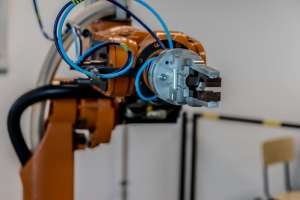
With automated assemblies and factories, businesses can now run operations with reduced operational costs all around the clock. Production doesn’t have to stop at 5 o’clock. So-called lights-out factories can run on their own with minimal human intervention. Sensors and adaptive programming allow the system to alter production variables independently of human operators. Every interconnected machine can respond to delays or modifications made by one part of the network.


Integrated assemblybenefits of automation

Integrate your whole production line with automation. This doesn’t just mean the machines and industrial robots in one facility either. Multiple buildings and sites can be connected and can share information. Jobs can be rescheduled, delayed, or advanced by an algorithm that determines the most efficient order. Eliminate or reduce the need for fussy Gantt charts or other project management nightmares. Automation can take care of much of this for you.


Considerations and questions

Before you get too far in looking into whether automation is right for your business, there are a few things you should consider. What process(es) do you want to automate? Will automation continue to be the best option in the long-term? Would your company be relying too much on automation, making it difficult or impossible for humans to intervene when necessary?

Consider the return on investment and other logistics should before choosing to automate your business. Remember Bill Gates’s second rule of technology used in business: automation can make an inefficient system even worse. So, make sure your company is already set up in a way that will facilitate, and be facilitated by, an automation upgrade.

Written by: B.A. Durham

add robots to your production line

DOWNLOAD NOW


What to Expect when Becoming a Robotics Engineer

Growing up, you may have had the idea of robots taking over almost all our daily chores. Movies and the media promised us that robots would make our jobs easier and even become capable of making their own decisions and correcting their behavior. These days, more and more universities are offering robotics and robotics engineering as majors. The need for people to design automated systems is steadily on the rise. So, what should you expect when pursuing a path in robotic engineering?


Robotic engineeringOverall job description

As a robotics engineer, you are responsible for designing robotics systems. Typically, these systems are part of the automation processes found in factories and assembly lines. A robotic system can automate several tasks that humans used to have to do by hand. Multiple industrial robots may work in tandem, or individual robotic systems may be able to complete numerous operations on their own. For example, robotic systems are almost entirely responsible for filling, capping, labeling and stamping soda bottles. In the past, this job may have required several humans and would have only taken place during normal business hours. Now, however, the job can be accomplished by machines and can operate even with minimal human oversight.


Skills and areas of studyskills of a robotics engineer

Robotics engineers need to have excellent problem-solving skills and the ability to work well with a team. Attention to detail is critical. However, you absolutely need some mechanical skill. If you enjoy working on cars, rebuilding old machinery, or fixing up things around the house, then you will be very satisfied with the day-to-day requirements of your job as a robotics engineer. A background in electronics, programming, and CAD are commonplace for robotics engineers.


robot specialist projectsProjects

While working as a robotics engineer you may work on several projects ranging from designing, troubleshooting, prototyping and possibly programming new robotics systems. Robotics engineers are always looking for ways to speed up a process or increase efficiency. One week you may be looking at motors and analyzing their power curves to see if you can find a better option. Later, you might be designing a part in CAD, getting it ready to incorporate into your automation flow line. Robotics engineers are part mechanic, part designer, part programmer and part troubleshooter.


Salary

According to Glassdoor.com, robotics engineers in Detroit can expect to earn around $56K (U.S.) to start with the potential of doubling that with seniority. Robotics engineers are still not listed as an “in demand” job, but that is rapidly changing. Just look at all of the advances in the domains of computer science, AI, and Machine Learning. As our software advances by incredible measure, so too must our hardware. After all, the robotics systems are the testbed for these programs in the real world.


When considering a career in robotics engineering, look to industry before science fiction. While many of the dreams we had in the past about our robotic-assisted future are coming to life, these realizations will come out of the field of automation first before they ever make their appearance in the real world.

Written by: B.A. Durham

Consult DIY Robotics Forum

CHECK IT OUT


5 Questions to Ask Yourself Before Going with a Cobot

If you thought robots were going to take over all of our factory jobs, you probably never considered the collaborative robot, or cobot. These machines are designed to work with and assist humans in the factory environment. Rather than to remove humans entirely from the process, machinery is quite capable of facilitating a variety of jobs that improve accuracy, safety, and precision. So what are the top 5 questions you should ask yourself before going with cobots in your factory?


#1 –  What long term flexibility are you looking for?

Which cobot to choose?Are you always going to need a robot that collaborates with a human? Or might your needs change to a more automated approach? This is the primary question you should ask when deciding if your company will benefit from a collaborative robots. Cobots are great at facilitating human machinists and assembly line workers. They are designed to take the load and strain off the human body, improve the precision of tasks, and improve worker speed. But are you looking at keeping humans on the factory floor? Do you need the capabilities of a real person to make judgment calls or fine tune operations? In this case, cobots would be suitable for your needs. If, however, your plans are to go fully automated in the next couple of years, cobots may be an expensive short-term solution.


#2 – How easy are the programming installation and setup?

In short, what can you expect from the setup process? What assembly is required? How long will it take to get one cobot up and running? Will this interrupt workflow? In general, cobots are advertised to have an easy setup process. Check out some videos on YouTube to see what you can expect from different manufacturers. This video from Omron shows how easy it can (and should!) be.

Then evaluate what cobots offer, or require, in terms of updating and customizing the programming. Will you need a dedicated programmer to make sure these machines work properly? If so, that’s a lot of pressure to put on someone in-house. When you have humans and robots working closely side-by-side, safety is of paramount importance. One should expect that the programming is simple and that safety features are already included in software packages provided by the manufacturer.


#3 – End-of-Arm-Tooling?Should I buy a cobot?

What about the end-of-arm-tooling (EOAT)? If the cobots you’re interested in are limited to only one or two applications then they’re not much different than traditional robots or machinery. Cobots are most useful when they are able to handle multiple tasks without changing your assembly flow. CNC, injection molding, pick and place operations, and welding are just a few of the possible applications that one single cobot should be able to perform. Also, if these tools happen to be dangerous, like a bladed instrument, for example, safety concerns may render this machine impractical as a cobot. Can it still operate without the need for a human operator?


#4 – What safety advantages can they provide?

With collaborative robots, your operators and engineers are working in close quarters with a robot. What are your controls and safety mechanisms? Did the manufacturer miss any concerns that are specific to your factory? What authoritative bodies conducted these safety tests? On the other hand, think about the preventative advantages that a cobot can offer. Reduced repetitive stress injury to your staff and a reduction in accidental, human-caused injuries alone are worth the investment.


#5 – What are the operational ranges?

ROI of industrial cobot

How close to the base can the cobot work? How far away vertically? What about horizontal reach? These aren’t just necessarily ways to boast about the machine’s capabilities, these are features that may render the cobot inadequate in your factory. Take an assessment of where you will use the cobot in your assembly process. How much room does it have to move? Which cobots from each manufacturer are capable of working safely in this space? Make your choice on the maximum dimensions that will work for your factory’s needs.

Another thing you’ll want to consider is the cobot speed. In general, cobots move slower than industrial robots. How much will this impact your production line? If speed is vital to your assembly, or if a reduction in speed will impact turnaround, then you may be better off going with a standard industrial robot.


If you don’t plan on having a human working closely with your robots, then cobots may not be the way to go as they are designed to work alongside a human counterpart. However, this design feature comes at the cost of speed and future flexibility in terms of the robot’s application; you might want to consider industrial robots and other automation solutions. Cobots offer a lot of advantages when humans are essential to the manufacturing process, but they aren’t a solution for all automation needs.

Written by: B.A. Durham

add robots to your production line

DOWNLOAD NOW


What to Know About the 4.0 Industry

Industry 4.0 is the new buzz word in the field of automation, and companies looking to be on the cutting edge may want to know how they can be part of this new movement. You may be wondering if Industry 4.0 is all it’s marketed to be? Or is just a gimmick? As you’ll see, Industry 4.0 is the real deal, and here’s what you need to know about it.

4.0 industry

The Industrial Revolutions

The first industrial revolution, often just called The Industrial Revolution, took place in the mid to late 18th century. During this time, machinery began replacing hand production and speeding up manufacturing processes in Europe and the United States. In the 1900s, rapid development led to new, dynamic machinery that was capable of performing multiple tasks and greatly improving on the first generation designs from the previous century. We sometimes refer to this period as The Technological Revolution. Not to be outdone, the Digital Revolution came about, adding computers into the production process. In this Third Industrial Revolution, we saw the rise of digital technology as the replacement for analog technology.

Now we’re in the midst of Industry 4.0, the 4th Industrial Revolution. We’re seeing interconnected machinery, computers forming advanced networks, and the internet blending these processes to decrease the need for human intervention. In this new era of industry, we’re seeing a turn toward smart manufacturing, smart factories, lights-out factories, and the Internet of Things (IoT).


Smart factory and smart manufacturing

Smart factories and smart manufacturing involve moving away from traditional linear automation practices. These integrated units not only connect every machine in one building, but they are also capable of connecting all of the machines in the entire supply chain, even ones in different locations. Smart manufacturing means that every step from the material handling to the delivery is integrated. This provides major advantages over independently operated, isolated units that rely on human scheduling.

industrial revolution 4.0

Lights-out factory

Factories that don’t require humans, don’t require lights. These so-called dark factories, or lights-out factories, aren’t necessarily dark. Instead, the name is meant to suggest that they can run without a human being present and therefore could theoretically operate in total darkness. Lights-out factories cut down on wasted electricity and provide a safer more efficient production site. Human operators can control and monitor the facilities remotely and processes can run uninterrupted over 24-hour periods.

industrial robots 4.0

The Internet of Things

Gone are the days where an employee walks around the factory floor with a clipboard checking the readings on dials and comparing them to his notes. Sensors, displays, and instruments are all interconnected via computers and cloud-based processing. Machines now possess more than just emergency shutoff switches that provide a fail-safe in worst-case scenarios. Our machines can communicate with a vast network that can identify, isolate and fix a problem without interrupting workflow. Operators can adjust settings remotely, even from their mobile phones. And a change made to one machine in the network can be assessed by all other machines working in concert, all of which can alter their conditions to keep the production flow running smoothly.

Written by: B.A. Durham

add robots to your production line

DOWNLOAD NOW


Top 5 Cobots on the Market

The world of robotics is in a golden age and the fields of industrial robotics and automation are reaping the benefits. In particular, the advent of the cobot fulfills the dream of humans and robots working side by side. In this article, we’ll take a look at the Top 5 collaborative robots currently on the market.

ABB YuMi® IRB 14000 best cobots robots

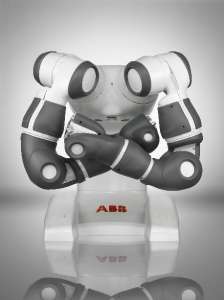
The Swiss-Swedish team at ABB has established their company as a leader in industrial robotics. The IRB 14000 cobot, known as YuMi, is a top of the line cobot. ABB designed the YuMi to manage processes that require lots of small and detailed parts in short cycles. ABB boasts that his 7-axis robot is the safest cobot on the market, eliminating the need for cages and safety barriers. The YuMi features camera-based part location as well as easy material feeding and extremely agile “hands.”


Kuka  LBR iisy and LBR iiwa

Kuka is ready for Industry 4.0 with their cobots LBR iisy and LBR iiwa. These two machines are in different payload categories, but keep the human at the center of the production process. With Kuka’s line of integrated sensors, delicate tasks can be delegated entirely to the machines. Bump sensing allows the machines to slow down when human contact is detected, providing superior safety and operational reliability.  The LBRs can perform tasks from automotive transmission assembly, to pick and place tasks, and even handling flexible and off-balance parts.


FANUC Cobotstop 5 industrial cobots

Used in everything from cheese production to automotive assembly, FANUC’s robotic arms are among some of the most beloved in the industry. Lauded for their reliability, easy programming and maintenance, and their long life-cycles, FANUC robots are trusted by such industry giants as Audi and Ford. Among their entire fleet of impressive machines, however, are some of the best collaborative robots available. Living up to the FANUC standard, the fleet of cobots tout great speed, reliability and reach. With six models of cobots to choose from, customers can select from a range of 4-35 kg and 550 mm reach to a whopping 1812 mm reach. These robots can also obtain speeds of up to 1500 mm/s.

Universal Robots UR10

Universal Robots is always looking to the future, and every robot they design has your company in mind. The UR10 is the perfect example of this company’s mission, allowing for superior customization, intuitive programming, and fast setup. The UR10 can handle a payload of up to 10 kg with a maximum reach of 1300 mm. The brilliantly simple design boasts a minimal footprint of only 190 mm and a relatively low mass of just over 33 kg. Combine that with an almost inexhaustible list of add-ons, and it’s no wonder this cobot is ideal for small and large businesses alike.


Omron TM Series

Omron, one of Europe’s top robotics manufacturers, is no late bloomer in this blossoming field. The TM Series offers safety, power, reach, and speed with four unique models. Operating at distances of up to 1300 mm and speeds of up to 1.4 m/s, there is no bad choice in this lineup. Omron takes the pressure off of programming and offers fast changeover to work with high or low volume productions. The TM Series requires no programming yet comes with intelligent vision processing capable of everything from barcode reading to object positioning and pattern recognition. Omron has created the perfect human-robot collaborative design ideal for a variety of applications including machine tending, soldering, and unloading.

Written by: B.A. Durham

add robots to your production line

DOWNLOAD NOW