window.dataLayer = window.dataLayer || []; function gtag(){dataLayer.push(arguments);} gtag('js', new Date());gtag('config', 'UA-141884085-1'); gtag('config', 'AW-761820283');

Industrial Automation

THE IMPORTANCE OF SUPPLY CHAINS

The acquisition of reasonably priced materials can make or break a company. In our modern world, industries and consumers are expecting goods to be delivered faster and cheaper than ever seen before. Industries must also ensure sufficient product is being delivered or created to match demand or run the risk of empty or leftover inventory. Meeting these constraints is highly dependant on the effectiveness of a company’s supply chain.

What is a Supply Chain?

In simple terms, a supply chain is the activities required by organizations in order to acquire and/or deliver goods. These activities usually include the transformation of raw materials into an end product for a customer, and the transportation in-between. Without an effective supply chain, a company runs the risk of reducing customers or losing an advantage over other competitors.
chain supply

Important Aspects

Supply chains are an essential part of the business structure and drive the economy. Understanding the following key aspects of what a supply chain is and how it operates is crucial for any business.

Diversity

Not all supply chains are operated by the same organization. In fact, the majority of supply chains involve many parties with different corporate interests. Therefore, companies may not be aware of other participants within the supply chain.

For example, a raw resource company that extracts iron ore and refines it to steel may sell it to an industry that makes robotics parts and electronics overseas. From there, the robot manufacturer would produce and assemble the robots to sell as full robotic cell assemblies to another industry that would use the robots on an assembly line (and the supply chain would continue from there). The ore refining company would have no insight on the business to which the robotic cell industry sold since it is on the other end of the supply chain. However, both are dependant on each other. If either company were to remove itself from the supply network (by going out of business or leaving the trade network), both companies would suffer.

That being said, any company would ideally seek to maximize its profits. If a company was to increase the price of its materials at the beginning of the supply chain, it would ultimately affect all other participating companies down the line, leaving the company or consumer at the end with an excessive cost. This could result in the ‘end’ company or consumer seeking another supplier and therefore disrupting the current supply chain. Organizations must work in cohesion by offering fair prices in order to construct an effective supply chain and not lose consumers. Doing so will increase the profitability of all organizations involved.

Supply & Demand

In order to maintain a steady supply chain, resources must be frequently available. When prices go up, delays become long, and when it is hard to get the required resources, industries will be unable to meet orders or schedules by their consumers. This will disrupt all players further down the supply chain and can greatly affect profitability since customers will look elsewhere to receive their goods. It is a smart strategy to have a plan to find another supplier before the previous is unable to provide the required recourses.

Chain supply

Despite the several layers of companies involved within a supply chain, it only operates effectively if there is customer behavior at the end of the chain (customer demand). Supply chain processes should be co-ordinated to focus on a customer’s needs. If no customers are purchasing goods from an ‘end’ company, the supplier will see fewer profits due to decreased demand, and vice versa.

Unexpected Events

Being the main contributor to supply chain disruption, unexpected events should be properly prepared for. These events can be classified into two categories: internal and external. Internal events usually entail anything which the supply chain companies are responsible for. This involves things like product recalls, transportation disasters, cost escalation, etc. External events involve occurrences that aren’t controlled by the supply chain company like border restrictions, natural disasters, importing taxes, etc.

For example, in recent events from the COVID-19 pandemic, many supply chains have been disrupted or halted due to the closing of borders and increased importing protocols. The global economy was greatly affected by the shutdown of businesses and we are still recovering. This is a prime example of an external unexpected event: a global pathogen.

In both cases of unexpected events (and decreased supply), keeping an inventory can prove quite useful. By having an excess of materials or products, any company which is experiencing slowdowns due to unexpected events can still fulfill its procedures. In severe terms, an inventory can also give a company enough time to find another material supplier. Many retail and industrial businesses own and manage storage facilities (warehouses) for these scenarios if they arise.

In the case where products can not be delivered or when the prices of the products go up, exploring a second-hand market is always an option. This gives the consumer company time to create a complete order when the delivering company fails to meet expectations. For example, a car manufacturing company that ordered a number of industrial robots only received a fraction. In order to stay on schedule, second-hand robots may need to be purchased. By knowing your supply chains, scoping out when second-hand purchasing is needed will be an easy task.

Chain supply

Conclusion

Therefore, performing due diligence with the supply of resources, internal/external events, company diversity, and the demand within or affecting the supply chain will allow for it to perform smoothly. That concludes this week’s post, if you have any questions about supply chains and their meaningfulness within an industry or if you have any other questions, please feel free to visit our contact page: https://diy-robotics.com/contact/

References

  • Coupa. “5 Scary External Factors for Supply Chains.” Coupa, 31 Oct. 2020, https://www.coupa.com/blog/supply-chain/5-scary-external-factors-for-supply-chains
  • “What Is Supply Chain Management and Why Is It Important?” Indeed Career Guide, https://www.indeed.com/career-advice/career-development/what-is-supply-chain-management-and-why-is-it-important.
OPTIMIZED FACTORY SHUTDOWNS

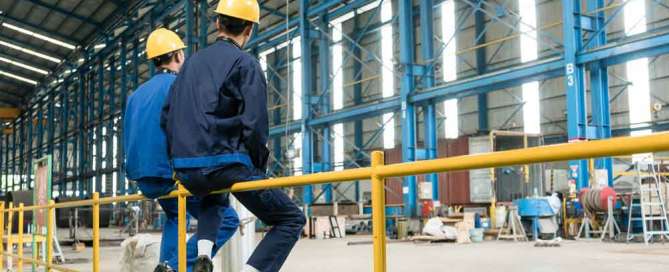
In order to be on track with today’s fast-paced, technology-driven world, industries have begun integrating automated processes to their production floors for a more efficient way of manufacturing goods. Robotic installations are a prime example of a crucial technology needed in present-day manufacturing. When performed correctly, robotic integration has many benefits. However, there are precautions that must be taken in order to ensure the technologies are installed swiftly and correctly. Often, robotic integrators are forced to shutdown equipment, or entire production floors in order to achieve this. This is referred to as Factory Shutdowns.

What is a Factory Shutdown?

As the name implies, a Factory Shutdown is a temporary closure of a production building to perform maintenance. Usually, these shutdowns are done to perform equipment inspections or deal with unplanned downtime. They are also performed to allow the integration of new equipment or technologies. Time, effort, and money devoted to shutdowns can sometimes be underestimated. This is due to the fact that elaborate planning and executions are required. Integrators may be unaware of certain layouts on a machine floor and will need equipment to be relocated to install their technologies properly. Or perhaps a software component within the machines (new and old) must be compatible in order to operate as one. Processes such as these are lengthy and costly, the company or the integrator must ensure every aspect of the integration process is planned and executed correctly to not waste possible production time, and in turn, reduce profits.

How DIY Robotic Cells can Help

How to Avoid or Reduce Shutdowns

Due to the nature of shutdowns and how they reduce profitability, companies should try to reduce the time spent in shutdown, or eliminate them entirely. Below are a few solutions to optimizing factory shutdowns due to robotic installations:

  • Develop a strategy in advance on how to accomplish integration. This includes assigning job tasks, resource planning (people, materials, tools), risk and safety assessments. This ensures that if any aspect of the integration process is delayed, there is a concrete plan set in place to put it back on track.
  • Schedule enough time in the case that issues arise. No matter how detailed a project plan is, unplanned work is inevitable. Not accounting for this work can have a huge impact on a budget or timeline. A time threshold should be set in place to ensure unseen issues do not ruin a project.
  • Employ an integrator with a time-efficient process to installation. This could involve prebuilding equipment that can be installed with ease, rather than supplying a company with only the parts.
  • Employ an integrator that offers a turnkey solution. Since all phases of integration are consolidated under one company, tasks are easier to plan, communication errors are less likely to occur, and any errors in integration are left to the experts. This will save a tremendous amount of time, for both parties.
  • If there are multiple production devices available, integration of the new technologies could take place on one of the devices while the others are still operating. This ensures the product is still being created while upgrading the upgrade is taking place. If there is an error with integration, only one machine would be affected.

How DIY Robotic Cells can Help

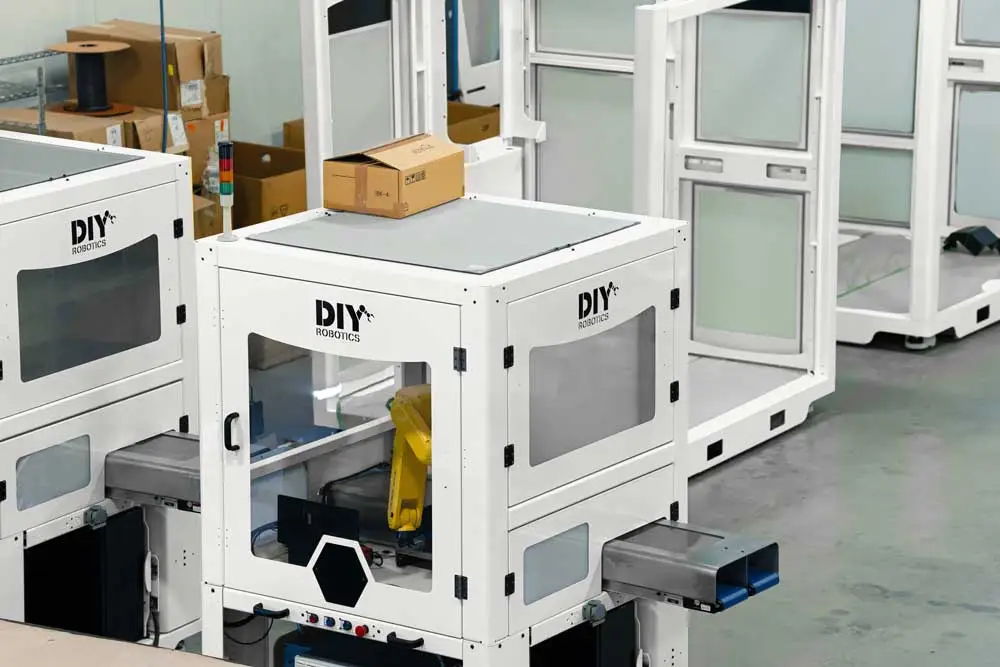
Factory shutdowns are a lengthy process. Companies should find a robotic integrator that can install technologies effectively, while still optimizing installation time. DIY Robotics provides the necessary solution to optimizing shutdown time. All DIY Robotics products come pre-built which reduces installation time greatly. Our cells are also modulare, which means they can be moved or altered with ease. Many robotic installations are bolted to the ground and therefore are fixed in position. These robots take unnecessary time to install or maintain (adjustments). By choosing DIY Robotics products, installation or maintenance can be easily executed due to its modulare capability. DIY Robotics also offers its products in turnkey solutions through a panel of official integrators familiar with the product. Integration/Customization of our machines can also be made at our facilities. All unexpected errors would be addressed before delivery, and any unique customizations would also be established. This could involve certain cell layouts, adjustments on the robot, custom EOATs, etc. Therefore, it would only take a few days to make a production line operational.

What is a Factory Shutdown?

All of these benefits listed above can help reduce shutdown time tremendously. A shutdown timespan of 2-4 weeks could easily be reduced down to 2-4 days with our products. If you are interested in learning more about our robotic cells, or have a question regarding other technical material, please feel free to visit our products page or contact us.

References

SELECTING THE RIGHT INTEGRATOR FOR AN AUTOMATION PROJECT

As technologies advance, new processes in manufacturing present themselves all the time. These processes can save time and money, boost production efficiency, and create more market opportunities. However, most manufacturers need the assistance of an outside integrator to establish these technologies, since they are not familiar with the new systems. Finding and selecting the right integrator that suits all business needs is not an easy task. The right integrator should understand a company’s situation and goals, and develop a plan to execute them. In this article, we will address some key points when selecting an integrator, and how they are essential to achieve an organization’s vision.

The Five Key Details

Field of Work

When selecting an integrator, the first action should be to ensure that their field of work matches what technologies you want to implement. Does the selected integrator deal with the appropriate products to achieve a company’s vison? Let’s say a company was working with a computer software integrator that mainly deals with IT systems, when the desire is to implement an automated labeller into a machine floor. This situation would not be ideal for both parties. The company should have been working with an automation integrator.

Expertise & Experience

It is crucial for an integrator to have the required credentials, expertise, and experience in the field they work with. If their expertise matches your goals, you have found the right integrator. If they specialize in a specific technology which is not useful for your company, they might not have enough general knowledge for your specified solution. If the chosen integrator shares a brand or company with the equipment your company already possesses, this integrator may be the best choice (due to it direct specialization).

As for experience, there may be projects or research that an integrator has conducted which correlates with your company’s interests. It is also important to know if an integrator has had previous successful business operations. If an integrator provided poor service, or did not meet expectations, it would not be ideal for another company to work with them in the future.

Knowledge

Methodology & Maintenance

An integrator should have a direct approach when implementing their systems in any workspace. This could involve delivery promises, risk analysis, and overall timespan. Effective planning is key, and an integrator needs to ensure they do not use up much of their consumer’s time. Time spent installing the integrator’s technologies could be time spent making money.

Offering a maintenance system to their products is also an important aspect which should be available with an integrator. If any errors should arise from using an integrator’s product, a company should assume that the integrator possesses the necessary solution to stop the problem. This way it puts the experts in control which saves time and stops unnecessary troubleshooting if a company were to do it themselves.

Compatibility

Compatibility between an integrator and an organization is essential. Both parties (being business partners) should be on the same page with regards to implementing the technologies effectively. The integrator should ensure all goals of the organization are being met, provide ongoing support through installation, and keep time and cash- usage low. Expenses are an organization’s biggest fear. Although an integrator may have exceptional expertise and product quality, the overall cost may be a deciding factor. It would also be ideal for an integrator to utilize technical terms the organization is accustomed to. This could involve programs or computer languages of their customer’s equipment. This is to ensure complete understanding when initiating the consumer to the new technology, and therefore gives them the best experience.

Compatibility

Knowledge Transfer

Training on how to operate the equipment should be common practice with any integrator. An organization deserves to know how equipment is operating within their workspaces. All knowledge of the product should be available to the organization for review. This could range from technical booklets, operation instructions, troubleshooting tips, etc. By acquiring crucial knowledge from the integrator, organizations reduce the risk of downtime with the newly installed systems and keep a strong relationship between both parties.

Conclusion

An organization’s success greatly depends on the integrator chosen. There are several factors (as stated above) that should be taken into account during the selection process. Taking the time to research various integrators and their expertise, methodology, and compatibility will be well worth it in the end.

At DIY Robotics, we offer turnkey and DIY solutions while still keeping a low cost with our ‘plug-&-play’ products. Free support is available for all organizations who select our products. We offer the development of your internal resources by supplying technical documents and training programs. We also make the selection of a robotic cell integrator an easy task with our panel of official integrators (for turnkey solutions). At DIY Robotics, we value our customer’s experience above all else. If you have any questions regarding our products, list of integrators, or topics addressed in this post, please feel free to reach out on our website: https://diy-robotics.com/contact/

References

  • McCarthy, Matt. “Automation Solutions: How to Choose the Right System Integrator for You!” Intec Automation, Inc., Intec Automation, Inc., 7 Oct. 2021, https://www.intecautomation.com/automation-solutions-how-to-choose-the-right-system-integrator-for-you/.
  • “Turnkey Industrial Robotic Solutions – DIY-Robotics.” DIY, 22 Nov. 2021, https://diy-robotics.com/turnkey-solutions/.

The Differences between FANUC LR MATE and FANUC CR ROBOT

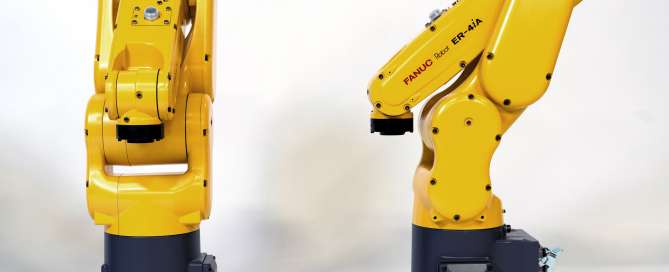
Each year, around 1.6 million twins are born around the world. Some are identical and some are not. But even identical twins are not completely identical. The same could be stated regarding the FANUC CR robots and the LR Mate series robots. They may look like twins because they share similar physical designs with very little differences, but they are both quite different in many aspects. The major difference can be noted in their working speed, environment, and safety.

To better understand the FANUC LR MATE and CR Robots, we should review their capabilities, similarities and differences.

FANUC LR MATE SERIES

The LR Mate Series is a robot the size of a human arm and has a load bearing capacity of maximum 14kg weight across its range. It is compact and used for quick maneuvers and part processing in various industries ranging from food to automotive.

They can come with different options tailored to the work they do, altered according to the client’s requirements. We will now look at the specifications and major characteristics of the LR Mate Series:

  • Floor, Ceiling, Wall and angle mounting robots
  • Can work alongside other robots in close proximity due to its smaller work envelope
  • Sensors, camera, and other attachment options
  • Reaches up to 911mm
  • Internal cable routing
  • Short cycle times (speed up to 4000 mm/s)
  • Work envelope remains constant irrespective of mounting
  • 5 and 6 axis robots

The FANUC LR Mate Series is used for applications such as dispensing, pick and place, assembly, machine-tending, welding, painting, and many others depending on its field of application. Due to their high speed and accuracy, they increase the precision and throughput of the production. All these above-mentioned reasons have increased the popularity of the LR Mate Series among various industries. So far, they have shown remarkable usage growth in the metal and food industries as well.

FANUC CR ROBOTS

The name CR itself stands for Collaborative Robots. So, the FANUC CR is basically the LR Mate Series turned collaborative with some modified features. Therefore, the FANUC CR Robot is capable of safely working alongside humans in a production line. The highlight features of the CR Robots are as follow:

  • From 550 mm to 1813 mm in reach capacity
  • Maximum speed up to 1000 mm/s
  • Less floor space occupancy
  • Devoid of safety fences due to
  • Customizable settings for speed and safety
  • Compatible with a wide range of attachments like cameras, sensors, etc.
  • Highly reliable
  • Only comes in 6 axis variant for more control

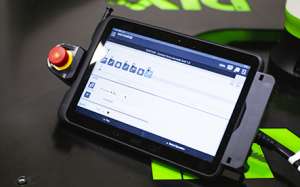
The FANUC CR Series is equipped with a safe contact stop sensor technology which enables it to stop immediately when the robot is in contact with a person or an unidentified object. This makes it highly safe for humans to work around it without any safety fences. Moreover, for extra safety, we can manually regulate the speed and safety settings. The FANUC Teach Pendant gives access to a step by step process to set up CR robots for new and acquainted users.

FANUC CR Robots can safely handle tasks like palletizing, pick and place, applying sealants, painting, lifting/placing heavy components, assembling, quality checks, and machine-tending.

Now that we have seen the features of both the FANUC LR MATE and the FANUC CR robots let’s compare them to see the differences:

FANUC LR MATEFANUC CR ROBOT
Non-Collaborative robotsCollaborative robots
Come in 5 and 6 axes modelOnly come in 6 axes model
±0.01mm repeatability rate±0.03mm repeatability rate
Cannot work in close proximity with humansCan work alongside humans without causing any harm
Need safety fencesDo not require safety barriers
Light in weightHeavy in weight compared to LR Mate
Auto stop option not availableAuto stops when in contact with a person or any fixed object
Speed up to 4000 mm/sSpeed up to 1000 mm/s
Reach up to 911 mmReach up to 911 mm

These features and limitations of the FANUC LR MATE and the FANUC CR Robots make things really clear when manufacturers need to select the correct model according to their requirements. The wide range of products provided by FANUC thanks to its LR Mate and CR robots makes it easier to spend exactly on what is required and get customized accessories to cater to their needs. The new trend around collaborative robots tends to make them attractive, but their performances are less effective than traditional robots.

Therefore, before opting for a cobot, take the time to figure out if a collaborative application is really needed or if an industrial robot in one of our pre-secured robotic cells could do the job with a better output. Discover more about our Collaborative Robotic Cells and Modular Robotic Cells on our product pages.

References

The benefits of 3D printing in robotics

With 3D printing, Complexity is free. The printer doesn’t care if it makes the most rudimentary shape or the most complex shape, and that is completely turning designing and manufacturing on its head as we know it.

— Avi Reichental (CEO of 3D systems)

What is 3D printing?

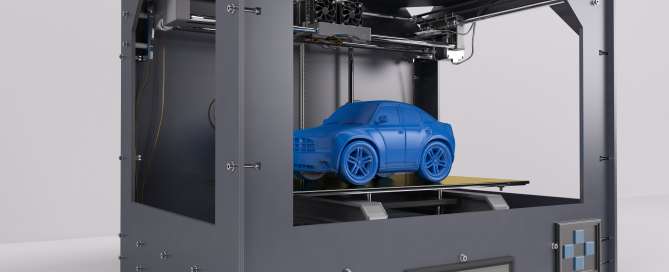
Additive manufacturing, also known as 3D printing, turns digital files into 3D physical objects by adding material in a layer-by-layer process. Each layer can be seen as a very thin sliced cross-section of the object. Unlike the subtractive manufacturing method where a piece of plastic or metal is cut out, 3D printing gives everyday consumers the power of manufacturing.  

Now, let’s dig deep into the benefits of using 3D printing in Robotics:

On a broader level, 3D printing aids prototyping, tooling, fabrication, and lowers cost and time to market. It is of great use for robotic engineers to achieve their goals. It accelerates product design, and reduces cost and waste. In doing so, it increases the flexibility to create more complex designs. This technology enables us to mass-produce customized products for customers.

3D Printing exemple

Speed:

The time frame for designing, manufacturing, and testing parts used to take months. 3D printing reduced that to a few days. It enables the user to design any kind of complex part without the need of a warehouse and expensive machinery. This modern production method easily reduces long lead times for the outsourcing of complex manufacturing projects, as well as the constraints of the minimum order for customized parts and products. As per the EY39% of companies in the manufacturing and Robotics industry now prefer 3D printed tools to enhance their products.

Cost:

Unlike traditional methods of CNC and injection molding, 3D printing reduces trial and error in designing, the cost of expensive machinery, and labor. Also, creating a product from the ground up, instead of carving it out from the block of material, reduces waste.

Ergonomic Designing:

Ergonomic Design - 3D Printer

Using the same 3D printer, designs can be produced irrespective of the part dimension or complexity. This allows the designing and manufacturing geometries impossible for the traditional methods such as parts within parts as a single structure and hollow cavity inside a solid joint free part. (No other way to say this?) It allows anyone with very little know-how of CAD to work and edit designs as per their needs. They can also work with multiple materials in the same object, giving them the chance to mix the mechanical properties and textures.

Tangible Product Quality check:

The life cycle of product manufacturing is reduced, thanks to the low cost and high-speed production rate of additive manufacturing. A physical prototype can be tested for flaws, corrected, and printed immediately the next day allowing for quick product improvements. This helps in getting accurate feedback from potential investors and consumers. This step-by-step production guarantees faster enhancement in the production design and better quality parts or products.

Consistency:

With 3D printing, parts are manufactured in succession. Each part can be monitored and real-time faults can be checked. The result is less waste and failed parts during production. Increasing the consistency of best quality parts by testing product prototypes beforehand reduces the risk of potentially disastrous investments.

Consistency in 3D printing

Accessibility and Sustainability:

3D printing is almost entirely automated. It requires little or no additional staff to operate, supervise, and manage the process, rendering it far more accessible than other manufacturing processes. As a result, contrary to the conventional production setup, its setup is quite cost-efficient.

In Conclusion, by developing better tooling, leveraging design freedoms, customizing robots, accelerating time to market, and being user-friendly, additive manufacturing enables the robotics industry to, like others, take advantage of producing volumes with fewer upfront costs and more efficiency gains. This, along with the multitude of applications 3D printing can provide to the robotics industry, makes for a very innovative future.


What makes FANUC Robots a Good Choice for DIY solutions?

The arrival of the first robots in this world was inspired by Mother Nature and different species of animals including humans. There are 30 different kinds of muscles in a human hand, and many complex functioning goes behind a simple task such as lifting a cup of water. However, we laymen don’t need to understand the mechanics of the hand to get all the complex work done with them. The same goes for FANUC robots as for a DIY solution.

Think of the FANUC robot as the muscles and DIY-Robotics as your hand. You do not need to know how the FANUC robot is programmed to get your desired work done. Let us identify the benefits of using FANUC robots in DIY solutions at the existing factory setup:

1 | Easy to Operate

Operating FANUC robots can be as easy as moving a hand. As they come preprogrammed, we don’t need to worry about its coding to operate it. You can also modify it to do different tasks at the assembly line with just some easy minor changes in the hardware and software. FANUC Robots are easy to fit in within the current footprints and factory layouts helping any business, whether it is automotive, packing items, or precision work such as watchmaking to have:

FANUC CRX Controler

  • Less downtime
  • Increased productivity
  • Better support and services
  • Deliver targeted product goals with precision
  • Low maintenance
  • Application-specific options
  • Range of payload and reach capacity

Today’s world is all about getting more productivity in less amount of time, money, and space. Choosing FANUC can fulfill all these aspects for your benefit.

2 | Flexibility

It is always said that work done by yourself gives you the best output and flexibility. Here is where the flexibility of FANUC robots helps to get the best whether it is saving money, saving time, or getting high production with quality outputs. With over 250 specialized software functions available, FANUC makes the customization easier, and along with our DIY-Robotics modular cells, gives you the option to make your design by choosing the modular panels that fit your needs.

3 | Compatibility

Sixty years since its foundation and, with more than 4.4 million CNC controls and 680,000 robots installed worldwide and still counting; FANUC has become the leading global manufacturer of factory automation. FANUC’s diverse reach in the global market makes it more feasible to connect to a DIY-Robotics cell. This makes your modification process quick and joint-free, giving the flexibility, payload, and reach capacity range as per your needs. FANUC Robots are compatible with almost all the other tools present in the market, making them the most accessible in terms of installation by yourself. Plugging and playing around with FANUC is just like playing with LEGO toys. FANUC Robots can plug and play with the existing factory design giving maximum output optimization in minimum changes made. These robots can do various applications, which includes as under but is not limited to:

FANUC Compatibility

  • Pick and place
  • Assembly
  • Cutting
  • Material application
  • Inspection
  • Palletizing
  • Dispensing and sealing
  • Material removal

I think this section should focus on the fact that FANUC controllers are very present in various industries, whether on a CNC machine or an injection molding machine, making it all the easier to connect to a DIY-Robotic cell.

4 | Lifetime Reliability Guaranteed

In addition to DIY-Robotics offering unlimited free support for their products, FANUC also offers lifetime support for their product throughout its life cycle no matter how old the robot is. FANUC being the only robot manufacturer to design and manufacture all its products’ components in-house also helps in giving superior quality products, functional reliability, and availability of products at the highest levels. With over 20 parts centers in Europe itself and a worldwide network of its parts store, they ensure 24/7 parts dispatch, limiting downtimes in your operations and giving guaranteed 100% performance service.

FANUC

FANUC IconThe name itself sells the product. It is very easy to find integrators for FANUC, being the leading brand in the robotics market. DIY-Robotics is not only an Authorized FANUC System Integrator but can also get you in contact with various integrators with different specialties around the world. Everything your robotic project requires, from FANUC robots to Certified Integrators, and custom components for your needs, is available at a one-stop solution platform called DIY-Robotics.
Choose Wise — Choose FANUC — Choose DIY-Robotics


What are The Industrial Robotic Trends in 2021 And After?

The future of industrial robots looks very bright as many companies are looking to automate their production lines, especially with the COVID-19 pandemic. According to a report from Reportlinker from November 2020, industrial robotics which is the top segment in robotics, is about to experience a compound annual growth of 18.2% with revenues growing to $176.8 billion in 2025 from $76.6 billion in 2020.

Here are the top 5 emerging trends in industrial robotics in 2021 and after.

1 | Smart Industrial Robots

Smart industrial RobotsIndustrial robots are now able to communicate with each other without any human support. With the increased digitization of robots by harnessing the power of the internet, robots can now be programmed to independently communicate with each other which increases the efficiency and speed of manufacturing. Manufacturers are also able to leverage real-time data analytics to improve production and help in making business decisions as well.
2 | Robots to Work in Small Factories

While we are accustomed to big specialized robots in assembly lines, they are expensive to install and are not suited for small factories. The future calls for small robots connected to the same network and AMRs (Autonomous Mobile Robots), which are easier to fit in small factories. They are equipped with navigation technology, making them mobile and more flexible than traditional industrial robots.

Once they are done with their tasks, you can reprogram them for other uses instead of dismantling them. This encourages new markets to automate their processes, such as in the food and beverage industry. Companies like DIY-Robotics offer predesigned, modular, and mobile robotic cells that can be integrated into any production line and moved to the next when needed. These robots are very different from traditional industrial robots that were huge, expensive, and needed to be built on sight thus requiring a lot of effort during installation.

3 | Robots That Reduce the Carbon Footprint

With the growing sensitivity towards climate change, investments in robotic technologies that leave a smaller carbon footprint will be expected to grow. The robots of today and the future are more energy-efficient,  and therefore require less energy to perform similar tasks to other energy-consuming industrial robots. They also have a higher precision rate which produces fewer rejects and below standard goods that have to be disposed of.

4 | Collaborative Robots

Collaborative Industrial Robot

The focus on industrial safety is one of the trends in 2021. This is especially key when it comes to collaboration with humans working hand in hand with industrial robots on the same assembly line without the need for safety barriers. Human-robot collaboration has been improved by the advancement of software, sensory capabilities, and end-of-arm tooling (EOAT) which give industrial robots the capability to detect changes on the line and respond quickly and safely.

These collaborative robots are known as Cobots and are one of the fastest-growing trends in industrial robotics. This is because they are not only collaborative and safe but also easy to program, quick to set up and allow for flexible automation.

5 | Industrial Robots Securing the Supply Chain

The COVID-19 pandemic has not started any trends in robotic technology, it has just accelerated their use beyond what was thought possible. The future of industrial robots belongs in helping fix and stabilize the supply chains that have been severely exposed by the pandemic. Automation of processes will only increase especially in markets in high-wage countries. Doing so will increase their flexibility in the production lines as well as ensure stability and security during uncertain times.

Conclusion

The robot revolution has just begun and we expect to see more investment and attention in this area in the future. Automation of many mundane processes in the assembly line will have to occur to not only increase speeds and efficiency but also reduce costs of production. Gradually, humans will rely on robots for manufacturing even more which is a trend that has already begun in 2021.


Redirection Deburring Cell Page

Why are Robotic kits profitable for businesses?

With an estimated average of 3 million industrial robots in use by the end of 2020, it is clear that more and more businesses are continuously embracing robots within their processes. This is according to IFR Statistics. With the dynamic technological advancements on the rise, we only anticipate even more use of robotic kits both for simple and complex functions.

Today we take a deep dive into why robotic kits are essentially a better option for you and why they are more profitable. In a nutshell, a robotic kit is a compilation of robot essentials which are used to build robots, then programmed to serve different functions. Here are some of the reasons why they are the better option for you.

1 | Low Cost Initial Outlay

Unlike buying a complete robot, robotic kits are way much cheaper to buy and install. We all know that at the end of the day, the objective of every business is to keep the costs as low as possible and therefore, this option will definitely leave you with a bigger chunk of the revenue. Depending on the complexity of the functions performed, robotic kits cost as low as $3800 and other marketplaces. In addition, extra costs such as shipping and installation, including the time is reduced considerably as all the parts come together and are assembled at your premise. and other marketplaces. 

2 | Customized Functionality

DIY_Robotics_3D_Builder

Once you have the robotic kit installed, depending on your need(s), you are able to connect with experts whose aim is to understand your end goals, then develop a customised program to allow your robot serve appropriately. This is magically impressive as you are able to fully service your needs, saving you a lot and ultimately increasing your profits. This aspect of robotic kits ensures that the robot fully serves the purpose.

Arrow_Profitability_Robotic_Kit

3 | Increased Efficiency

This is a sure factor for profitability. The use of robotic kits by far improves the production process as it eliminates the human error. As a result, businesses are able to increase their output, reduce wastage and hence, increase profits. This is one of the major reasons behind robots, as they are programmed to do what human beings do, just by much, more efficiently.

4 | Continued Expert Support

DIY-Robotics_Kits

The biggest problem especially when dealing with complex technology such as robotics is that of support. After you buy and install your robotic kit and it is functional, just like any other piece of technology, problems arise which can lead to huge losses. Therefore, having expert support is key to ensuring that you quickly troubleshoot your robot and get it back to work in the shortest time possible. This can take the form of a live online chat with your supplier and/or community forums such as DIY-Robotics’,  where you can instantly get help from experts and peers.

Clearly, you can now see that indeed robotic kits are here to help you with your production and day-to-day processes, which ultimately leads to increased profits for you. If you haven’t considered robotic kits yet, it is about that time you got in touch with an expert and come on board.


How Could a Robotic Cell Improve Your Manufacturing Business?

Robotic cells are streamlined, efficient, highly complex machines capable of providing advanced technical solutions. Each cell is tailored to a company’s unique production needs. They are customizable and easy to integrate into your workflow at many different insertion points. Robotic Work cells may be one of the best improvements you can make to your manufacturing business.

What Is a Robotic Cell?

Robotic Work cells, or just robotic cells, contain all of the tools and end-effectors required to perform a specified task or series of tasks. Think of them as automated, fully-housed robots pre-loaded with precisely what they need for each stage of your automation process. Work cells are designed and equipped to handle tasks at numerous points in your assembly line. Robotic cells can be fitted with sensors, grippers, conveyors, and various safeguarding measures like fencing and emergency stop controls.

What Are the Assets of a Robotic Cell?

Work cells are set up to allow robots to operate at peak efficiency and performance. Everything is designed so that the robot can do its job as quickly as possible and with a high level of consistency. Enhanced speed and throughput translates to higher productivity and less down-time.

Safety is also an important asset of a robotic cell. Cells can come equipped with light curtains, e-stops, fencing, and other safeguards to keep employees safe while working within the robot’s vicinity. Speed barriers cease to be necessary because the robot is safely housed within a cellular compartment. The increase in speed equates to an increase in productivity and up-time.

Versatility

Robotic Work cells may only contain one robot. However, this is far from the limit of their capacity. Robotic cells are capable of housing multiple industrial robots. Since Work cells can accommodate various components of differing sizes, weight, and configuration, there are many possible automation solutions achievable by each unit. And while conventional thinking might suggest that adding more tools and sensors would take up more space, the robotic cell maintains the same footprint even when tooling or tasks are added or changed.

Conventional industrial robots are often fixed in place with a security perimeter. Consequently, they are typically dedicated to a single task and location. Conventional industrial robots have large footprints and create downtime when moved in the assembly line.

DIY-Robotics cells, on the other hand, offer swift and straightforward retasking. You can quickly move our robotic cells in and out of your production line. With a simple change in the tooling, you can use the same unit for multiple applications. That is the definition of versatility.

Reduce Direct Labor Costs

The cost of hiring and retaining a person to handle multiple manufacturing operations can add up over the years. A robotic cell, however, provides savings in a relatively short time. Not only does this reduce the cost of human labor, but it can also free up workers to take over higher-order processes such as programming and engineering.

What are the Operations a Robot Cell Can Do?

The most frequent task assigned to robotic cells is pick-and-place. However, this says more about industry need than the robot’s capabilities. Robotic cells can be equipped to handle numerous tasks and provide an enormous variety of automation improvements. Some of the primary tasks a robotic Work cell can handle are:

  • Sorting
  • Assembling
  • Deburring
  • Painting
  • Finishing and polishing
  • Welding (arc welding, spot welding, etc.)
  • CNC machine tending

Pick-and-place operations are easy to notice, as they are often placed at the beginning or end of assembly lines. But don’t be fooled into thinking that’s all robotic cells can do. Work cells can handle a significant number of your automation needs, more than what’s included in the list above.

Conclusion:

The purchase of a robotic cell might seem to be a costly investment for some small to medium-sized businesses. However, if we look at the numerous advantages that robotic cells bring to production, we realize that the return on investment makes it a worthwhile purchase. A robot cell is a guarantee of fast and seamless improvements to your automation processes. For more information on robotics cells, check out our product page at DIY-Robotics.com. You can also test-drive our virtual “FANUC Build Your Own Cell” configurator to create the ideal cell for your business.


Lights Out for COVID-19

We are facing an unprecedented global catastrophe. At the time of this article, the COVID-19 virus has infected millions of people worldwide and claimed the lives of a quarter of a million. Human ingenuity, creative problem-solving, and a lot of bravery have helped to keep us moving forward. Smart machines and artificial intelligence have played a significant role in maintaining factory operations with minimal human presence while the majority of us quarantine daily.

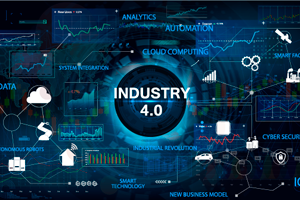
importance of automation processSo-called “Lights Out” factories, a key part of the Industry 4.0 revolution, are equipped to handle the crisis we find ourselves in today. And COVID-19 may be the necessary impetus for all companies to convert old practices into new, incorporated and networked solutions that can operate with little or no direct human intervention. Let’s look at how automation processes and robotics are helping the world to continue functioning during a global lockdown.
How COVID has affected industry and supply lines

In almost every grocery store, shelves are bare and vital items are out of stock. This isn’t just because people are hoarding; the real culprit is the disruption to inventory supply lines. Human workers are self-quarantining and complying with stay-at-home orders, and this has slowed down shipping and delivery. What can we do to minimize the impact of stay-at-home orders on our distribution chain? Luckily, the solution already exists in many factories: Industry 4.0.

Lights-Out Factories

Simply put, robotics and automation can protect us from COVID-19. Businesses that incorporate Industry 4.0 practices reduce the need for on-site human presence in factories and distribution centers. Humans workers can monitor and even calibrate machines from home. As the name “lights out factory” suggests, these facilities can be run entirely in the dark because humans are not needed on-site. By converting to a lights-out factory and utilizing other automation processes, engineers and technicians are able to work remotely. People are able to minimize contact with each other and potentially contaminated surfaces. By reducing the number of people in the same place at the same time, automation processes can protect us from transmitting COVID-19 and other communicable diseases.

Advantages of moving forward

what is industry 4.0Scientists and doctors predict that this current global crisis will likely reappear in the winter, coincident with flu season. Factories and industry leaders have an opportunity, and maybe even the responsibility to, build the infrastructure for automated facilities. They can take advantage of the products and methods already available to switch to Industry 4.0. In doing so, not only do factories protect their workers and preserve the integrity of production flow, but they take advantage of energy-saving and resource-saving measures that will improve the environment.

At DIY-Robotics, we offer autonomous robots and cells that will help you convert your factory into an automated, Industry 4.0-ready facility. Check out our website at www.DIY-Robotics.com for more information on how to get your business COVID-proof by incorporating cutting-edge, self-regulating products and machines.